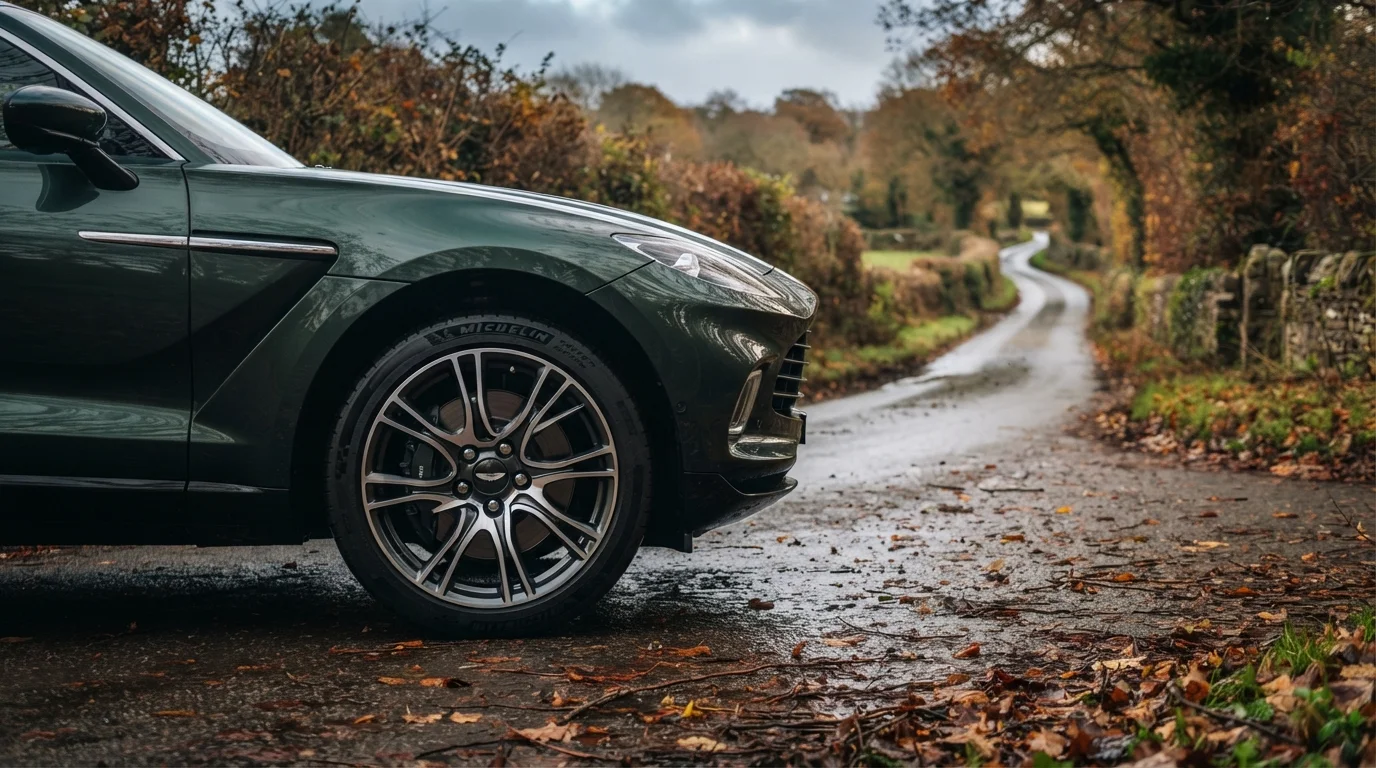
With councils preparing their winter gritting routes, the roads will soon carry a fine coating of salt for months on end. For drivers with alloy wheels, that is the season when the choice of finish starts to show its strengths and weaknesses.
The two most common finishes on modern alloys are diamond cut and powder coat. They look different, are applied in different ways and age differently, particularly in a British winter.
How Diamond Cutting Works
A diamond cut wheel has a bright, machined face, often with fine concentric lines visible in the metal. The effect is created by mounting the wheel on a computer-controlled lathe and cutting a very thin layer from the face with a diamond-tipped tool. The bare metal is then protected with a clear lacquer.
The result is striking, and diamond cut wheels are now fitted as standard to many mid-range and premium cars. The weak point is the lacquer. Once it is chipped by a stone or scraped by a kerb, moisture and road salt can reach the bare aluminium underneath. Corrosion then spreads beneath the lacquer, often appearing as a white or grey creeping pattern that lifts the clear coat from the edges.
Repairing a diamond cut wheel usually means cutting it again. Because each cut removes a small amount of metal, a wheel cannot be re-cut indefinitely, and refurbishers generally assess how much material remains before agreeing to repeat the process.
How Powder Coating Works
Powder coating is a different approach. After the old finish is removed and the wheel cleaned, a dry powder is sprayed onto it using an electrostatic charge, then baked in an oven so that the powder melts and bonds to the surface. A lacquer may be added on top.
Powder coat is generally thicker than wet paint and resists chips and corrosion well. It also allows almost any colour, from factory silver to gloss black, bronze or brighter custom shades. What it cannot do is reproduce the bright machined face of a diamond cut wheel, since the powder covers the metal rather than exposing it.
Many wheels combine the two: a powder-coated base colour with a diamond cut face, a style known as two-tone.
Which Suits Which Driver
The choice often comes down to appearance, use and tolerance for upkeep. Drivers who want the original look of a factory diamond cut wheel will usually choose to have it re-cut. Those who cover high mileage through winter, park on the street or regularly meet kerbs may prefer the durability of a powder-coated finish.
Warranties are worth comparing. Some refurbishers offer guarantees on both finishes. Alloy Fix, which operates workshops in Romford, Dartford and Hemel Hempstead, states on its site that it gives a three-year warranty on powder coating and diamond cut work.
Looking After Either Finish
Whatever the finish, regular washing through winter removes salt before it can work into chips. A pH-neutral wheel cleaner is gentler on lacquer than strong acidic products. Applying a protective coating designed for wheels can make cleaning easier and add a barrier against brake dust and grime.
Checking wheels for chips in the lacquer before winter and repairing small areas early is usually cheaper than dealing with spread corrosion in spring. A good finish, of either kind, lasts longest when damage is caught while it is still small.