What to Eat Before Swim Practice: Smart Fueling for Better Laps

Ever finished a set feeling heavy, bloated, or like you ran out of gas halfway through the lane? If you’ve ever wondered “what to eat before swim practice” to feel light, strong, and energized in the water, you’re in the right place. Whether you’re an early-morning club swimmer, a weekend triathlete, or a parent packing snacks for the kids, the right pre-swim fuel makes a huge difference.
Why pre-swim nutrition matters
Swimming is both an aerobic and anaerobic sport—meaning you need steady glycogen stores for distance sets and quick-access carbs for sprints. The wrong food at the wrong time can lead to cramps, sluggishness, and poor performance. Smart timing and food choices help you maintain intensity, recover faster, and get more out of every practice.
How to time your pre-swim meal
2–4 hours before practice: full meal
For a morning or evening session where you have time, eat a balanced meal 2–4 hours prior. Aim for:
- Complex carbohydrates (oatmeal, rice, whole-grain pasta)
- Lean protein (chicken, Greek yogurt, eggs)
- Small amount of healthy fat (avocado, nuts)
- Fruits or veggies for vitamins and easy carbs
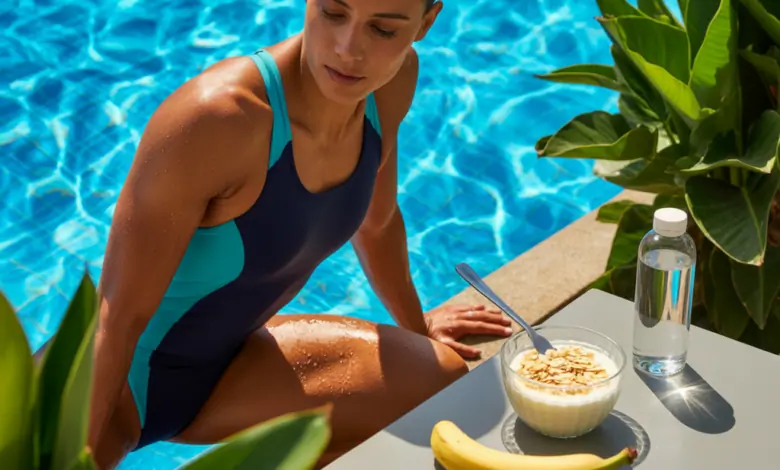
Example: A bowl of oatmeal with banana, a scoop of Greek yogurt, and a few almonds.
30–60 minutes before practice: small snack
If you’re short on time or have an early practice, choose a light, mostly carbohydrate snack that’s low in fiber and fat to avoid GI upset:
- Banana or applesauce
- Toast with honey or jam
- Rice cake with peanut butter (small amount)
- Sports drink or gel for high-intensity sessions
What to eat before swim practice: foods that work (and ones to avoid)
Picking the right foods is about digestibility and energy density. Here’s a quick guide to practical options.
Great pre-swim foods
- Bananas — fast carbs + potassium (helps with cramps)
- Oatmeal or porridge — sustained energy for longer sessions
- Whole-grain toast with honey — quick, simple fuel
- Greek yogurt with berries — carbs + moderate protein
- Rice or rice cakes — easy-to-digest carbs for early workouts
- Small smoothie (fruit + yogurt + spinach) — liquid fuel if you have a sensitive stomach
Foods to avoid before swimming
- High-fat meals (fried foods, heavy sauces) — slow digestion, can cause sluggishness
- High-fiber meals (large salads, beans) — may cause gas or cramps
- Spicy foods — could upset your stomach
- Large quantities of dairy right before a hard set if you’re lactose-sensitive
Hydration and electrolytes: often overlooked
Hydration influences performance even in the pool. Start hydrating early—drink 16–24 oz (about 0.5–0.7 L) of water in the 2–4 hours before practice and another 8–12 oz (0.25–0.35 L) 15–30 minutes before you jump in.
For longer or higher-intensity sessions, include electrolytes (sports drink, electrolyte tablets) to replace sodium lost through sweat. Small sips between intervals can also help maintain energy, but avoid overdrinking right before jumping in to prevent sloshing discomfort.
Fueling for different swim practice types
Sprint or high-intensity interval sessions
These require quick-access carbs. Eat a small, high-glycemic snack 30–60 minutes before—like a gel, banana, or toast with honey. Avoid heavy protein or fat right before fast efforts.
Distance or endurance sessions
For longer practices, go for a balanced meal 2–4 hours before, focusing on complex carbs and moderate protein to sustain glycogen stores. Bring small snacks and fluids to top up energy during long sets if needed.
Technique or recovery days
On lighter swim days you can afford a smaller pre-swim snack and should focus more on overall daily nutrition and recovery foods post-practice (protein + carbs).
Practical tips and real-world examples
Here are some time-tested strategies swimmers use:
- Early-morning club swimmer: If you train at 6:00 AM, have a small snack (banana + a spoon of peanut butter) at 5:20 AM, or a light bowl of oats if you have an earlier wake-up.
- Afternoon school practice: Eat a balanced lunch 3 hours before practice (rice, chicken, veggies), and bring a rice cake or piece of fruit in your bag for later.
- Weekend triathlete with multiple sessions: Prioritize carbohydrate-rich meals and sip electrolytes during longer rides or swims to keep glycogen topped up.
Pre-swim warm-up and dryland tips
Match your fueling to your warm-up. A dynamic dryland warm-up and a gradual in-pool warm-up prepare your muscles to use glycogen efficiently. Try mobility drills, band work, light core activation, and breathing drills before your first main set.
Workout variations: do a shorter, faster warm-up for sprint sets and a longer, steady warm-up for endurance sessions.
Long-term habits for consistent performance
Great practice performance isn’t just one meal—it’s consistent habits. Prioritize:
- Regular carbohydrate intake across the day
- Adequate protein for recovery
- Quality sleep (7–9 hours)
- Planned fueling around workouts
- Post-practice recovery snacks within 30–60 minutes (protein + carbs)
Frequently Asked Questions
1. How long before swim practice should I eat?
Ideally, eat a full meal 2–4 hours before practice. If you’re short on time, have a light, carb-focused snack 30–60 minutes before to avoid stomach upset and provide quick energy.
2. Are energy gels okay before swimming?
Yes—energy gels can be effective for short, high-intensity sessions or when you need quick carbs. Follow with a small sip of water. If you’re new to gels, test them during training first to ensure they don’t upset your stomach.
3. Should I drink a sports drink before swim practice?
Sports drinks are useful for long or intense practices where you’ll sweat a lot. For shorter sessions, water is usually sufficient. Use electrolyte drinks when you expect prolonged exertion or hot conditions.
Conclusion: Eat smart, swim faster
Figuring out what to eat before swim practice is as much about timing and trial as it is about food choices. Aim for mostly carbs with moderate protein, avoid heavy fats and fiber right before a workout, and hydrate consistently. With a little planning—matching your meal size to the session type—you’ll finish sets feeling strong and ready for more.
Want more tailored guidance? Check out our nutrition guides for meal plans, browse specific workout routines, or read additional wellness tips to support your swim training. Ready to tweak your pre-swim fueling today? Try swapping one meal or snack this week and notice the difference in the pool.
Call to action: Comment below with your practice schedule and I’ll suggest a simple pre-swim snack tailored to your timing—or sign up for our newsletter for weekly swim nutrition tips and quick recipes!