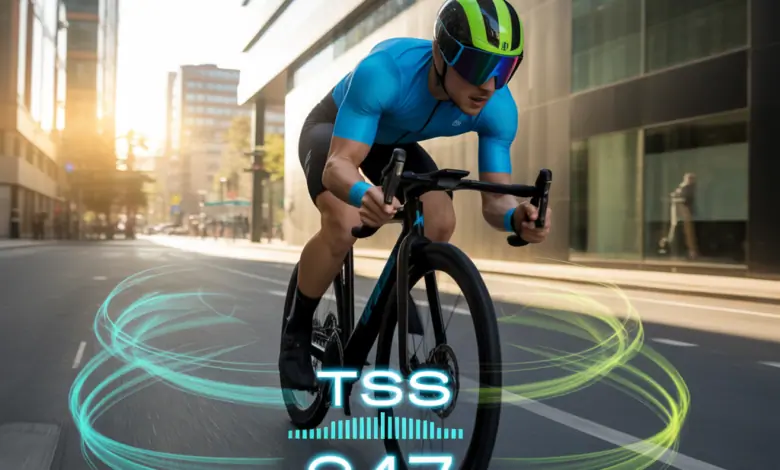
Have you ever finished a ride feeling crushed and wondered, “Did I overdo it?” or finished feeling like you didn’t get much out of your time on the bike? Understanding what is TSS in cycling can turn those guesses into confident training decisions — so you train smarter, recover better, and make steady gains.
What is TSS in cycling? — The basics
TSS stands for Training Stress Score. It’s a numerical way to quantify how hard a ride was, combining intensity and duration into a single training load metric. Instead of relying on perceived effort or distance, TSS uses power data (or heart rate as a substitute) and your functional threshold power (FTP) to estimate how much physiological stress a session imposed.
At a glance:
- TSS = A single number measuring training load
- FTP (functional threshold power) = the power you can sustain for ~60 minutes
- IF (intensity factor) and NP (normalized power) are used to reflect how intense a ride was
Why care? Because TSS helps you plan workouts, prevent overtraining, and track improvements over weeks and months — all crucial for cyclists who want consistent progress.
How TSS is calculated (simple explanation)
The technical formula uses duration, normalized power, IF and FTP. Practically, the important points to remember are:
- An hour at FTP ≈ 100 TSS
- One hour at 90% of FTP ≈ 81 TSS (because the intensity factor squared determines the score)
- Short, very hard intervals can spike TSS if they’re long enough and repeated; long, steady rides accumulate TSS through duration
So if you ride at your FTP for 60 minutes you’ll score about 100 TSS. That gives you an intuitive baseline: 100 TSS = one hour at threshold. Shorter, easy rides will be much lower; long endurance hours at moderate intensity will add up over time.
Why TSS matters: benefits for cyclists
- Training load tracking: TSS provides an objective way to measure weekly and monthly load so you can follow a plan or adjust when life gets in the way.
- Fatigue management: Paired with metrics like CTL (chronic training load) and ATL (acute training load), TSS helps prevent burnout and overreaching.
- Progress monitoring: You can compare weeks, phases, and seasons to see whether your fitness is improving.
- Better session design: Use TSS to balance hard intervals and recovery to hit weekly targets without guesswork.
Real-world example
Imagine you’re prepping for a 4-hour sportive. Your coach prescribes a week with 400–500 TSS. Two hard threshold workouts (each ~100 TSS), a long 3.5-hour endurance ride (~200 TSS), and a couple of low-TSS recovery spins will hit that target while leaving room for rest.
How to use TSS in your training: practical tips and workout variations
Here are actionable ways to use TSS whether you’re a weekend warrior or an aspiring racer.
- Set weekly TSS targets: Pick a realistic weekly TSS based on your time availability and fitness. Beginners might aim for 200–300 TSS/week; more committed riders 400–700+ depending on goals.
- Balance intensity: Combine high-TSS interval sessions (threshold or VO2 work) with lower-intensity endurance rides to keep fatigue manageable.
- Use progressive overload: Increase weekly TSS by no more than 10% each week for sustainable gains.
- Schedule recovery weeks: Every 3–6 weeks drop volume and intensity to reduce TSS and let fitness consolidate.
- Workout variations:
- VO2 max intervals: 5 x 3 minutes very hard with equal rest — moderate TSS but high intensity
- Threshold session: 3 x 20 minutes at ~95–105% FTP — high TSS in a short time
- Long endurance ride: 3–5 hours at 60–75% FTP — accumulates TSS through duration
- Sweet spot training: 2 x 30–40 minutes at 88–94% FTP — efficient TSS per hour for time-crunched riders
Tracking tools and power vs heart rate
Power meters and cycling computers make TSS easy to measure. If you don’t have power, heart rate-based estimates exist but are less precise because HR lags and is affected by heat, hydration, and stress. Normalized power captures variability (like group rides with surges) and typically produces higher TSS than average power would suggest.
Lifestyle factors that change your TSS response and recovery
TSS measures external load, but your body’s response depends on lifestyle. To make the most of your training stress score:
- Prioritize sleep: 7–9 hours helps recovery and increases training quality.
- Fuel appropriately: Carbohydrates before and during long/hard sessions maintain power. Post-ride protein + carbs aids recovery.
- Hydration and electrolytes: Dehydration reduces power and increases perceived effort, inflating TSS for the same session.
- Manage life stress: Work, family, and illness all add to total stress load — lower training stress when life stress is high.
- Cross-training: Strength work and mobility sessions improve resilience without huge TSS increases — smart for longevity.
Common mistakes and how to avoid them
- Relying only on TSS: Combine with perceived exertion and recovery data.
- Ignoring intensity distribution: Lots of mid-intensity work can be less effective than a mix of easy + high-intensity.
- Chasing weekly TSS blindly: Quality matters as much as quantity — don’t fill hours with low-value riding.
Frequently Asked Questions
1. Is TSS the best way to measure cycling training load?
TSS is one of the most practical and widely used objective measures because it combines duration and intensity. It’s very useful when paired with other metrics (RPE, sleep, mood). No single metric is perfect, but TSS gives a clear baseline for planning.
2. How many TSS should a beginner aim for per week?
Beginners can start with 150–300 TSS per week depending on time availability and recovery. Focus on consistency, proper pacing, and rest. Gradually increase load by ~5–10% weekly when you feel recovered and sessions are landing well.
3. Can I use heart rate to estimate TSS if I don’t have a power meter?
Yes. Many training platforms estimate TSS from heart rate, but it’s less accurate because heart rate is affected by heat, hydration, caffeine, and stress. If you use HR-based TSS, be conservative and track trends over time rather than absolute values.
Conclusion — take control of your training with TSS
Understanding what is TSS in cycling gives you a clear, scientific way to measure and manage your training load. Use TSS to design balanced weeks, prevent overtraining, and make steady fitness gains. Start by tracking a few weeks, set realistic weekly targets, and adjust for life stress and recovery. If you want structured ideas, check out our workout routines for sample TSS-based plans, visit our nutrition guides to fuel your rides, and explore wellness tips to improve recovery.
Ready to get started? Track your next ride’s TSS, compare it to your weekly goal, and plan one actionable change this week — a purposeful recovery day, a sweet spot session, or an extra hour of sleep. Small adjustments compound into big improvements.