Ever pull a sweaty tee from the bottom of your gym bag and wonder if it’s permanently doomed? If you’ve ever thought, “How do I get my activewear to smell like new again?” you’re not alone. In this guide you’ll find practical, easy-to-follow wash workout clothes tips to remove odor, protect technical fabrics, and extend the life of your favorite gym pieces.
Why caring for workout clothes matters
Proper care does more than just remove smell. Activewear often uses technical materials—moisture-wicking polyester, nylon blends, and elastane—that can lose performance or stretch out if washed incorrectly. The right laundry routine preserves breathability, color, and fit so your gear continues to support performance during runs, HIIT sessions, and yoga flows.
Real-world example
Imagine you’re training for a 10K and logging daily runs. Damp shirts left in a gym bag develop mildew and odor that are hard to remove. A quick rinse and following the tips below will keep your rotation fresh and ready for every workout.
Top wash workout clothes tips — a practical checklist
- Rinse or air out clothes immediately after workouts to prevent bacteria buildup.
- Sort by fabric type and color: keep technical fabrics separate from cotton towels.
- Use a gentle detergent designed for activewear or sports clothes to protect moisture-wicking properties.
- Avoid fabric softeners and dryer sheets—they clog fabrics and reduce breathability.
- Wash on cold or warm, on a gentle cycle; hot water can break down elastic fibers.
- Fasten zippers and turn garments inside out to protect prints and seams.
Pre-treatment and stain removal
For sweat stains or deodorant marks, pre-treat with a paste of baking soda and water or a small amount of liquid detergent. Gently rub and let sit 15–30 minutes before washing. For persistent odors, add half a cup of white vinegar to the rinse cycle—it’s a natural deodorizer that won’t harm most synthetic fabrics.
How to wash workout clothes: step-by-step
- Empty pockets, unzip, and turn garments inside out.
- Sort by color and fabric type (e.g., technical tops vs. cotton towels).
- Pre-treat stains and use an activewear-friendly detergent.
- Select a gentle cycle with cold or warm water; high spin settings can stretch elastane.
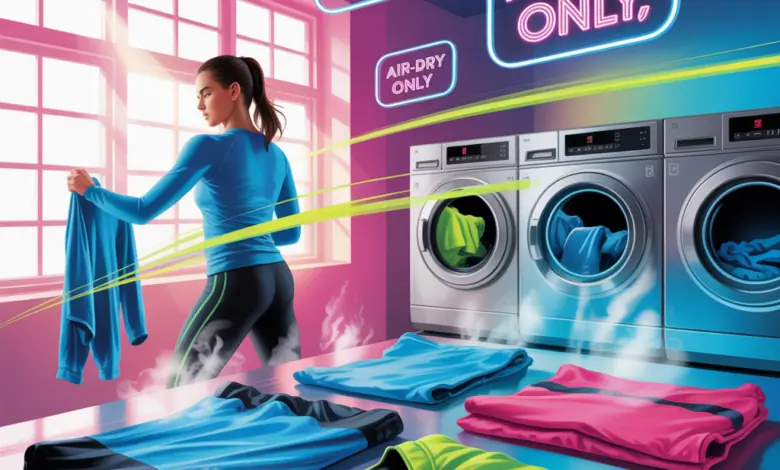
- Air-dry whenever possible; if using a dryer, choose low heat and remove promptly.
Handwashing and delicate pieces
For compression wear, bras with molded cups, or high-end leggings, handwashing in cool water maintains shape and elasticity. Use a mild detergent, gently agitate, rinse thoroughly, and lay flat to dry to avoid stretching.
Extra tips to remove sweat odor and keep gear smelling fresh
- Don’t leave sweaty clothes in a closed gym bag—hang them to dry or place them in a ventilated laundry basket.
- Use a mesh laundry bag for small items like workout socks to avoid tangling and help them wash evenly.
- Sprinkle baking soda in storage drawers to absorb lingering smells.
- Rotate your workout wardrobe so gear has time to fully dry between uses.
Workout-friendly lifestyle tips that tie into clothing care
Small habits make a big difference. Shower or at least change clothes soon after intense sessions to limit bacteria growth. For busy days, pack an extra breathable tee or quick-change top in your bag. Proper nutrition, hydration, and recovery also reduce excessive sweating and body-odor intensity—so check our nutrition guides for post-workout meal ideas that support recovery without forcing you to wash clothes every day.
Workout variations and clothing considerations
- Low-impact workouts (yoga, Pilates): You might wear the same top for several sessions if it stays dry—wash as needed.
- High-intensity interval training (HIIT) or hot yoga: Expect to wash immediately—sweat and salt quickly affect fabric performance.
- Outdoor runs and cycling: Rinse salt stains and road grime soon after to prevent abrasion and discoloration.
Avoidable mistakes that ruin activewear
- Using bleach on elastane blends—this breaks down fibers and fades color.
- Overusing detergent—residue can trap odors; measure carefully.
- Frequent hot drying—heat degrades elastic fibers and shrinkage is common.
Frequently Asked Questions
1. How often should I wash gym clothes?
Wash tops and bottoms after any high-sweat session. For light activity (walking, gentle yoga) where you don’t sweat heavily, you can wear a garment a second time if it’s fully dry and odor-free. Socks and underwear should be washed after every use.
2. Can I use vinegar or baking soda to remove workout smell?
Yes. White vinegar in the rinse cycle or a baking soda pre-soak helps neutralize odors without damaging most synthetic fabrics. Use about half a cup of vinegar or a tablespoon of baking soda dissolved in water. Avoid excessive vinegar on delicate items and always rinse well.
3. Do moisture-wicking fabrics need special detergent?
They don’t need a specialty detergent, but look for formulas labeled safe for technical fabrics. Avoid fabric softeners and heavy detergents that can leave residue and impair moisture-wicking performance. Gentle, low-residue detergents work best.
Conclusion — Make these wash workout clothes tips part of your routine
Fresh, well-cared-for workout clothes help you feel more confident and perform better. Use these wash workout clothes tips to prevent odor, protect technical fabrics, and extend the life of your activewear. Start small: air out your gear after the next session, pre-treat stains, and choose the right wash cycle. Want more practical fitness advice and daily habits to support your training? Explore our workout routines and wellness tips for ideas that pair perfectly with a clean, ready-to-go wardrobe.
Ready to level up your gear care? Put one tip into action today—wash and air out your next sweaty set immediately—and notice the difference in smell and longevity.