The Boiled One is a fictional horror entity created by artist and animator Doctor Nowhere. It appears in the 2024 analog horror short THE BOILED ONE PHENOMENON. The disturbing character is also widely identified as PHEN-228.
The short uses corrupted television footage, warnings, religious imagery, and psychological horror to build its story. Its unsettling red-faced figure quickly attracted theories, memes, fan art, and explanation videos. That attention helped the character move beyond its original YouTube audience.
Quick answer: The Boiled One, also called PHEN-228, is the central entity in Doctor Nowhere’s 2024 analog horror short. The story links it to a mysterious television interruption called Broadcast-813. People exposed to the broadcast experience paralysis-like effects and continue perceiving the entity afterward.
| Key fact | Details |
|---|---|
| Character | PHEN-228 |
| Common name | The Boiled One |
| Creator | Doctor Nowhere |
| First major appearance | THE BOILED ONE PHENOMENON |
| Release date | March 17, 2024 |
| Genre | Analog horror |
| Original platform | YouTube |
| Major story element | Broadcast-813 |
| Horror style | Psychological and broadcast horror |
| Status | Fictional character |
What Is The Boiled One?
PHEN-228 is the threatening presence at the center of Doctor Nowhere’s short film. It appears as a distorted red face on a dark, unnatural body. The presentation makes the creature look like something captured by damaged broadcast equipment.
The entity’s danger is also psychological within the fictional story. Seeing its face appears to leave victims unable to forget what they witnessed. Sleeping afterward is associated with a strange paralysis-like condition in the narrative.
This approach separates PHEN-228 from conventional movie monsters. It does not need extended chase scenes or graphic attacks to create fear. The possibility of remembering the face becomes part of the threat.
Where Did PHEN-228 Come From?
Doctor Nowhere released the short on YouTube on March 17, 2024. The video runs about eleven minutes and presents itself as recovered broadcast material. Its fictional events are delivered with the serious tone of an emergency recording.
Doctor Nowhere had teased the project online before its release. The completed short later gained substantial attention across horror communities and social media. Viewers began producing theories, reaction videos, fan artwork, and memes based on its central figure.
That format fits the broader traditions of analog horror. Creators often imitate television broadcasts, instructional tapes, surveillance recordings, or forgotten archives. Familiar media becomes frightening when something impossible enters it.
Readers interested in screen horror can also explore MagVibes’ Jenna Ortega movies and TV shows guide. Her work includes modern horror projects such as Scream and X. Those productions use different techniques but share horror’s interest in uncertainty and vulnerability.
What Happens in the Broadcast-813 Story?
The story revolves around a fictional television incident known as Broadcast-813. A seemingly normal broadcast becomes interrupted by disturbing images and the strange entity. The footage then describes consequences affecting people who watched it.
According to the fictional account, exposed viewers enter a condition resembling profound paralysis. They remain aware despite their inability to communicate normally. Some can communicate through blinking while continuing to perceive the threatening figure nearby.
Victims also report disturbing sounds within the story. These include trumpets and the impression of numerous voices. Together, they give the incident an apocalyptic, religious tone without fully explaining its meaning.
The lack of a complete explanation is important to the horror. Viewers receive enough information to recognize a pattern but not enough to solve everything. That uncertainty creates room for competing interpretations.
Why Is PHEN-228 So Disturbing?
The character’s face is its most recognizable feature. Its red, stretched appearance looks human enough to feel familiar but distorted enough to trigger discomfort. The largely fixed expression makes the image harder to interpret emotionally.
Sound contributes another layer of tension. The creature’s voice contrasts with its disturbing visual design. That mismatch prevents viewers from relying on familiar horror signals.
The presentation also makes watching feel like participation. Instead of watching characters encounter a monster, the audience sees the threat broadcast to them. The video therefore blurs the boundary between its fictional victims and its real viewers.
That technique explains why screenshots can remain effective outside the original short. A single image preserves much of the character’s unsettling design. Social media then gives that image countless opportunities to reach people unfamiliar with its origin.
Is PHEN-228 Real?
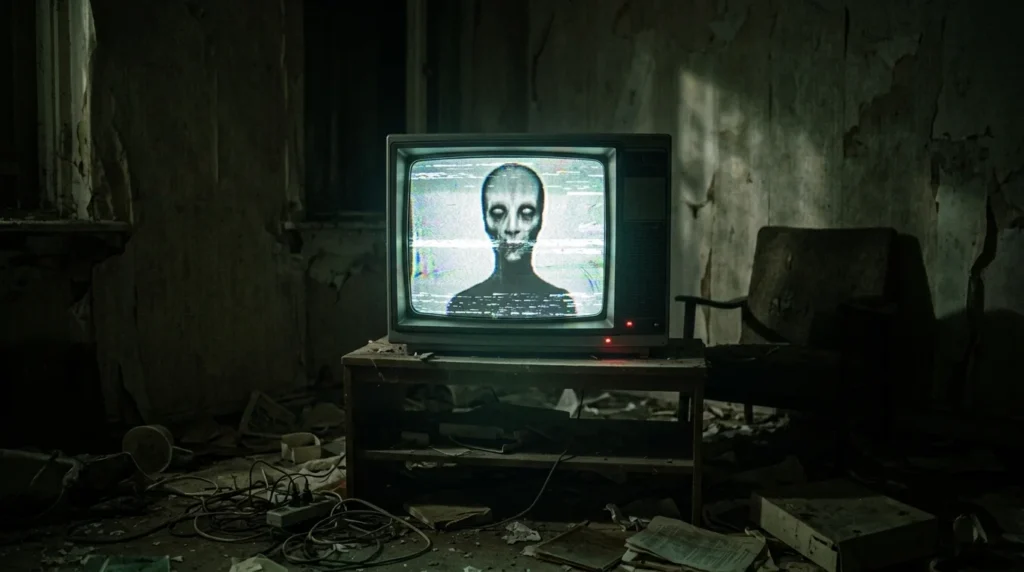
No. The character and the events surrounding Broadcast-813 are part of a fictional analog horror story. Doctor Nowhere created the project as horror entertainment, not as documentation of a real paranormal incident. Its broadcast presentation deliberately imitates authentic archival material.
That distinction matters because analog horror often removes traditional fictional framing. Fake warnings, dates, television graphics, and official-sounding terminology can make stories feel unusually convincing. The realism is part of the storytelling technique.
PHEN-228 also sometimes appears beside other internet horror characters in fan content. Those crossovers do not make the stories factual or necessarily connected. They usually reflect community creativity rather than official shared continuity.
For more pop-culture coverage, readers can browse the MagVibes entertainment archive. The site also covers actors, television, movies, music, and other subjects attracting online interest.
Is PHEN-228 an SCP?
PHEN-228 is not originally an SCP Foundation character. The naming style can create confusion because both formats use letters and numbers. This entity originates in Doctor Nowhere’s horror work.
SCP stories also frequently use institutional records to describe unusual objects or creatures. Analog horror can use similar classification language to make fictional material feel documented. Similar presentation does not establish a canonical connection.
This distinction is useful when reading fan wikis or watching theory videos. Community pages may combine confirmed story details with interpretation. Checking the original short remains the safest way to separate source material from speculation.
What Does the Character Represent?
Doctor Nowhere doesn’t provide a simple, dictionary-style explanation for every symbol. That leaves viewers free to interpret the imagery in several ways. Fear, helplessness, trauma, memory, and religious dread are recurring readings.
One especially effective theme is loss of control. Victims remain conscious while losing ordinary control over their bodies. The entity then becomes frightening because escape appears impossible even without conventional physical pursuit.
Religious imagery adds another interpretive layer. Trumpets and apocalyptic language can evoke ideas associated with judgment or catastrophe. Yet viewers should distinguish those observations from confirmed explanations of the creator’s intent.
That ambiguity has helped sustain discussion long after the initial upload. A monster with every detail explained leaves fewer questions unanswered. PHEN-228 instead gives audiences fragments to keep examining.
How the Character Became an Internet Horror Phenomenon
The short gained attention soon after its March 2024 release. Explanation videos appeared within weeks, while memes and fan artwork circulated across online platforms. The entity’s recognizable face made it especially suitable for visual sharing.
Internet horror characters often gain second lives through community participation. Fans redraw them, create animations, discuss theories, and place them inside games or unrelated fictional scenarios. Those adaptations can eventually reach audiences who never watched the original source.
The character has since appeared in fan-made gaming material and other online projects. Such appearances should not automatically be treated as original canon. They show how internet horror spreads through remix culture.
MagVibes readers interested in broader entertainment personalities can also read the site’s Peter Hermann profile. Another recent feature covers Chynna Phillips and her entertainment career. These pages provide additional routes into MagVibes’ entertainment coverage.
Why Analog Horror Works So Well Online
Analog horror turns familiar media technology into a source of uncertainty. Old television graphics and degraded recordings can suggest that viewers discovered something forgotten. Limited visual information also forces viewers’ imaginations to fill in missing details.
The genre benefits from how people consume media online. A strange screenshot can circulate without context and encourage viewers to investigate its source. Short videos also make horror easy to discuss through reactions and theories.
PHEN-228 demonstrates both strengths. Its design works instantly as an unsettling image, while the surrounding story rewards closer attention. That combination supports both casual sharing and detailed interpretation.
The project also avoids explaining every mystery. Viewers must decide which visual clues matter and which theories seem plausible. That participation turns a short film into a longer community conversation.
PHEN-228 FAQ
Who created PHEN-228?
Doctor Nowhere created the character and released its best-known short in March 2024. The artist’s project uses analog horror techniques and fictional broadcast material. PHEN-228 later became widely discussed across online horror communities.
What is PHEN-228?
PHEN-228 is the designation commonly used for the central entity in the original short. The character appears during a fictional broadcast incident and affects people who perceive it. Its strange face and psychological effects drive much of the story’s horror.
Is PHEN-228 based on a true story?
There is no evidence that the fictional broadcast incident happened in real life. The presentation intentionally resembles documentary or archival footage. That realism is a storytelling device commonly used by analog horror creators.
What is Broadcast-813?
Broadcast-813 is the fictional television interruption described within the short. The event exposes viewers to the disturbing entity and precedes their unusual symptoms. It functions as the central incident around which the narrative develops.
Is PHEN-228 an SCP character?
No, the character originated in Doctor Nowhere’s work, not the SCP Foundation. Its coded name can resemble SCP naming conventions. That similarity can confuse newer viewers.
Why did the character become popular?
Its distinctive face works well in screenshots, memes, thumbnails, and fan artwork. The original story also leaves significant questions unanswered. Those qualities encouraged both visual sharing and ongoing theory discussions.
Why the Story Still Gets People Talking
Doctor Nowhere became a memorable horror figure without a long movie or elaborate franchise. A short broadcast-style presentation established the creature, its effects, and several unresolved mysteries. The format gave audiences enough information to become curious without removing uncertainty.
Its continued online visibility also shows how modern horror develops beyond its original release. Memes, fan art, games, and theory videos can introduce fictional characters to entirely new audiences. That cycle can keep a short independent horror project relevant for years.
For new viewers, the original video remains the clearest starting point. Watch it as fiction, then compare community theories against what the short actually shows. That approach makes the unanswered details more interesting without confusing fan interpretation with established story material.