Have you ever finished a hard swim set and felt drained, even though you thought you ate “well”? Or wondered what to eat before an early-morning practice that won’t sit heavy but will still power your intervals? For swimmers—whether competitive, masters, or fitness-focused—a smart swimmer diet plan can be the difference between plateauing and making real gains in speed, endurance, and recovery.
Why a tailored swimmer diet plan matters
Swimming places unique demands on the body: long aerobic sets, repeated high-intensity sprints, and training in cool, chlorinated water which can mask sweat loss. A nutrition plan for swimmers focuses on timing, the right balance of macronutrients, and practical hydration strategies so you have energy for the pool and recover quickly after sessions.
Core components of a swimmer diet plan
Carbohydrates: the primary fuel
Carbs are your best friend during swim training. Aim to get 50–60% of daily calories from quality carbohydrates—whole grains, fruits, starchy vegetables, and legumes—to maintain glycogen stores. For high-volume days, increase carbs slightly to support endurance and repeated high-intensity efforts.
Protein: repair and rebuild
Protein helps repair muscle microtears and supports adaptation. Target 1.2–1.7 g/kg bodyweight per day depending on training load. Include lean protein sources—chicken, fish, eggs, Greek yogurt, legumes, or a whey/plant protein shake—spread across meals and snacks. A practical tip: consume ~20–30 g protein within 30–60 minutes after a swim session to support recovery.
Fats: energy and hormones
Healthy fats (20–30% of calories) from nuts, seeds, avocados, and olive oil support long-term energy, brain health, and hormone balance. They shouldn’t dominate pre-training meals (keep those lower in fat to avoid a heavy stomach), but are useful in meals between workouts and at dinner.
Sample swimmer diet plan (daily outline)
This sample day fits a swimmer with a morning practice and an afternoon lift or second pool session. Adjust calories to your body size and training volume.
- Pre-morning practice (30–60 min before): Banana + small bowl of oats or a slice of toast with honey.
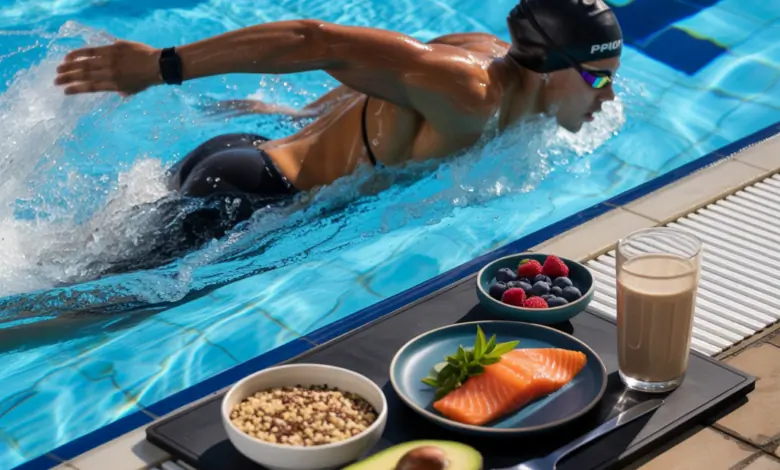
- Post-practice recovery: Smoothie with milk or fortified plant milk, 1 scoop protein, frozen berries, and spinach.
- Mid-morning snack: Greek yogurt + granola or peanut butter on whole-grain crackers.
- Lunch: Grilled chicken or tofu, quinoa or brown rice, mixed veggies, avocado.
- Pre-afternoon session: Rice cake with jam or an energy bar (light, easy to digest).
- Post-training dinner: Salmon or lentil stew, sweet potato, steamed broccoli.
- Evening snack (if needed): Cottage cheese with fruit or a small handful of almonds.
Practical hydration and electrolyte strategy
Swimming can disguise fluid loss. Start hydrated, sip water throughout the day, and consider adding electrolytes on long sessions (>60–90 minutes) or in hot, humid environments. A simple strategy is a sports drink during extended workouts and plenty of fluids with meals. Monitor urine color (pale yellow = good) and bodyweight changes after long workouts to estimate sweat loss.
Workout pairings: nutrition for specific sessions
Endurance day
Focus on higher-carb meals the evening before and a carb-rich breakfast. During long aerobic sets, small sips of a carbohydrate-electrolyte drink every 30–45 minutes can help maintain performance.
Sprint/Speed day
Prioritize easily digestible carbs pre-session and a protein-carb recovery to replenish glycogen and speed muscle repair. Keep fat low right before sprints to avoid gastric discomfort.
Weight room / dryland
Consume a balanced meal with carbs and protein 1.5–2 hours before lifting. A post-lift snack with carbs + protein accelerates recovery and muscle growth.
Healthy lifestyle tips that enhance the swimmer diet plan
- Sleep is non-negotiable: aim for 7–9 hours nightly to support recovery and performance.
- Regularly track training load and adjust calories accordingly—higher mileage weeks need more fuel.
- Plan meals around your pool schedule: prioritize carbs before sessions and protein after.
- Use whole foods first—supplements (whey, creatine, vitamin D, omega-3) can fill gaps but aren’t substitutes for a balanced diet.
- Practice race-day or meet nutrition in training to avoid surprises (what you eat and when matters).
Real-world examples
Case 1: College swimmer on a heavy training block added an extra carb-rich snack post-swim and saw faster recovery between morning and afternoon sessions. Case 2: Masters swimmer reduced heavy fats before morning practice, switched to a fruit+oat pre-workout, and reported less stomach discomfort and improved intensity on intervals.
Swimmer diet plan tips for special situations
Vegetarian or vegan swimmers
Focus on plant-based protein (lentils, beans, tempeh, tofu), combine carbs and protein for recovery, and consider vitamin B12, iron, and omega-3 sources or supplements if needed.
Weight management for competition
Prioritize lean protein and fiber-rich carbs to maintain energy while managing calorie intake. Avoid extreme diets—slow changes are more sustainable and preserve strength in the water.
Frequently Asked Questions
1. How many calories does a swimmer need per day?
Calories vary widely by age, sex, body size, and training volume. Recreational swimmers might need 2,000–2,500 kcal, while competitive swimmers can require 3,000–6,000 kcal on high-volume days. Use hunger cues, training performance, and bodyweight trends to guide adjustments, and consult a registered dietitian for precise plans.
2. What should I eat right after a hard swim?
A combination of carbs and protein works best—aim for ~20–30 g protein plus 0.5–1.0 g/kg bodyweight of carbs in the first hour post-workout. Examples: a smoothie with protein and fruit, turkey sandwich, or yogurt with granola.
3. Are energy gels or sports drinks necessary for swimmers?
Not always. For sessions under an hour, water and a balanced diet may suffice. For workouts longer than 60–90 minutes or very intense sessions, carbohydrate drinks or gels can help sustain intensity and delay fatigue.
Conclusion: start your swimmer diet plan today
A focused swimmer diet plan—built around timing, quality carbs, adequate protein, healthy fats, and smart hydration—can improve training quality, speed up recovery, and boost race-day performance. Start by tracking one week of meals around your pool sessions, make small targeted changes, and test what works for your body. If you want structured sample menus or tailored macros, consider working with a sports dietitian.
Ready to take the next step? Check out our workout routines for swimmers and explore our nutrition guides to build a plan that fits your training. For everyday habits and recovery strategies, visit our wellness tips page.
Train smart, fuel well, and swim stronger.