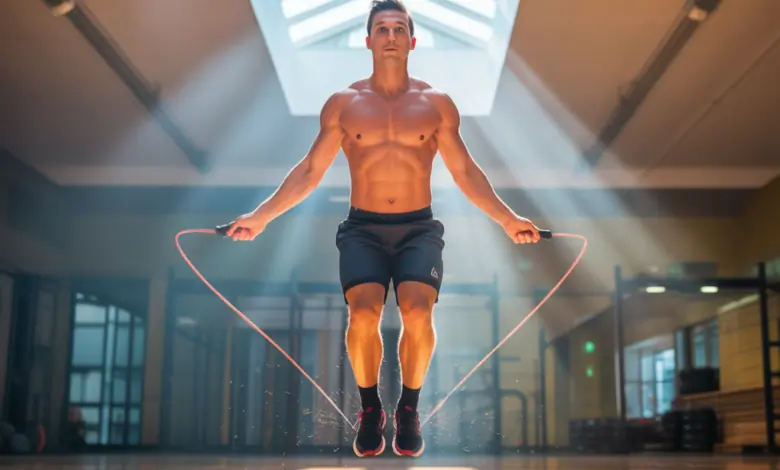
You stand over your rope, handles in hand, and ask yourself: should my jump rope touch the ground before I start skipping? It’s a small detail, but get it wrong and you’ll trip, waste energy, and stall your progress. Whether you’re a total beginner or working toward double-unders, understanding rope length and how it interacts with the floor will make your skipping smoother, safer, and far more effective.
Should my jump rope touch the ground?
Short answer: yes — but only lightly. The classic rule is to stand with one foot on the center of the rope and pull the handles straight up. The handles should reach roughly to your armpits. If the rope just grazes the floor when the handles are at armpit height, your rope length is likely correct. If it pools on the floor or forms a big loop, it’s too long; if the handles don’t reach your armpits, it’s too short.
This “armpit method” is practical for most people and most styles of skipping. It ensures the rope has enough clearance for clean turns while minimizing slack that causes tripping. For performance work like double-unders you may prefer a slightly shorter rope to allow faster rotations, but that’s a small tweak from this baseline.
How to measure your jump rope length (step-by-step)
- Stand on the midpoint of the rope with one foot.
- Pull the handles straight up against your body — no slack, wrists together.
- Measure where the ends (handles) reach. They should touch about the armpit or slightly below.
- If you don’t have a rope handy, use a measuring tape: a common guideline is rope length ≈ your height × 1.1 (varies by brand and style).
Jump rope length guide by height (approximate):
- Under 4’6″ (137 cm): 7 ft (213 cm)
- 4’6″–5’0″ (137–152 cm): 8 ft (244 cm)
- 5’0″–5’6″ (152–168 cm): 9 ft (274 cm)
- 5’6″–6’0″ (168–183 cm): 10 ft (305 cm)
- Over 6’0″ (183+ cm): 11 ft (335 cm) or adjustable rope
These are ballpark figures—adjust to comfort and skill level. Many modern ropes are adjustable so you can fine-tune length easily.
What happens if your rope is too long or too short?
- Too long: more tripping, slower rotations, wasted energy in pulling the rope, poor technique reinforcement.
- Too short: cropped jumps, awkward arm mechanics, harder to time rotations, difficulty with complex moves.
- Perfect length: efficient jumps, better rhythm, easier progressions (single unders → double-unders → tricks).
Practical tips to improve your jump rope technique
Getting the rope length right is step one. Pair it with technique and environment adjustments to avoid injury and see progress faster.
- Warm up: 3–5 minutes of dynamic movements (leg swings, ankle mobility) before skipping.
- Use your wrists, not your arms: keep elbows close and rotate from the wrist for faster, controlled spins.
- Land softly: light, quiet landings reduce impact on knees and ankles. Think spring, not stomp.
- Choose the right surface: wood, rubber, or mat is kinder to joints than concrete.
- Wear proper shoes: supportive sneakers with cushioning and a low profile aid quick foot turnover.
- Progress gradually: increase duration and complexity by ~10% per week to avoid overuse injuries.
Jump rope workouts and variations
When your rope length is dialed in, try these sample sessions. Each includes a warm-up and cool-down.
Beginner — 10-minute starter
- Warm-up: 3 minutes brisk walk + ankle circles
- Workout: 30 seconds jump, 30 seconds rest × 8 rounds (alternating basic bounce and high-knees)
- Cool-down: calf and quad stretches
Fat-burning HIIT — 20 minutes
- Warm-up: 5 minutes dynamic
- Workout: 40 seconds work/20 seconds rest × 10 rounds (mix single unders, double-unders, and side swings)
- Cool-down: foam rolling and stretching
Skill focus — Double-under practice (15 minutes)
- Warm-up: 5 minutes easy skipping
- Drills: single-skip → two quick wrists-only turns → attempt double-under; repeat 10 sets
- Cool-down: mobility for shoulders and calves
Combine jump rope intervals with resistance exercises from your favorite workout routines for balanced conditioning.
Healthy lifestyle tips to support your skipping progress
- Nutrition matters: eat balanced meals with sufficient protein and carbs to fuel and recover—see our nutrition guides for sample meal plans.
- Sleep and recovery: 7–9 hours of quality sleep helps muscle repair and skill learning.
- Cross-train: add mobility work and strength training to build the ankle, hip, and core stability needed for advanced skipping.
- Mindset: focus on consistency over perfection. Small daily habits yield big fitness gains.
Frequently Asked Questions
1. How often should my jump rope touch the ground during practice?
The rope should only graze or lightly touch the floor between rotations—this is normal. It shouldn’t pool or sit heavily on the ground. The brief contact is part of efficient rotation and timing.
2. Is there a different rope length for double-unders?
Many athletes shorten the rope slightly (1–2 inches) from their armpit measurement to speed up rotations for double-unders. Start with the armpit rule, then trim a little if you find the rope too slow for quick turns.
3. Will jumping rope hurt my knees?
When done with proper technique (soft landings, correct rope length, good shoes, appropriate surface), jumping rope is low-impact and knee-friendly for most people. If you have a pre-existing knee condition, check with a healthcare professional and start slowly.
Conclusion — now measure your rope and start skipping smarter
So, should my jump rope touch the ground? Yes — but just a light graze when the handles reach your armpits. Correct rope length sets the foundation for clean technique, fewer trip-ups, and faster progress toward fitness goals. Measure your rope, make small adjustments, and try the sample workouts above. For more tips that complement your skipping routine, explore our wellness tips and other guides on this site.
Ready to skip with confidence? Measure your rope, try today’s beginner workout, and tell us how it goes in the comments—or sign up to get weekly workouts and nutrition advice straight to your inbox.