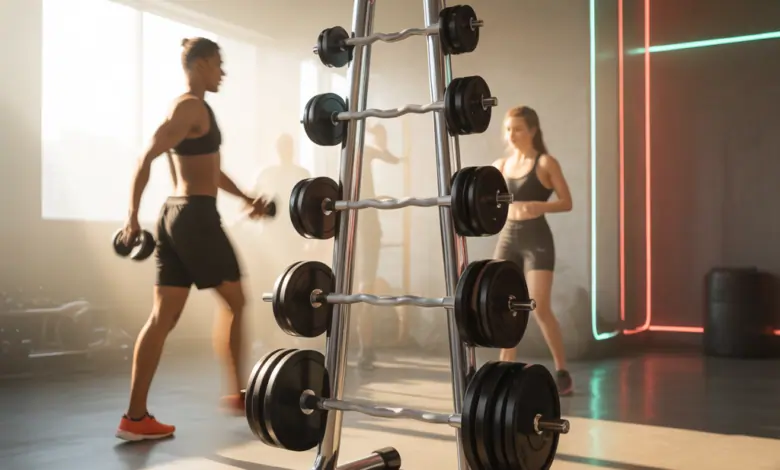
Ever squeezed a tough workout into a crowded corner of your living room, only to trip over loose dumbbells afterwards? Or stared at a cluttered garage and wished your home gym felt more like a pro studio? If you’re serious about training at home, choosing the right rack for dumbbell weights for home gym storage can transform your space—improving safety, aesthetics, and the efficiency of every session.
Why a Dedicated Dumbbell Rack Matters
A simple rack does more than keep plates and dumbbells off the floor. It protects your flooring, makes your training area tidy and motivating, and speeds transitions between sets. For anyone building a compact home gym—whether in an apartment, basement, or spare room—an organized setup encourages consistency and progress.
Real-world example
Sam, a busy parent and software engineer, upgraded from a loose-weights pile to a two-tier dumbbell rack. The result: faster 30-minute workouts, fewer stubbed toes, and a home gym that looks intentional—so he’s more likely to stick to his routine.
Choosing the Right Rack for Dumbbell Weights for Home Gym
Not all racks are created equal. Match your purchase to your goals, space, and the type of dumbbells you own.
- Measure first: Calculate your available floor space and ceiling height. Consider clearance for moving weights safely.
- Match the type: Fixed dumbbells, hex dumbbells, and adjustable dumbbells may require different racks—a universal or multi-style rack is useful if you change equipment.
- Capacity & weight rating: Check the max weight each tier can hold. A heavy-duty dumbbell storage rack for small spaces should still support the combined weight of the heaviest set.
- Footprint vs. accessibility: Vertical racks save floor space but may place heavier dumbbells higher. Horizontal or two-tier racks are easier for quick loading and unloading.
- Materials: Steel frames with rubberized cradles reduce noise and protect handles. Powder-coated finishes resist rust in garages or basements.
- Stability and safety: Look for anti-tip designs, bolt-down options, and non-slip feet.
Types of racks and who they suit
- Two-tier horizontal rack: Best for home gyms with several fixed-weight sets; easy access for all ages.
- Vertical rack: Ideal for tight spaces and multi-weight sets; choose models with low center of gravity.
- Adjustable-dumbbell stand: Designed for modern adjustable dumbbells—compact and streamlined.
- Wall-mounted racks: Save floor space but require sturdy wall anchors and careful placement.
Key Features to Look For (and Safety Tips)
- Weight capacity: Overestimate your future needs to avoid buying twice.
- Protective cradles: Rubber or plastic-lined holders prevent damage to metal coatings and reduce noise.
- Spacing: Racks with enough gap between tiers let you pick up dumbbells without hitting knuckles or banging on the frame.
- Assembly & warranty: Easy-to-follow instructions and a solid warranty add long-term value.
Safety tip: always return weights to the rack immediately after use. This builds habit, reduces clutter, and protects family members and pets.
Workout Variations You Can Do with Dumbbells
With a complete set neatly organized on a rack, you’re ready for full-body programming. Here are practical routines and variations to maximize your equipment.
Quick 20–30 Minute Full-Body Circuit
- Goblet squats — 3 sets of 10–12
- Single-arm dumbbell rows — 3 sets of 8–10 per side
- Dumbbell Romanian deadlifts — 3 sets of 10
- Standing shoulder press — 3 sets of 8–10
- Alternating dumbbell lunges — 2 sets of 12 per leg
- Plank rows (renegade rows) — 3 sets of 8 per side
Hypertrophy and Progressive Overload Tips
Prioritize progressive overload: increase reps, weight, or reduce rest every 2–3 weeks. Use drop sets or tempo changes (3-second eccentric) to stimulate growth without buying heavier dumbbells right away.
Space-conscious home gym workouts
In small spaces you can still train effectively—use your rack’s vertical storage to free up floor area for lunges, kettlebell swings (if you have a kettlebell), and core circuits that need only a small footprint.
Maintenance, Lifestyle Tips, and Longevity
Caring for your rack and weights keeps them safe and extends lifespan.
- Wipe down handles and rack cradles after sweaty sessions to prevent rust and bacteria.
- Inspect bolts and welds every few months; tighten hardware as needed.
- Place a mat under the rack to protect flooring and reduce noise.
- Pair storage with a schedule—treat your weights like tools: organized and ready to use.
Nutrition and recovery matter as much as the gear. Pair structured workouts with balanced eating and sleep. Explore our nutrition guides for simple meal strategies, and check our wellness tips for recovery practices that keep you training consistently.
Frequently Asked Questions
1. How much space do I need for a dumbbell rack?
Allow at least the rack’s footprint plus a 2–3 foot clearance in front for safe lifting. For a two-tier horizontal rack expect ~4–6 feet width; vertical racks can be narrower but may require extra front clearance.
2. Can I use a garage rack for indoor home gym use?
Yes, if the rack is in good condition. Choose rust-resistant finishes for garages and consider a mat beneath to protect concrete and reduce vibration. Ensure the rack is stable on an uneven floor—shims or leveling feet help.
3. Are adjustable dumbbells compatible with regular racks?
Some are, but many adjustable dumbbells have unique shapes and cradles—look for stands designed for your model or universal adjustable-dumbbell stands to ensure secure storage and ease of use.
Conclusion — Invest in a Rack for Dumbbell Weights for Home Gym and Level Up Your Training
Buying the right rack for dumbbell weights for home gym storage is a small investment with a big payoff: safer workouts, faster sessions, and a more inspiring space to train. Whether you prefer a compact adjustable-dumbbell stand or a heavy-duty two-tier rack, choose durability, stability, and the right footprint for your room. Ready to upgrade? Browse recommended setups, plan your layout, and check out our workout routines to put your organized home gym to immediate use.
Take action today—measure your space, list the dumbbells you’ll store, and pick a rack that fits your future fitness goals. Your next PR is waiting on a tidy shelf.