Have you ever imagined standing on the shoreline, heart racing, watching the skyline light up as you prepare to dive in? If the thought of crossing the finish line at the NYC triathlon in Big Apple race sends a thrill through you, you’re not alone — and you can absolutely train for it. Whether you’re aiming to finish strong or chase a personal best, this guide breaks down the plan, workouts, and lifestyle habits that turn ambition into race-day success.
Why the NYC Triathlon in Big Apple Race Is Unique
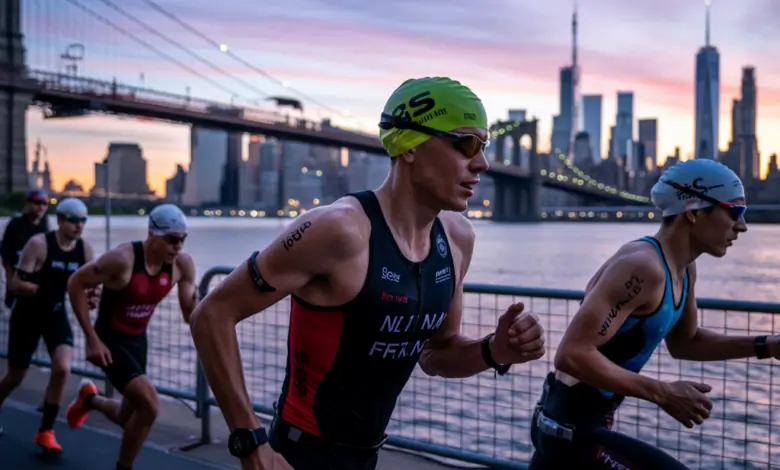
The New York triathlon blends urban energy with endurance sport: open-water swims, fast city bike sections, and runs with cheering crowds. That mix demands specific preparation — not just aerobic fitness, but open-water confidence, bike handling skills, and efficient brick workouts to make transitions smooth.
Training Foundations: Swim, Bike, Run
Swim: Open-Water Confidence
Focus on sighting, drafting, and waves: practice in open water when possible. Your weekly swim work should include a long steady set (endurance), intervals (speed), and a drill set (technique).
- Example set: 400 warm-up, 8×100 at race pace with 20s rest, 10×50 drills/focus on catch, 200 cool-down.
- Drills: catch-up, fingertip drag, and bilateral breathing to handle chaotic starts.
Bike: Power, Cadence, and City Handling
Combine steady endurance rides, threshold intervals, and skills sessions for cornering and pack riding. Simulate course conditions: short, intense efforts for traffic lights and bridges, and longer tempo stretches for flats.
- Interval example: 5×5 minutes at threshold with 3 minutes easy spinning between sets.
- Skills: single-leg drills, cadence ladders, and quick accelerations out of corners.
Run: Brick Workouts and Economy
Bricks train your legs to handle the bike-to-run transition. Include one weekly brick: 45–60 minute bike followed by 20–30 minute run at race pace. Add strides and interval sessions for speed and leg turnover.
Sample 8-Week Training Block for NYC Triathlon in Big Apple Race
This progression is beginner-friendly with scaling options for experienced triathletes.
- Weeks 1–4: Build base. 3 swims, 3 bikes, 3 runs per week. Include one long session per discipline and one brick per week.
- Weeks 5–7: Add intensity. Introduce threshold intervals on the bike and tempo runs. Increase brick length.
- Week 8: Taper. Reduce volume by 40–60% while keeping short intensity to stay sharp.
Cross-Training, Strength, and Recovery
Strong, balanced muscles reduce injury risk and improve efficiency.
Strength Workouts
- 2x per week: compound lifts (deadlifts, squats), single-leg work (lunges, step-ups), core stability (planks, Pallof press).
- Short, focused sessions (20–30 minutes) are enough — prioritize quality over quantity.
Flexibility and Mobility
Incorporate dynamic warm-ups and post-workout mobility: hip openers, thoracic rotations, and calf/hamstring stretches for runners and cyclists.
Race-Day Strategy for the Big Apple
Execution beats pure fitness on race day. Plan transitions, nutrition, and pacing in advance.
- Pre-race: short warm-up swim and bike spin; rehearse transitions at home.
- Nutrition: practice your race-day fueling during long sessions. Aim for 200–300 kcal per hour on the bike depending on intensity and body weight. Use gels, bars, or real-food options you’ve tested.
- Pacing: start conservatively on the swim and first 10–15 minutes of the bike to avoid early red-line efforts.
Practical Fitness Tips and Workout Variations
Keep training engaging and effective with variety:
- Swim alternatives: pool sets if open water isn’t available, or use a swim tether for stroke work.
- Indoor bike option: structured trainer workouts mimic threshold efforts and allow controlled intervals.
- Run off the bike: shorter bricks (10–15 minutes) twice a week for beginners; longer bricks for experienced racers.
- Active recovery: yoga, easy swims, and low-impact cycling help circulation and reduce soreness.
Healthy Lifestyle Habits to Support Training
Consistent results come from habits outside of workouts.
- Sleep: aim for 7–9 hours, prioritize consistency. Sleep is when adaptations happen.
- Hydration: daily habits plus electrolyte intake during long sessions in heat.
- Nutrition: focus on whole-food carbohydrates, lean proteins, healthy fats, and timing around workouts. Consider consulting a sports-focused nutrition plan in the nutrition guides section.
- Mental prep: visualization, race rehearsals, and breathing techniques reduce anxiety and improve focus.
Gear and Logistics Checklist
- Swim: wetsuit (if allowed and desired), goggles with backup, swim cap.
- Bike: tuned bike, helmet, spare tube, nutrition mounted in an accessible spot.
- Run: comfortable race shoes broken in during training, easy-to-remove clothing for quick transitions.
- Pre-race: layout transition area the night before and label gear for speed.
Real-World Examples That Motivate
Case 1: Maria, a busy professional, trained 6–8 hours weekly with two focused bricks and strength sessions. She finished feeling strong and used race-day pacing to negative-split the run.
Case 2: Tony, a masters athlete, prioritized mobility and recovery along with threshold bike work; he improved his bike split by practicing longer tempo efforts on his trainer.
Frequently Asked Questions
Q1: What distance is the NYC triathlon in Big Apple race?
A: Distances vary by event category. Confirm the specific race format you’re entering (sprint, Olympic, or other). Train for the event distance and practice transitions and pacing accordingly.
Q2: How far in advance should I start training?
A: For beginners, a 12–20 week plan is common. For athletes with a base, 8–12 weeks of focused, structured training can be enough to sharpen for a sprint or Olympic distance.
Q3: Can I balance triathlon training with a full-time job?
A: Yes. Prioritize key sessions (one quality swim, bike, run, and one brick per week), keep some workouts short and intense, and leverage early-morning sessions. Effective planning and recovery are essential—see our workout routines for time-efficient plans.
Conclusion: Take on the NYC Triathlon in Big Apple Race with Confidence
Training for the NYC triathlon in Big Apple race is as much about smart preparation and consistency as it is about raw fitness. Build specificity into your swim, bike, and run, prioritize recovery and nutrition, and practice race-day routines until they feel automatic. Ready to get started? Check out our tailored workout routines, explore nutrition in the nutrition guides, and track a 8–12 week plan that fits your life. Lace up, dive in, and make the Big Apple your next finish line.
Call to action: Sign up for a training plan today or bookmark this guide to start your structured journey toward race day — the city is waiting.
Internal pages: wellness tips | workout routines | nutrition guides