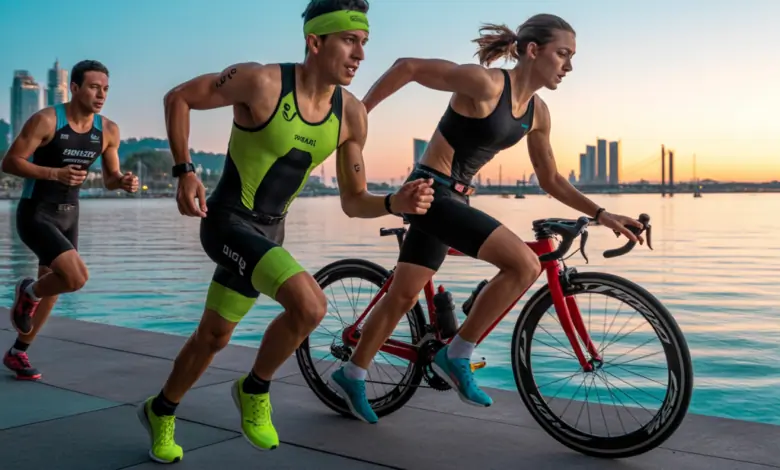
Ever stood on the shore watching swimmers cut through the water and thought, “Could I do that?” If the Mission Bay triathlon is on your bucket list — whether you’re a first-timer eyeing the swim start or a seasoned racer chasing a PR — this Mission Bay triathlon guide will get you race-ready with confidence.
Why Mission Bay is a Great Race for Every Level
Mission Bay in San Diego is known for its flat bike course, calm waters, and scenic run route, making it one of the most beginner-friendly triathlons around. That makes it ideal for age-group competitors, sprint-distance rookies, and athletes looking to sharpen open water skills. In this guide you’ll find training tips, workout variations, nutrition advice, and real-world examples to help you prepare smartly.
Plan Overview: How to Approach Your Training
Whether you have 8 weeks or 16 weeks, structure matters. Build a weekly plan with a balance of swim, bike, run, strength, and recovery. Below is a flexible 12-week outline you can adapt:
- Weeks 1–4: Base building — focus on technique and easy volume
- Weeks 5–8: Intensity — introduce intervals and brick workouts
- Weeks 9–11: Race simulation — practice transitions and race pace
- Week 12: Taper — reduce volume, keep sharp with short intensity
Sample Weekly Microcycle (Beginner)
- Monday: Swim technique (45 minutes) + core work
- Tuesday: Bike easy (45–60 minutes) with cadence drills
- Wednesday: Run intervals (30–40 minutes) + mobility
- Thursday: Brick — 30 min bike + 15 min run off the bike
- Friday: Swim endurance (40 minutes) + light strength
- Saturday: Long bike or combined long workout
- Sunday: Easy recovery run or rest
Swim: Open Water Strategy for Mission Bay
Open water swimming can feel intimidating, but Mission Bay’s sheltered conditions are forgiving. Prioritize sighting, drafting, and calm pacing.
Key Swim Workouts
- Technique session: 10–15 minutes warm-up, drills (catch, fingertip drag), short intervals focusing on form
- Intervals: 8 x 100m at threshold with 20s rest to build speed
- Open water practice: 20–40 minutes continuous swimming to simulate race conditions
Real-world tip: Practice bilateral breathing and sight every 6–8 strokes to stay on course without killing your rhythm. If you’re nervous about group starts, practice mass-starts with local swim groups or simulate it in a pool by starting in lanes at the same time.
Bike: Flat Course Power and Smart Pacing
Mission Bay’s relatively flat bike course rewards steady power and clean aerodynamic positioning. Focus on cadence, sustained efforts, and bike handling.
Bike Workout Variations
- Sweet-spot intervals: 3 x 12 minutes at 88–94% of FTP with 6 minutes recovery
- Speed work: 10 x 1 minute hard, 2 minutes easy to build fast-twitch
- Long ride: 60–90 minutes at endurance pace — practice nutrition and steady fueling
Practical tip: Do at least two brick workouts in the final month to train the legs for the bike-to-run shift. Example: 45 minutes steady bike immediately followed by a 20-minute run at goal race pace.
Run: Turnover, Form, and Race-Pace Work
The Mission Bay run favors efficient turnover and pacing. Training should include short speed work, tempo runs, and race-pace intervals.
Run Session Ideas
- Tempo run: 20–30 minutes at moderately hard pace to raise lactate threshold
- Intervals: 6 x 400m at 5K pace with 90s rest
- Long run: 45–75 minutes easy to build endurance
Real-world example: Finish a brick with 3 x 1 mile at target triathlon run pace to practice discipline and mental toughness under fatigue.
Strength, Mobility, and Recovery
Don’t skip strength training. Two 20–30 minute sessions per week focused on posterior chain, core stability, and single-leg strength reduce injury risk and improve power transfer.
- Exercises: deadlifts, single-leg Romanian deadlifts, planks, glute bridges, and step-ups
- Mobility: hip openers, thoracic rotations, and ankle mobility before key workouts
- Recovery: sleep, foam rolling, and active recovery rides maintain freshness
Nutrition and Race-Day Fueling
Good fueling is as important as training. Practice your race-day nutrition in training so you know what sits well.
- Before the race: a carbohydrate-focused breakfast 2–3 hours prior (oatmeal, banana, toast)
- During the bike: 30–60g carbs per hour for sprint/olympic efforts, adjust based on duration
- Hydration: drink to thirst, but start races well-hydrated; consider electrolytes if warm
Tip: Use gel packets or real-food alternatives you’ve trained with. Nothing new on race day.
Race Day Logistics: Transition, Gear, and Mindset
Transitions are where you can shave minutes. Organize your transition area and rehearse the sequence.
- Set up: Shoes on the bike, helmet clip, run belt visible, sunglasses tucked inside
- Practice: Simulate T1 and T2 at least twice during training
- Mental prep: Visualize the course, prepare for calm pacing on the swim, and remind yourself to smile — nerves are normal
Gear checklist: tri suit, well-fitted goggles, bike shoes, helmet, race belt, nutrition, and a towel. If water temps are chilly, confirm wetsuit allowances before race day.
Mission Bay Triathlon Guide: Final Preparations
In the final two weeks, reduce volume, keep short sharp efforts, finalize nutrition and kit, and plan logistics like parking and wake-up time. Walk the transition area if possible to visualize where you’ll rack your bike and how you’ll move through T1 and T2.
Frequently Asked Questions
Do I need a wetsuit for Mission Bay?
It depends on water temperature and race rules. Mission Bay often has mild conditions, but wetsuit use is a personal comfort and performance decision. Practice open water swims in a wetsuit beforehand to ensure proper fit and mobility.
How should beginners pace themselves for a sprint-distance Mission Bay triathlon?
Start conservatively on the swim and bike — avoid going out too hard in the first 10–15 minutes. Aim to run at a sustainable effort off the bike. Practicing brick workouts helps find the right pacing strategy for your fitness level.
What are simple transition tips for faster time?
Lay out gear in order of use, zip ties or elastic laces can speed shoe transitions, and practice quick bottle handoffs. Keep a checklist the night before to avoid last-minute stress.
Conclusion — Ready to Race Mission Bay?
This Mission Bay triathlon guide gives you a practical blueprint: balanced training, swim confidence, bike efficiency, run discipline, and transition mastery. Start with a realistic training plan, practice race-specific drills like brick workouts and open water sighting, and dial in nutrition during long sessions. If you’re ready to take the next step, explore our workout routines and nutrition guides for detailed plans, or check out more wellness tips to support sleep and recovery.
Sign up for a local swim clinic, book a practice open-water session, and put your training plan on the calendar — your Mission Bay race day is closer than you think. Ready to get started? Lace up, hit the water, and make this race your best yet.