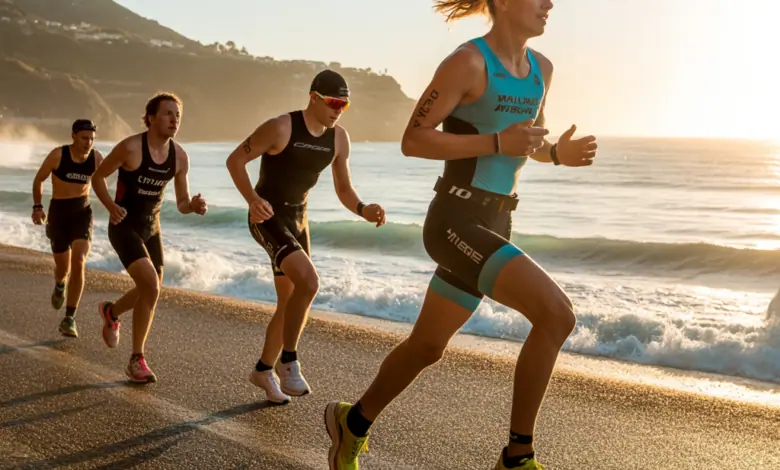
Have you ever stood on the shoreline, wetsuit in hand, staring at the Pacific with a mix of excitement and nerves and wondered, “Can I really finish a coastal triathlon?” If that sounds familiar, you’re not alone. Preparing for the malibu triathlon coastal challange is as much about smart planning and mental grit as it is about fitness. This guide walks you through realistic workouts, nutrition tips, and race-day strategies so you cross that finish line with confidence.
Why the Malibu Triathlon Coastal Challange Is Unique
The Malibu course blends open-water swim conditions, rolling bike terrain, and scenic coastal runs — which means you’ll face waves, wind, and variable elevation. That makes race-specific training essential. Instead of only logging miles, you’ll practice sighting, drafting awareness, hill repeats, and transitions to mimic real race stressors.
Preparing for the Malibu Triathlon Coastal Challange: Training Essentials
Focus on three pillars: swim technique and sea confidence, bike power and handling, and run endurance and pacing. Add strength work and mobility to reduce injury risk, and include recovery blocks so you adapt rather than fatigue.
Swimming: Open-Water Skills and Confidence
- Practice sighting every 6–10 strokes so you don’t swim extra distance during the race.
- Do interval sets (e.g., 10 x 200m at race pace with 30–45s rest) and one weekly open-water session to get used to waves and pack swimming.
- Include bilateral breathing drills and some anaerobic sprint sets to handle surges off the start or at turn buoys.
Cycling: Power, Handling, and Hills
- Ride at least one long bike session per week (60–90+ minutes) with steady efforts at your target race power or perceived effort.
- Incorporate hill repeats and group rides to work on climbing and drafting etiquette — key on windy Malibu roads.
- Practice bike handling and emergency braking; consider a skills session focusing on cornering and pack riding if you’re newer to group situations.
Running: Brick Workouts and Pacing
- Run off the bike (brick workouts) weekly: 20–45 minutes at race effort immediately after a hard bike set to train your legs to transition.
- Mix long runs (steady state), tempo efforts, and short intervals to build speed and endurance.
- Practice race nutrition and shoe choices during bricks so nothing surprises you on event day.
Sample 8-Week Plan (Beginner to Intermediate)
Below is a simplified week to illustrate structure. Scale duration/intensity to match your fitness.
- Monday: Rest or mobility + light swim technique (30–45 min)
- Tuesday: Bike intervals (45–60 min) + 10–15 min easy run
- Wednesday: Swim intervals (45–60 min) + strength training (30 min)
- Thursday: Tempo run (30–45 min) + short spin (30 min)
- Friday: Open-water swim or swim set (45–60 min)
- Saturday: Long ride (60–120 min) + 20–30 min brick run
- Sunday: Long run (45–75 min) or recovery ride + mobility
Nutrition, Hydration, and Recovery Strategies
Training volume is only part of the equation. Fueling and recovery determine how effectively you adapt.
Daily Nutrition
- Prioritize whole foods: lean proteins, complex carbs, healthy fats, and colorful vegetables.
- Time carbs around key workouts (pre- and post-session) to support performance and recovery.
- Use electrolyte drinks during longer sessions in warm coastal weather to avoid cramping.
Race Nutrition
Practice on-bike and run fueling during long sessions. Consider 30–60 grams of carbs per hour for rides longer than 60 minutes and small gels or chews during the run depending on your tolerance.
Recovery
- Prioritize sleep (7–9 hours) and schedule easy days after heavy sessions.
- Use active recovery (easy swims, walks, foam rolling) to improve circulation without adding stress.
- Include one complete rest day weekly and a down week every 3–4 weeks to refresh.
Race-Day Strategies for the Malibu Course
Arrive early, do a short warm-up swim, and check conditions. If the ocean looks choppy, start wider to avoid the pack or pick a later wave that matches your pace. During the bike, stay aero but controlled; crosswinds are common on coastal roads. On the run, start conservatively — you’ll catch others who went out too hard.
Transition Tips
- Set up a tidy transition area with shoes, helmet, sunglasses, and nutrition in the same order every race.
- Practice quick wetsuit removal and mounting skills at least twice pre-race to shave off nervous seconds.
Gear and Logistics
Choose a wetsuit that fits snugly but allows full shoulder movement. Aero helmets help on flat stretches, while a reliable road or time-trial bike with properly inflated tires reduces rolling resistance. Don’t forget a race-specific checklist the night before: bib, chip, goggles, towel, and post-race layers.
Frequently Asked Questions
1. How far in advance should I start training for the Malibu Triathlon Coastal Challange?
For beginners, 12–16 weeks of consistent training is ideal. Intermediate athletes can prepare in 8–12 weeks with focused, quality sessions. Start earlier if you need to build base fitness or swimming confidence.
2. What should I eat the night before and the morning of the race?
The night before, prioritize a familiar, carb-focused meal with some lean protein and vegetables (e.g., pasta with grilled chicken and veggies). Race morning, eat a light, high-carb breakfast 2–3 hours before start (oatmeal, toast with peanut butter, banana) and top up with a small snack 30–60 minutes prior if needed.
3. Can I train for the Malibu tri with limited open-water access?
Yes. Use regular pool sessions to build speed and endurance, and travel to open water at least every 1–2 weeks if possible. Practice breathing, sighting, and group starts when you can. Wetsuit swims in a calm bay or lake are good substitutes if ocean access is limited.
Conclusion — Take On the Malibu Triathlon Coastal Challange
Whether you’re chasing a personal best or aiming to finish your first coastal tri, the malibu triathlon coastal challange is an achievable and unforgettable goal with the right plan. Start by building consistent swim, bike, and run habits, nail race nutrition, and practice transitions. Ready to get structured? Check out our workout routines for triathletes, review our nutrition guides for race fueling, and browse practical wellness tips to stay injury-free. Sign up for the race, pick a 12-week plan, and commit — the Pacific awaits.