Ever stood in front of your fridge after a sweaty gym session, staring at a limp bag of greens and thinking, “I wish my salad tasted as good as the effort I just put in”? What if a simple, homemade dressing could turn that bland post-workout plate into a nutrient-packed, crave-worthy meal in under five minutes? This lemon vinaigrette recipe does exactly that — bright, balanced, and perfect for fueling recovery and weight-loss goals without the processed sugars and additives.
Simple Lemon Vinaigrette Recipe (Ready in 5 Minutes)
This easy lemon vinaigrette recipe is bright, versatile, and a great staple for meal prep. It’s a healthy lemon salad dressing that uses whole-food ingredients and healthy fats to help you feel full and satisfied.
Ingredients
- 1/4 cup fresh lemon juice (about 1–2 lemons)
- 3/4 cup extra-virgin olive oil
- 1 tablespoon Dijon mustard
- 1 clove garlic, minced
- 1 teaspoon honey or maple syrup (optional, for balance)
- Salt and freshly ground black pepper to taste
- 1 tablespoon chopped fresh herbs (parsley, basil, or dill) — optional
Instructions
- In a small bowl or jar, combine lemon juice, Dijon mustard, minced garlic, and honey (if using).
- Slowly whisk in the olive oil until the dressing emulsifies, or shake vigorously in a jar with a tight lid.
- Season with salt and pepper. Stir in fresh herbs if desired.
- Taste and adjust: add more lemon for tang, more olive oil for richness, or a pinch more salt for depth.
Variations & Substitutions
- Make a creamy lemon vinaigrette: add 2 tablespoons Greek yogurt or 1 tablespoon tahini for a richer texture.
- Lower-calorie swap: use 1/3 cup water + 1/2 cup olive oil substitute (like avocado oil) to reduce calories slightly while keeping healthy fats.
- Herb-forward: add basil for an Italian twist, or dill for pairing with roasted fish.
- Spicy kick: a pinch of red pepper flakes or a teaspoon of harissa blends well with lemon’s brightness.
Why This Lemon Vinaigrette Recipe Belongs in Your Meal Prep
Healthy dressings can be the difference between a salad that satisfies and one that leaves you snacking later. This homemade lemon vinaigrette is full of monounsaturated fats from olive oil, which support satiety and heart health. Unlike many store-bought options, it contains no hidden sugars, preservatives, or artificial flavors. Bonus: the acidity from lemon juice helps enhance nutrient absorption (especially iron from leafy greens) — a tiny advantage for athletes and active adults who want every meal to count.
Nutrition Benefits & Fitness-Friendly Tips
Here’s how this lemon dressing contributes to your fitness and wellness routine:
- Supports recovery: Pair with protein-rich foods — grilled chicken, canned tuna, tempeh, or a chickpea salad — to aid muscle repair.
- Better absorption: Fat-soluble vitamins (A, D, E, K) in vegetables are better absorbed when eaten with healthy fats like olive oil.
- Portion mindful: Use 1–2 tablespoons per serving to control calories while still getting flavor and fat for satiety.
Practical Fitness Tip
Make a batch on Sunday and portion into 2-tablespoon containers for the week. Pair with hearty bases — mixed greens, roasted sweet potato, quinoa, or farro — and add a palm-sized portion of protein after strength sessions to replenish glycogen and support muscle synthesis.
How to Pair This Dressing with Workouts & Meal Plans
Real-world examples make meal planning simple. Here are sample pairings and workout variations that align with performance and recovery:
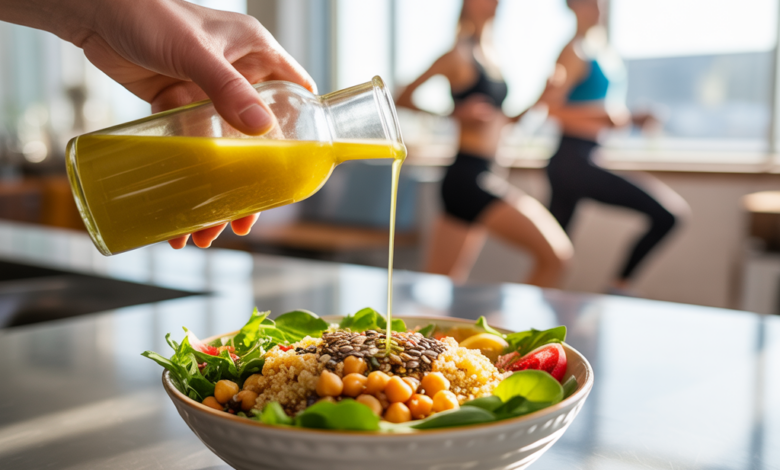
- HIIT Day: Quick, intense session in the morning? Recharge with a quinoa bowl: quinoa + roasted beets + arugula + chickpeas + lemon vinaigrette. The carbs restore glycogen; the dressing helps with appetite control.
- Strength Day: After heavy lifts, try a grilled chicken and mixed greens salad with whole-grain croutons and this lemon vinaigrette. Protein plus healthy fats speeds recovery.
- Low-Intensity/Cardio: An easy yoga or steady-state run pairs well with a citrusy salad of spinach, avocado, hemp seeds, and lemon dressing to keep energy steady.
For specific workout plans that integrate nutrition timing and meal ideas, check out our workout routines and nutrition guides pages.
Meal Prep and Storage Tips
- Store dressing in a sealed jar in the fridge for up to 7–10 days. Olive oil may become cloudy when chilled; let come to room temperature before using.
- Shake well before each use — emulsions separate naturally.
- Scale recipe up easily for weekly meal prep. Keep dressings in 2–3 small bottles to prevent cross-contamination with salads containing raw proteins.
Frequently Asked Questions
1. Is lemon vinaigrette healthy?
Yes — when made with quality olive oil and minimal sweeteners, homemade lemon vinaigrette is a healthy salad dressing option. It contains heart-healthy monounsaturated fats and helps with nutrient absorption from vegetables.
2. Can I use bottled lemon juice instead of fresh lemons?
Fresh lemon juice provides brighter flavor and more vitamin C, but bottled lemon juice can be used in a pinch. Taste and adjust acidity; bottled juice may be slightly different in flavor and strength.
3. How long does homemade lemon vinaigrette last in the fridge?
Stored in a clean, airtight jar, this vinaigrette keeps for about 7–10 days. If it smells off or the garlic has been in too long, discard and make a fresh batch. For safety, add garlic right before serving if you plan to store the dressing long term.
Conclusion — Make This Lemon Vinaigrette Recipe Part of Your Healthy Routine
This lemon vinaigrette recipe is a quick, flavorful way to upgrade everyday salads and support your fitness goals. It’s versatile for meal prep, pairs perfectly with protein-rich meals after strength training, and helps boost the nutrient value of every bite. Try making a batch this weekend and use it in salads, grain bowls, and roasted veggies all week. Want more ideas on combining meals and workouts for better results? Explore our wellness tips and start experimenting — then come back and tell us which variation became your favorite!
Action step: Make this dressing today and prepare one balanced meal that supports your next workout. Small, consistent changes like this add up fast.