Ever been caught chasing a friend on a group ride, feeling like your legs are fine but your speed won’t budge? Or watched a KOM slide away and thought, “There has to be a smarter way to go faster”? If you want real progress instead of guesswork, this guide breaks down how to get faster at cycling with practical workouts, nutrition, and lifestyle tweaks that actually work.
Why speed gains come from more than just pedaling harder
Too many riders believe going faster is purely about grinding more miles. While endurance matters, speed is the product of structured training, better bike fit, improved power-to-weight ratio, and smarter recovery. Below you’ll find a step-by-step approach that blends interval training, strength work, pacing, and nutrition into a complete plan.
Core concepts: what to prioritize
- Aerobic base: Build the engine with steady rides to increase endurance and recovery.
- Threshold and VO2 max work: Use intervals to raise sustainable power and top-end speed.
- Cadence and technique: Smooth, efficient pedal strokes at an optimal cadence save energy and increase speed.
- Strength and mobility: Off-the-bike strength training improves sprint power and sustained climbing performance.
- Nutrition & recovery: Fuel for performance and prioritize sleep to adapt and improve.
How to get faster at cycling: a simple weekly training plan
Here’s a balanced sample week for an intermediate rider aiming to get faster. Adjust volume to your fitness level.
Sample week (moderate volume)
- Monday — Rest or active recovery (30–45 min easy spin)
- Tuesday — Interval session: 6 x 3 min at VO2 max (near sprint) with 3 min easy recovery
- Wednesday — Endurance ride: 60–90 min at conversational pace
- Thursday — Threshold intervals: 3 x 12 min at lactate threshold with 8 min easy between
- Friday — Strength training (45 min): squats, deadlifts, lunges, core work
- Saturday — Long ride: 2–4 hours building at endurance pace with short surges
- Sunday — Recovery ride or mobility session
Progression tip: every 3–4 weeks increase either interval duration or number of reps, then take an easier recovery week.
Workout variations to boost speed
Interval workouts
- Tabata sprint repeats: 8 x (20s hard / 10s easy) for top-end speed and neuromuscular power.
- Sweet spot training: 3 x 15–20 min at ~88–94% of FTP to raise sustainable speed with less fatigue.
- Hill repeats: 6–10 x 45–90s hard climbs to build power and improve climbing speed.
Cadence and technique drills
- High-cadence spinning: 5 x 5 min at 100–110 RPM to improve leg speed and neuromuscular coordination.
- One-leg drill (on trainer): 3 x 30s each leg to smooth the pedal stroke and find dead spots.
Strength training and mobility for faster cycling
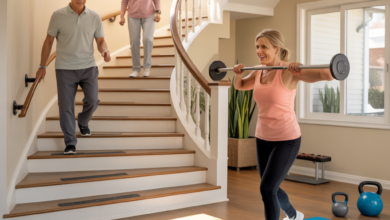
Strength off the bike translates to faster accelerations and better sustainability on climbs and sprints. Focus on compound lifts and single-leg work:
- Back squat, Romanian deadlift, lunges, step-ups — 2 sessions/week, 3–5 sets of 4–8 reps for strength; 8–12 reps for muscular endurance.
- Core stability: planks, side planks, anti-rotation work to transfer power efficiently.
- Mobility: hip flexor and thoracic mobility to maintain an aerodynamic and powerful position.
Bike fit, equipment, and aerodynamics
Speed gains often come from shaving small amounts of time across many elements:
- Proper bike fit reduces wasted energy and prevents injury. A few millimeters can change your power output and comfort.
- Aerodynamics: tuck when safe, optimize position, and consider aero bars or a cleaner clothing fit for time trials.
- Tire pressure and rolling resistance: choose the right tire width and pressure for your weight and road conditions.
Nutrition, weight, and recovery for sustainable speed
Fueling and recovery are non-negotiable. You can’t train harder if you’re under-fueled or sleep-deprived.
- Pre-ride: carbs + small protein for sessions >60 minutes. Example: oatmeal with banana or a bagel and peanut butter.
- During long or intense rides: 30–60g carbs/hour, more for longer events. Use real-food options or energy gels if needed.
- Post-ride: 20–30g protein + carbs within 60 minutes to kick-start recovery.
- Weight management: aim for a healthy power-to-weight ratio. Gradual fat loss through nutrition and training is safer than crash dieting.
- Sleep: aim for 7–9 hours. Quality sleep improves hormonal balance and repairs muscles.
Mental strategies and pacing on the road
Racing your own pacing and using smart mental strategies can save energy and increase average speed:
- Negative splits: don’t go too hard early—finish rides faster than you start to maximize average speed.
- Use perceived exertion and power data together: learn how your watts feel at different intensities.
- Practice group riding technique: drafting, cornering, and smooth accelerations save energy and increase speed in packs.
Real-world example: Anna’s 12-week speed boost
Anna, a busy working mom, wanted faster 40 km time-trial results. She followed a structured plan: two interval sessions per week, one strength session, long weekend rides, and a focus on sleep and protein intake. After 12 weeks she improved her FTP by 12% and cut 4 minutes off her time trial—by training smarter, not just longer.
Frequently Asked Questions
How long will it take to get faster at cycling?
You can see measurable improvements in 4–8 weeks with consistent training (intervals + endurance + strength). Bigger gains, especially for experienced riders, take 3–6 months of structured work and proper recovery.
Should I train every day to increase speed?
No. Quality beats quantity. Include 1–2 high-quality sessions per week (intervals or hills), steady endurance rides, and at least one full rest day. Recovery weeks every 3–4 weeks prevent overtraining and keep progress steady.
Does strength training really make me faster on the bike?
Yes. Targeted strength work improves sprint power, climbing strength, and injury resilience. Focus on low-rep heavy lifts and single-leg exercises 1–2 times per week, with appropriate cycling recovery.
Conclusion — take action and track progress
If you want to know how to get faster at cycling, start with a plan: combine interval training, endurance, strength work, proper nutrition, and rest. Track your progress with simple metrics (RPE, power, and ride times) and tweak your training every few weeks. Ready to get started? Try the sample week above, log your sessions, and use focused drills to shave seconds off every ride.
Want more structure? Check out our workout routines for cyclists and our nutrition guides to dial in fueling. For lifestyle and recovery ideas, explore our wellness tips.
Call to action: Pick one interval from this article and do it tomorrow. Track how it feels, then share your result—small consistent steps create big speed gains.