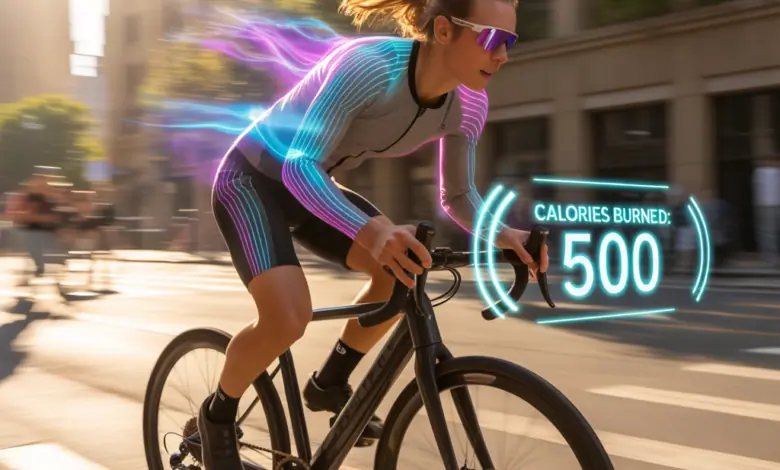
Ever looked at your bike after a long day and wondered, “If I ride for an hour, how many calories will I actually burn?” Whether you’re trying to lose weight, maintain fitness, or just justify that post-ride snack, understanding calorie burn from cycling helps you plan smarter and ride with purpose.
How many calories does an hour bike ride burn
There isn’t a single answer because calories burned during a 60-minute bike ride depends on several factors: your weight, the intensity (leisurely spin vs. a fast road ride), terrain, and whether you’re on a road bike, mountain bike, or stationary trainer. Below are practical estimates and an easy method you can use to calculate your own numbers.
Estimated calorie ranges by intensity
- Light / Leisurely (flat, easy pace): ~250–350 kcal per hour
- Moderate (steady pace, some effort): ~350–600 kcal per hour
- Vigorous (fast road cycling, hills, interval work): ~600–900+ kcal per hour
How to calculate it yourself (simple formula)
A reliable method uses MET values (Metabolic Equivalent of Task). Formula: Calories per minute = (MET × weight in kg × 3.5) / 200. Multiply by 60 to get hourly calories.
Example for a 70 kg (154 lb) rider:
- Light (MET ~4): ~294 kcal/hour
- Moderate (MET ~6): ~441 kcal/hour
- Vigorous (MET ~8): ~588 kcal/hour
Why these numbers vary (real-world examples)
Two people doing “an hour of cycling” can have very different calorie burns. Here are a few scenarios that illustrate why:
- Commuter ride (flat, stoplights): lower average intensity — closer to the light range.
- Saturday group ride (sustained pace with surges): moderate to vigorous ranges, especially with drafting and sprints.
- Spin class or interval session: high-intensity intervals push you into the vigorous range and increase total burn plus afterburn (EPOC).
- Mountain bike on technical singletrack: higher energy output due to accelerations and upper-body effort, so calories can be surprisingly high.
Practical fitness tips to increase calorie burn and fitness gains
1. Add intervals
Swap part of your steady ride for intervals — 30–60 seconds hard, 1–2 minutes easy, repeated 6–10 times. Intervals raise average intensity and boost calories burned both during and after the ride.
2. Incorporate hills or resistance
Climbing or adding resistance on a trainer increases muscular effort and energy use. It also builds strength, which helps raise your resting metabolic rate over time.
3. Track intensity, not just time
Use a heart rate monitor, perceived exertion, or a cycling power meter to ensure you’re working at the intensity that matches your goals. Time alone won’t tell the whole story.
4. Fuel smart and recover
Eat a balanced pre-ride snack if your session is longer than 45–60 minutes. Afterward, prioritize protein and carbs to support recovery. Small changes in nutrition make rides more productive and sustainable—see our nutrition guides for ideas.
Workout variations for different goals
- Fat loss: 45–60 minute steady-state rides at moderate intensity, 2–3 times per week, plus 1 interval session.
- Endurance: Longer rides (90+ minutes) at low-moderate intensity to build aerobic base.
- Strength & power: Hill repeats or high-resistance intervals, short and intense.
- Time-crunched: 20–30 minute high-intensity interval training (HIIT) on the bike provides big benefits in less time.
Lifestyle strategies that amplify results
- Consistency beats intensity spikes: 3–5 weekly rides are more effective than one huge session.
- Cross-train with strength workouts to preserve muscle while losing fat—check our workout routines for beginner-to-advanced plans.
- Prioritize sleep and stress management—both influence hunger hormones and recovery.
How to measure calorie burn accurately
Bike computers, smart trainers, and fitness watches give quick estimates, but accuracy varies. Power meters (watts) are the gold standard for cycling output. If you use heart rate or an app, treat the number as a useful estimate rather than an exact total.
Quick tips for better tracking
- Enter your correct weight and age in devices and apps.
- Use routes and rides of multiple intensities to learn your typical burn.
- Compare perceived exertion to device estimates to calibrate expectations.
Frequently Asked Questions
1. Will I lose weight if I bike for an hour every day?
Possibly—weight loss comes down to a calorie deficit. An hour of cycling helps create that deficit, but you must pair exercise with sensible eating and recovery. Consistency and total weekly activity matter more than single sessions.
2. Does riding faster always burn more calories?
Generally yes, because higher speed usually means higher intensity and greater energy expenditure. However, aerodynamics, drafting, and terrain influence the relationship between speed and calories, so context matters.
3. Is indoor cycling (spin) better for calorie burn than outdoor riding?
Spin classes are often high-intensity, structured, and time-efficient, so they can burn a lot of calories in an hour. Outdoor rides introduce coasting, wind resistance, and terrain; both are great—choose the one you enjoy and can stick with.
Conclusion — Take action on your rides
So, how many calories does an hour bike ride burn? For most people, a 60-minute ride will burn somewhere between roughly 250 and 900 calories depending on weight and intensity. Use the MET formula or your device to get personalized estimates, and focus on consistency, smart fueling, and mixing ride types to reach your goals.
Ready to make your rides more effective? Start by scheduling three weekly sessions—one easy ride, one interval workout, and one longer endurance spin—and consult our wellness tips for recovery and nutrition ideas. Hop on your bike, track your progress, and adjust as you improve.