Have you ever wondered whether grinding out 100 squats in your living room is worth it for calorie burn—and if it will actually move the needle on your fitness goals? Maybe you saw a challenge online and want to know: how many calories does 100 squats burn and is it worth your time? Spoiler: the answer depends on you—your weight, pace, intensity, and how you stack that set into your overall routine.
How many calories does 100 squats burn? Quick answer and breakdown
There isn’t a single number because calorie expenditure varies. As an approximate guideline:
- A 60–70 kg (132–154 lb) person doing 100 bodyweight squats in about 4–6 minutes will burn roughly 30–50 calories.
- A heavier person (80–90 kg / 176–198 lb) might burn 40–65 calories for the same effort.
- If you add intensity—jump squats, a weighted vest, or continuous high pace—you can push that into the 60–100 calorie range depending on duration and effort.
Why the range? Calories burned depend on body weight, tempo (squats per minute), rest between reps, and squat type (bodyweight vs. jump vs. loaded). Using a MET-based calculation (metabolic equivalent tasks) helps explain differences, but the takeaway is: 100 squats are a solid burst of work—good for conditioning, muscular endurance, and a modest calorie burn.
Factors that affect calorie burn for 100 squats
Body weight and muscle mass
Heavier people and those with more muscle burn more calories for the same movement because moving more mass requires more energy.
Intensity and tempo
Doing 100 slow, controlled squats will burn fewer calories per minute than 100 fast squat jumps with minimal rest. Increasing tempo raises heart rate and metabolic demand.
Squat variation and added resistance
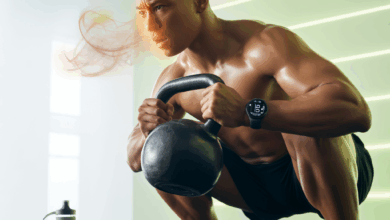
Jump squats, kettlebell goblet squats, or barbell squats significantly increase calorie burn compared to basic air squats. Even a light dumbbell or vest can change the math.
Fitness level and efficiency
Beginners may expend more energy because movements are less efficient; trained athletes may perform the same reps at a lower relative cost unless intensity is increased.
Practical examples: real-world calorie estimates
- Example A: 154 lb person, 100 air squats in 5 minutes—~35–45 calories.
- Example B: 185 lb person, 100 jump squats in 6 minutes—~60–80 calories (higher heart rate and power output).
- Example C: 140 lb person, 10 sets of 10 squats with 30 seconds rest—~25–40 calories, plus strength benefit over time.
Why 100 squats still matter beyond calories
Calories are just one metric. Squats build lower-body strength, improve mobility, boost functional movement (sit-stand), and increase lean muscle—muscle that raises resting metabolic rate over the long term. They also improve cardiovascular capacity when done at a high pace or in circuits (EPOC effect).
Workout variations and ways to use 100 squats
Progression and programming ideas
- 10 sets of 10: Great for beginners—manageable volume with form focus.
- 5 rounds of 20 EMOM (every minute on the minute): Fast-paced conditioning.
- AMRAP 100: Do as few sets as possible—timed effort for conditioning and pacing practice.
- Loaded option: 5 sets of 20 goblet squats with a dumbbell for strength and higher calorie burn.
- Plyometric option: Replace every 5th squat with a jump squat to spike heart rate and power output.
Form tips to maximize results and prevent injury
- Feet shoulder-width, knees tracking over toes, chest up and back neutral.
- Reach at least parallel (hips level with knees) to get full range and muscle activation.
- Control the descent, drive through heels on the way up, and breathe (exhale on exertion).
- Warm up with bodyweight squats, hip mobility drills, and light dynamic stretches before attempting high reps.
How to make 100 squats more effective for fat loss
To use 100 squats as part of a fat-loss strategy, pair the movement with sensible nutrition and progressive overload. Squats alone won’t offset a large calorie surplus. Focus on:
- Tracking food with a sustainable deficit if weight loss is the goal—see our nutrition guides for strategies.
- Combining strength sessions (squats with load) and cardio intervals for maximum calorie burn and muscle retention.
- Adding recovery and sleep—adequate rest helps hormones and appetite regulation.
Sample 20-minute lower-body circuit using 100 squats
- Warm-up: 3 minutes dynamic mobility.
- Circuit (repeat 4 rounds): 25 squats (bodyweight or goblet), 10 lunges per leg, 15 glute bridges, 30 seconds rest.
- Cool down and stretch.
This is a practical way to distribute 100 squats while hitting complementary movements for balanced development.
Frequently Asked Questions
1. How many calories does 100 squats burn for a beginner?
Beginners will typically burn in the lower end of the range—around 25–45 calories—because pace and power are usually lower. However, beginners often recruit more effort per rep, which can offset efficiency and increase total burn slightly. Use perceived exertion to guide intensity.
2. Will doing 100 squats a day help me lose belly fat?
Doing 100 squats daily builds lower-body strength and burns calories, but spot reduction isn’t effective. Fat loss requires a consistent calorie deficit, full-body strength training, and cardio. Pair your squat habit with a balanced diet—our nutrition guides can help you plan meals—and overall activity for best results.
3. Can I replace my gym leg day with 100 squats at home?
It depends on your goals. For general fitness and endurance, 100 squats are a solid at-home option. For hypertrophy or maximal strength, you’ll eventually need added resistance (barbells, heavy dumbbells) and progressive overload. Check our workout routines for gym-friendly leg programs that progress load safely.
Conclusion — Is 100 squats worth it?
So, how many calories does 100 squats burn? It varies, but expect a modest calorie burn—typically 25–80 calories depending on bodyweight and intensity—plus meaningful strength and conditioning benefits. 100 squats are a convenient, effective building block for fitness when performed with good form and smart programming. Want to turn this habit into consistent progress? Start simple, track effort, and gradually add intensity or load.
Ready to build a plan that fits your lifestyle? Explore our workout routines, read more in our nutrition guides, and browse practical wellness tips to make small habits become big results. Try one of the sample variations this week and report back—what you change, and how it feels.
Call to action: Pick one 100-squat variation above, try it three times this week, and log your time and how you felt. Share your progress with a friend or write it down—consistency beats intensity every time.