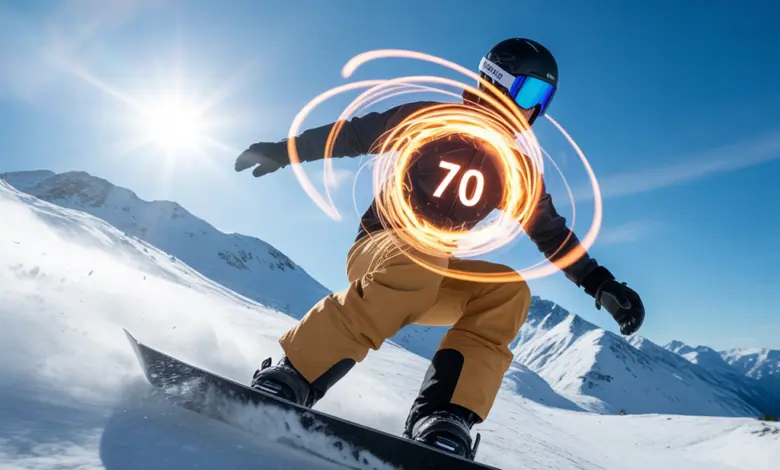
Ever stood at the top of a powdery run, board strapped on, wondering whether that epic day on the mountain will count as your workout for the week? Or have you ever tracked your activity only to see your fitness watch give a different story? If you’re asking “how many calories do you burn snowboarding,” you’re not alone — and the answer is both simple and surprisingly nuanced.
How many calories do you burn snowboarding — estimates by weight and intensity
Snowboarding calorie burn depends on several factors: your body weight, the intensity of riding (casual cruising vs. aggressive freestyle), terrain (groomer vs. backcountry), and even environmental factors like cold and altitude. Below are realistic estimates using a standard metabolic calculation (METs). These are averages and useful for planning workouts and nutrition around your days on the slopes.
- Light/recreational snowboarding (cruising, easy runs): ~4 METs → roughly 250–380 calories per hour.
- Moderate/active snowboarding (mixed runs, lots of turns): ~6 METs → roughly 400–575 calories per hour.
- Vigorous snowboarding (freestyle, racing, hiking uphill/backcountry touring): ~8 METs or higher → roughly 570–760+ calories per hour.
Examples by bodyweight (approximate calories per hour):
- 150 lb (68 kg): 286 kcal/hr (light), 428 kcal/hr (moderate), 571 kcal/hr (vigorous)
- 180 lb (82 kg): 344 kcal/hr (light), 517 kcal/hr (moderate), 689 kcal/hr (vigorous)
- 200 lb (91 kg): 382 kcal/hr (light), 573 kcal/hr (moderate), 764 kcal/hr (vigorous)
Why these ranges vary so much
- Gear and effort: Hitting park features, deep powder, or hiking for lines requires more energy than chairlift-assisted groomers.
- Breaks and lift time: Calories counted by devices often smooth over rest periods; an hour on-mountain may include chairlift downtime or long rests.
- Individual metabolism: Fitness level, muscle mass, and how efficient you are on the board change calorie burn.
How to get a more accurate calorie estimate
Want to know the real number for your body? Try these practical approaches:
- Use a heart-rate monitor or GPS watch with a snowboarding activity mode—these combine heart data with movement to improve estimates.
- Track active minutes (time spent actually riding vs. sitting on the lift) and apply the appropriate MET level.
- Log multiple days—conditions change, and your average will stabilize over several sessions.
Practical fitness tips to burn more (or recover faster) on the slopes
Snowboarding is a full-body sport. To maximize performance and manage calorie burn safely, use targeted training and recovery strategies.
Pre-trip strength and stability workouts
- Leg strength circuit (3 rounds): squats 12, reverse lunges 10 each leg, Romanian deadlifts 10.
- Core and balance (3 rounds): single-leg RDL to balance for 8 reps, plank 45–60 sec, side plank 30–45 sec each side.
- Plyometric day (once per week): box jumps 8–10 reps, lateral bounds 10 each side to build explosive edging power.
On-mountain training and variations
- Interval laps: pick steep runs and push heavy effort for 1–2 minutes, then cruise for recovery. This mimics HIIT and increases calorie burn.
- Technique-focused sessions: less intense but improves efficiency; better technique can reduce injury risk and let you ride longer.
- Splitboarding/backcountry touring: expect far higher calorie burn due to climbing — plan nutrition accordingly.
Post-ride recovery & nutrition
- Refuel within 30–60 minutes: 20–30g protein + carbs to rebuild muscle (e.g., yogurt and fruit, protein shake and a banana).
- Hydration: cold suppresses thirst; drink water and include electrolytes if you had a long or intense day.
- Sleep & mobility: prioritize 7–9 hours and light mobility sessions (foam rolling, hip/ankle mobility) to recover faster.
Real-world examples
Sarah is a 135-lb intermediate rider who spends 4 hours on-mountain with a mix of cruising and short breaks. Using moderate intensity estimates (≈400 kcal/hr for her), she’ll burn about 1,600 calories during that day—plus the lift rides and walking around. Jake, a 200-lb avid freerider doing backcountry touring, could burn 3,000+ calories in a long day (climbing, riding, and heavy effort combined).
Those numbers help you plan meals and snacks: a big breakfast with complex carbs and protein, snacks like nut butter and fruit on the hill, and a recovery dinner with lean protein and vegetables.
Training resources and healthy lifestyle advice
Incorporate cross-training during the off-season: cycling, deadlifts, and single-leg work will translate to stronger, less fatigued riding. For structured plans, check out our workout routines page. For meal timing and fuel ideas to sustain those long days, see our nutrition guides. And if you want low-effort recovery strategies, visit our wellness tips for sleep, hydration, and mobility hacks.
Frequently Asked Questions
1. How many calories does snowboarding burn per hour compared to skiing?
Snowboarding and skiing burn similar calories when effort and terrain are equal, though differences appear by style. Aggressive boarding or uphill touring typically burns more than casual downhill skiing. Use activity intensity rather than the sport name to estimate calories.
2. Will I lose weight just by snowboarding on weekends?
Weekend riding contributes significant calorie burn, but weight loss depends on overall weekly energy balance. Combine consistent activity with sensible portion control and recovery nutrition for best results.
3. Does cold weather increase calorie burn while snowboarding?
Cold temperatures can slightly raise resting metabolic rate to maintain body heat, but the primary calorie drivers on the mountain are effort and duration. Proper layering ensures you maintain performance without excessive calorie loss from shivering.
Conclusion — Take action on your next ride
So, how many calories do you burn snowboarding? Depending on your weight, effort, and terrain, expect roughly 250–760+ calories per hour. Use heart-rate monitoring, aim for targeted pre-trip strength and balance work, and refuel smartly to get the most out of every day on the mountain. Ready to level up your fitness for the slopes? Start with a short strength routine from our workout routines, plan your snacks with our nutrition guides, and check our wellness tips to recover faster. Strap in, ride safe, and enjoy the burn—both the calorie kind and the one that means progress.