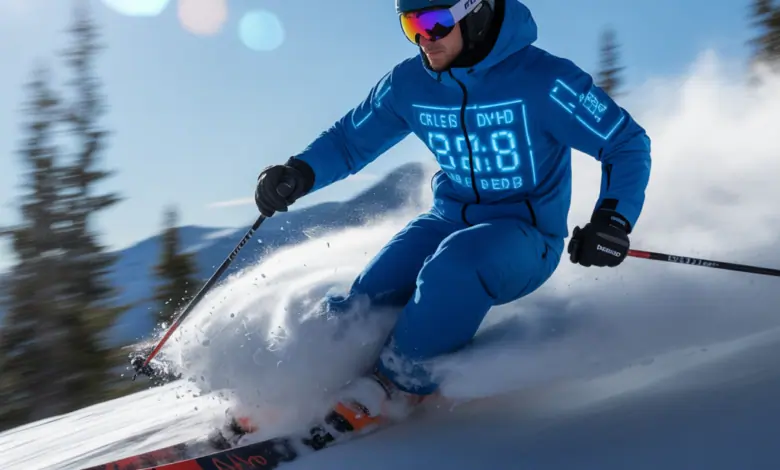
Ever finished a full day on the slopes, toes numb but exhilarated, and wondered, “how many calories do you burn skiing?” You’re not alone—skiing feels like a workout, but the numbers vary wildly depending on your style, terrain, and body. Let’s break it down so you can track your winter fitness, plan your ski-day fuel, and get more from every run.
What affects calorie burn while skiing?
Before we talk numbers, it helps to understand the variables that drive energy expenditure on snow:
- Type of skiing: downhill, cross-country (Nordic), ski touring/backcountry, and freestyle all demand different energy.
- Intensity and skill level: carving fast runs and navigating moguls uses more energy than cruising groomers.
- Body weight and composition: heavier people burn more calories for the same activity; muscle mass also increases metabolic cost.
- Duration and vertical: longer days and uphill travel increase total calorie burn.
- Conditions and equipment: deep powder, heavy gear, and steep climbs make skiing harder—and more calorie-intensive.
How many calories do you burn skiing: estimates and examples
Here are realistic calorie ranges based on common types of skiing. Use these as starting points; your wearable or a ski-calculator will refine things for your weight and effort level.
Downhill skiing (recreational)
Typical range: 300–600 kcal per hour. Recreational downhill skiing is often intermittent—short bursts of intense work followed by chairlift recovery. For a 150 lb (68 kg) person at moderate effort (≈5 METs), expect ~350 kcal/hour. A heavier or more aggressive skier (7+ METs) can burn 500+ kcal/hour.
Cross-country skiing (Nordic)
Typical range: 500–900+ kcal per hour. Cross-country is one of the highest calorie-burning winter sports because it uses continuous full-body motion and sustained effort. A 150 lb person skiing at a brisk pace (≈8–10 METs) can burn 600–800 kcal/hour or more.
Ski touring and backcountry
Typical range: 600–1,000+ kcal per hour during uphill travel (skins). Touring mixes steep aerobic climbs with technical descents—expect a high total daily burn, especially if you’re skinning for hours.
Quick math tip: you can estimate calories using MET values: kcal/min = MET × weight(kg) × 3.5 / 200. Multiply by minutes skiing to get total calories.
Practical fitness tips to burn more and ski better
Want to make your ski days more effective for fitness and performance? Try these targeted strategies:
- Mix intensity: alternate high-effort runs (steeper terrain, carving, moguls) with recovery laps to increase overall calorie burn.
- Include uphill work: take a lap that ends with a hike or skin to add sustained cardio and increase energy expenditure.
- Use interval training off the mountain: HIIT sessions (20–30 minutes) mimic the on-snow bursts and improve stamina.
- Strength training: prioritize squats, lunges, deadlifts, and single-leg stability to improve power and endurance—see our workout routines for ski-specific plans.
- Balance and core: incorporate single-leg balance drills and anti-rotation core work to help control turns and reduce fatigue.
Workout variations for ski conditioning
Here are three sample workouts to boost ski fitness—choose one or combine them throughout the season.
1. Strength + Power (45 minutes)
- Warm-up: 10 minutes bike or dynamic mobility
- Barbell back squat: 4×6 at heavy load
- Romanian deadlifts: 3×8
- Bulgarian split squats: 3×8 each leg
- Plyo box jumps: 3×10
- Core circuit: 3 rounds (plank 45s, pallof press 12 each side)
2. Endurance + VO2 (40 minutes)
- Warm-up: 10 min easy run or row
- Intervals: 6×3 min hard @ 90% effort with 2 min easy recovery
- Cool down: 10 min easy
3. Mobility + Recovery (30 minutes)
- Dynamic hip openers, thoracic rotation, ankle mobility
- Single-leg balance work and banded glute activation
- Foam rolling and breath work
Fueling, recovery, and healthy lifestyle advice
Fueling smart will help you ski longer and recover faster.
- Pre-ski: eat a balanced breakfast with carbs + protein (oats with nuts and yogurt) 1–2 hours before hitting the slopes.
- During the day: prioritize quick carbs for energy—bananas, energy bars, or sandwiches—and hydrate frequently, especially at altitude.
- Post-ski: aim for a 3:1 carb-to-protein snack within 30–60 minutes (chocolate milk, smoothie) and a protein-rich dinner to repair muscle.
- Sleep and recovery: quality sleep, stretching, and contrast showers speed recovery; avoid excessive alcohol after long days on the mountain.
For detailed meal timing and macros, check our nutrition guides.
Real-world examples: quick comparisons
These examples illustrate how weight and intensity change calorie burn:
- 150 lb skier, moderate downhill (~5 METs): ~350 kcal/hour
- 150 lb skier, vigorous downhill (~7 METs): ~500 kcal/hour
- 150 lb cross-country skier (8–10 METs): ~600–850 kcal/hour
- 200 lb skier, same effort: roughly 30–40% more calories than the 150 lb example
Gear and tech to track calories accurately
Wearables (heart rate straps, GPS watches) and ski-specific apps help track active time, heart rate zones, and vertical gain, improving calorie estimates. Remember that some devices over- or under-estimate—treat them as helpful guides rather than absolute truth.
Frequently Asked Questions
1. Is skiing a good cardiovascular workout?
Yes. Downhill skiing includes aerobic and anaerobic bursts, improving heart health and muscular endurance. Cross-country and touring are especially strong cardio workouts with continuous effort.
2. How can I burn more calories on a ski day without skiing longer?
Increase intensity with harder runs, add uphill hiking or skinning, reduce lift rides by taking more laps, and mix in off-snow interval training during your trip to boost overall calorie burn.
3. Should I count chairlift time when estimating calories burned?
No—chairlift time is passive recovery and burns minimal extra calories. Focus on active time on slopes, uphill travel, and off-snow workouts for accurate estimates.
Conclusion: How many calories do you burn skiing—and what now?
Skiing can be a major calorie burner, but the exact number depends on the skiing style, your weight, and how hard you push yourself. Whether you’re a casual groomer cruiser or a backcountry tourer, you can maximize fitness gains with targeted strength work, interval training, and smart fueling. Track your efforts with a wearable, try the sample workouts above, and tweak your routine seasonally.
Ready to get stronger for next season? Explore our workout routines, read our nutrition guides, and check out practical recovery tips in our wellness tips to ski longer, recover faster, and make every run count.
Call to action: Save this article for your next ski trip, try one of the workouts this week, and share your calorie-tracking experience in the comments—what did your watch show after a full day on the slopes?