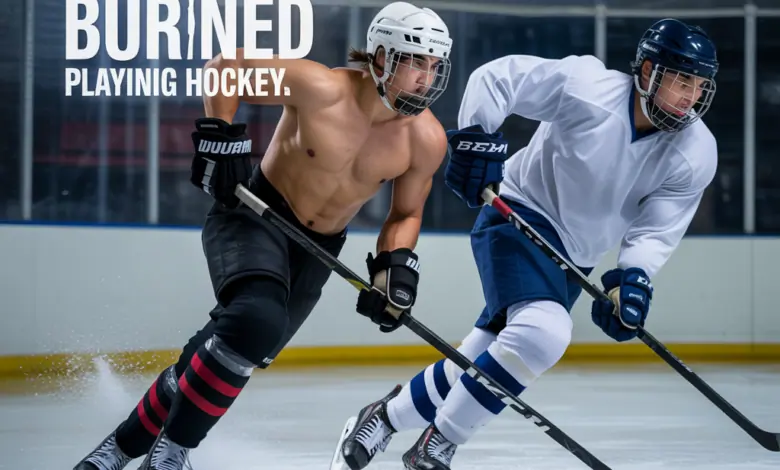
Ever stepped off the ice after a fast-paced shift, soaked in sweat and wondering, “How many calories did I just burn?” Whether you lace up for a casual pond skate, an intense league game, or a roller hockey session, the calorie burn can surprise you — and understanding it can help you train smarter and eat better.
Why calorie estimates for hockey matter
Hockey is a mix of explosive sprints, quick changes of direction, strength battles along the boards, and short recovery periods — essentially a built-in interval workout. Knowing roughly how many calories you burn playing hockey helps you plan pre-game fuel, post-game recovery, and weekly energy balance so you hit your fitness or weight goals without under- or over-eating.
How many calories do you burn playing hockey?
Short answer: it depends. A typical hour of ice hockey or competitive roller hockey ranges from about 400 to 900 calories per hour depending on your weight, intensity, position, and ice time. Below are practical estimates to give you a starting point.
Estimated calorie burn by body weight and intensity (per hour)
- 125 lb (57 kg) player: ~420–600 calories/hour
- 155 lb (70 kg) player: ~520–740 calories/hour
- 185 lb (84 kg) player: ~620–900 calories/hour
These ranges reflect recreational to competitive intensity. A full-on league game with long shifts and minimal rest sits at the higher end, while casual practices or stick-and-puck sessions will be lower.
What affects calories burned on the ice?
Intensity and shift structure
Short, repeated high-intensity sprints increase metabolic demand more than steady-state movement. A forward who’s constantly forechecking will burn more than a defenseman who sits deeper and skates less.
Body composition and fitness level
Heavier or more muscular players burn more energy. Fitter athletes may burn fewer calories at the same pace because their bodies are more efficient, but they’re often able to sustain higher intensities that increase total burn.
Game type: ice vs roller vs pond
Pond hockey might involve longer shifts and fewer stoppages, sometimes increasing total work. Roller hockey often has less glide and more continuous effort, which can change calorie output slightly. Consider the playing surface and how continuous the action is.
Practical tips to maximize fitness and manage calorie burn
- Track training, not just games: Use a heart rate monitor or wearable to record session intensity and get personalized calorie estimates.
- Fuel appropriately: Eat a balanced meal 2–3 hours before play (carbs + protein + light fat). For long skates, a small carbohydrate snack 30–60 minutes prior helps performance.
- Hydrate consistently: Even mild dehydration reduces power and increases perceived exertion, which impacts training quality.
- Prioritize recovery: Post-game protein (20–30 g) plus carbs refuels muscles and supports repair; aim for 7–9 hours of sleep nightly.
- Focus on off-ice strength and conditioning to boost on-ice calorie burn and performance (see workout ideas below).
Workout variations and off-ice drills to complement hockey
To improve speed, power, and calorie-burning capacity, blend on-ice practice with targeted off-ice sessions.
HIIT skate sessions
- Warm-up 10 minutes easy skating
- 8–10 x 30-second all-out sprints with 90 seconds easy recovery
- Cool down 10 minutes
Strength and power (2–3x per week)
- Barbell squats or split squats — 3 sets of 6–8 reps
- Deadlifts or kettlebell swings — 3 sets of 8–10 reps
- Box jumps or broad jumps — 3 sets of 5–8 reps
Conditioning circuit (30 minutes)
- Sled pushes or prowler — 6 x 30 m
- Battle ropes — 6 x 30 seconds
- Farmer carries — 4 x 40 m
These workouts not only improve your game but also increase your overall calorie expenditure by boosting lean muscle mass and metabolic rate.
Real-world examples
Example 1: Mike, a 155 lb recreational player, plays a 60-minute game but only records 30 minutes of high-intensity ice time due to line changes. His effective calorie burn for the game will be closer to 300–375 kcal from high-intensity work plus an extra 150–250 from low-intensity movement — totaling ~450–600 calories.
Example 2: Emma, a 135 lb competitive forward, trains twice a week plus games. Her weekly calorie burn from hockey sessions often exceeds 2,000 calories, so she prioritizes recovery carbs and protein and schedules strength training twice a week to support performance.
Healthy lifestyle advice for hockey players
- Balance macronutrients for performance: Aim for a mix of carbohydrates for energy, lean protein for repair, and healthy fats for hormonal health.
- Meal timing matters: Post-practice meals within 60–90 minutes speed recovery.
- Monitor energy availability: If you’re training a lot and losing weight unintentionally, increase calories to prevent fatigue and injury.
- Include mobility work: Hip and ankle mobility help you get better edges and reduce injury risk.
Frequently Asked Questions
1. How many calories are burned in a typical hockey game?
A typical game can burn between 400 and 900 calories depending on body weight, playing time, and intensity. Recreational players tend to be on the lower end; competitive players with longer shifts hit the higher range.
2. Does hockey burn more calories than running?
It depends on intensity. A high-intensity hockey session with explosive shifts can burn as many calories as interval running. But steady-state long-distance running at a moderate pace may burn a similar amount over time. Hockey’s advantage is that it adds strength and power elements along with conditioning.
3. Can I lose weight by just playing hockey?
Yes, hockey can be an effective tool for weight loss when combined with sensible nutrition and recovery. However, weight loss requires a consistent calorie deficit over time, so track total weekly activity and eating habits rather than relying on a single session.
Conclusion — Take action on your calorie goals
So, how many calories do you burn playing hockey? While there’s no one-size-fits-all number, you can expect roughly 400–900 calories per hour depending on weight and intensity. Use wearable tracking, tune your nutrition, and add targeted off-ice workouts to boost performance and meet your goals. Ready to improve your on-ice fitness? Check out our workout routines, refine your eating with our nutrition guides, and adopt recovery practices from our wellness tips page.
Got a specific weight, position, or training schedule? Leave a comment or try tracking a few sessions — then adjust your fueling and training for better results.