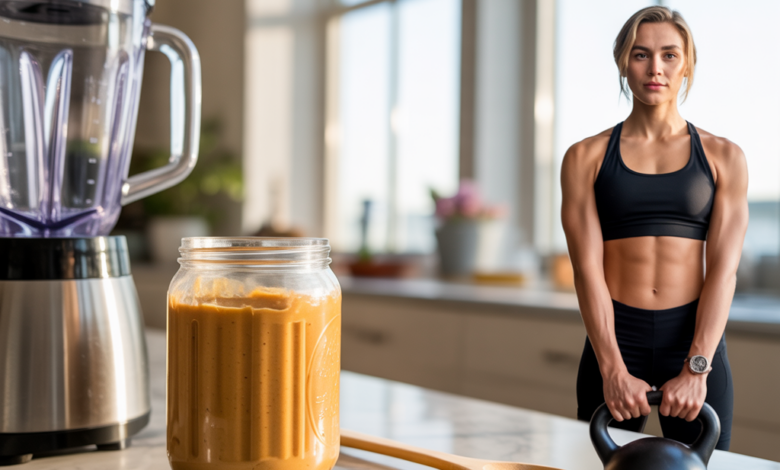
Ever reach for a jar of peanut butter after a tough workout and wonder what’s actually inside — and whether you could make a better version at home? If you’re juggling training sessions, work, and family life, learning how to make a simple, wholesome spread can save time, cut out additives, and give you a customizable source of energy that supports your fitness goals.
Why homemade peanut butter deserves a spot in your kitchen
Store-bought peanut butter often contains added sugars, vegetable oils, and stabilizers that dilute the natural nutrition of peanuts. Homemade peanut butter puts control back in your hands: you choose the salt level, sweetener (or none), and any protein or superfood add-ins. It’s an affordable, high-calorie, healthy-fat option that works as a pre-workout boost, post-lift recovery mix-in, or a portable snack for busy days.
How to make homemade peanut butter: a simple recipe
This easy homemade peanut butter recipe takes under 15 minutes, requires only a food processor, and yields a creamy or crunchy spread depending on your preference.
Ingredients
- 2 cups dry-roasted peanuts (unsalted or lightly salted)
- 1/2 teaspoon fine sea salt (adjust to taste)
- 1–2 teaspoons neutral oil (optional: peanut oil, avocado oil) for creaminess
- Optional add-ins: 1 teaspoon honey or maple syrup, 1 scoop vanilla protein powder, a dash of cinnamon, or dark cocoa powder
Directions
- Place the peanuts in a food processor and pulse until they break down into a coarse meal (about 1–2 minutes).
- Continue processing. The peanuts will go through a sand-like stage, then clump, and finally become creamy (about 4–6 minutes total). Scrape down the sides as needed.
- If the mixture seems dry, add 1 teaspoon of oil at a time until desired texture is reached.
- Stir in salt and any optional add-ins. Taste and adjust.
- Store in an airtight jar in the fridge for up to 3 weeks.
Nutrition and performance benefits
Peanut butter is calorie-dense and provides a balanced mix of monounsaturated fats, plant protein, fiber, and micronutrients like magnesium and vitamin E. For athletes and fitness enthusiasts, it’s an efficient way to increase calorie intake without sacrificing nutrient density.
How to use it for workouts
- Pre-workout (30–60 minutes): 1 tablespoon on a rice cake or banana provides quick carbs plus fat for sustained energy during moderate-intensity sessions.
- Post-workout (within 60 minutes): Combine a scoop of protein powder with 2 tablespoons of homemade peanut butter in a smoothie to speed recovery and promote muscle protein synthesis.
- Between meals: Pair 1–2 tablespoons with apple slices or whole-grain toast to stabilize blood sugar and curb cravings.
Snack ideas and healthy lifestyle pairings
Homemade peanut butter is versatile. Here are practical, real-world pairings that fit different lifestyles.
- Busy parent: Pre-portion 2-tablespoon servings in small containers for kid lunches or after-school snacks.
- Endurance athlete: Spread on a bagel with banana for a high-carb + fat long-run meal.
- Strength trainer: Mix into Greek yogurt with oats and cinnamon for a protein-rich breakfast.
Workout variations that pair perfectly with peanut butter snacks
Fuel your workouts according to intensity and duration.
Quick HIIT session (20–30 minutes)
- Pre-workout: 1 small banana with 1 tablespoon homemade peanut butter (light fuel)
- Workout: 5 rounds of 40 seconds work / 20 seconds rest — exercises like burpees, kettlebell swings, push-ups, and jump lunges
- Post-workout: Protein shake with 1 tablespoon peanut butter for muscle repair
Strength block (45–75 minutes)
- Pre-workout: Toast with 2 tablespoons of peanut butter and a drizzle of honey for endurance during heavy lifts
- Sample routine: Compound lifts (squats, deadlifts, bench press), 4 sets of 5–8 reps; accessory supersets for 3 sets
- Post-workout meal: Omelet with veggies + a peanut butter smoothie for balanced recovery
Variations and flavor ideas
Make it your own: add cacao nibs for crunch, stir in protein powder for an extra macro boost, or mix with almond or cashew butters to alter the flavor profile. For a lower-fat option, use slightly fewer peanuts and add more protein powder — note texture will change.
Storage, safety, and allergy alternatives
Store homemade peanut butter in the fridge for up to 3 weeks or freeze for longer storage. Always use clean utensils to avoid contamination. If you or someone you feed has a peanut allergy, try homemade almond butter, sunflower seed butter, or soy nut butter as safe alternatives. These homemade nut and seed butters follow the same basic process.
Frequently Asked Questions
1. Is homemade peanut butter healthier than store-bought?
Often, yes. Homemade allows you to skip added sugars, hydrogenated oils, and preservatives. Nutritionally it’s similar in calories and fat, but you control quality and flavor.
2. How long does homemade peanut butter last?
Refrigerated, it generally lasts about 2–3 weeks. For longer storage, freeze in small portions for up to 3 months. Always check for off smells or mold.
3. Can I add protein powder to homemade peanut butter?
Yes. Stir in a scoop of unflavored or vanilla protein powder after processing for an extra protein boost. Note that texture may become thicker; adjust with a little oil if needed.
Real-world example: an athlete’s weekly plan
Meet Sara, a recreational runner who trains 5 days a week. She makes a batch of homemade peanut butter on Sunday and uses it as follows:
- Monday: 1 tablespoon on toast before an easy run
- Wednesday: Peanut butter smoothie post-tempo run for recovery
- Saturday: Peanut butter + jelly on whole-grain bagel as long-run fuel
This small prep saves time, supports consistent fueling, and reduces dependence on processed sports foods.
Conclusion — make homemade peanut butter part of your healthy routine
Homemade peanut butter is more than a spread — it’s a customizable, nutrient-dense tool that supports workouts, busy schedules, and healthy eating habits. Try the simple recipe above, experiment with add-ins, and pair your servings with the workout variations and tips provided. Ready to take the next step? Prep a jar this weekend, and for more ideas on training and fueling, explore our workout routines, nutrition guides, and wellness tips.
Call to action: Make a jar of homemade peanut butter today, share your favorite variation in the comments, and tag a friend who needs a healthier pantry swap.