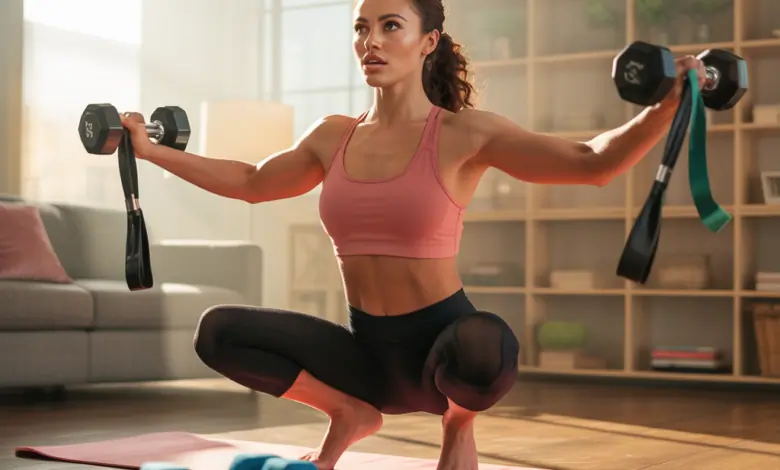
Ever stood in your living room, gym clothes on, timer set — and felt totally unsure where to start? Whether you’re a busy mom, a remote worker, or someone who prefers sweat sessions at home, finding effective and realistic home workout tips for women can change your fitness routine from “I’ll do it tomorrow” to “I crushed it today.”
Why at-home fitness works (and how to make it stick)
Working out at home removes commute time, gym anxiety, and scheduling friction. But the biggest challenge is consistency. The secret is designing small, manageable habits that fit your life. Think 20–30 minute focused sessions, progressive overload with bodyweight or bands, and a plan that adapts to busy weeks.
Set a realistic schedule
- Pick 3 non-negotiable workout slots each week — treat them like appointments.
- Use calendar reminders and lay out your workout clothes the night before.
- If you’re pressed for time, do two 10–15 minute bursts (morning + evening) instead of one long session.
Create a friendly workout space
You don’t need a home gym. A cleared corner with a yoga mat, a set of resistance bands, and one or two dumbbells is enough. Good lighting, a water bottle, and an upbeat playlist help make the space inviting.
Home Workout Tips for Women: Quick Start Guide
These practical tips help you begin safely and progress faster without overdoing it.
- Warm up for 5–7 minutes — marching in place, arm circles, gentle lunges to raise heart rate and reduce injury risk.
- Focus on compound moves — squats, lunges, push-ups, glute bridges, and rows target multiple muscle groups and burn more calories.
- Mix cardio + strength — alternate HIIT circuits with strength days to build muscle and improve endurance.
- Progress slowly — increase reps, sets, or resistance every 2–3 weeks rather than every session.
- Prioritize recovery — sleep, hydration, and mobility work (foam rolling or yoga) are part of training.
Sample at-home workouts (no equipment and minimal gear)
Below are realistic workout variations for beginner, intermediate, and advanced levels. Adjust reps and rest based on your fitness.
Beginner — 20-minute full-body (no equipment)
- Warm-up: 5 minutes brisk march + arm swings
- 3 rounds: 30s bodyweight squats, 30s incline push-ups (hands on counter), 30s glute bridges, 30s plank (knees if needed)
- Cooldown: 3–5 minutes stretching hips and hamstrings
Intermediate — 25–30 minute circuit (one dumbbell or kettlebell)
- Warm-up: dynamic leg swings, torso twists
- 4 rounds: 12 goblet squats, 10 single-arm bent-over rows (each side), 12 reverse lunges (each leg), 15 Russian twists
- Optional finisher: 60s jump rope or high knees
- Cooldown: hip flexor and chest stretches
Advanced — HIIT strength (30 minutes)
- Warm-up: 7 minutes mobility + light cardio
- EMOM 20 (every minute on the minute for 20 minutes): min 1: 12 deadlifts, min 2: 10 push-ups, min 3: 12 walking lunges, min 4: 15 kettlebell swings
- Cooldown: full-body stretch and foam rolling
Nutrition, lifestyle, and recovery tips
Exercise is one piece of the puzzle. To get sustainable results, combine your workouts with smart daily habits.
Eat with purpose
Focus on protein at every meal to support muscle repair (eggs, Greek yogurt, lean chicken, legumes). Balance carbohydrates and healthy fats to fuel workouts and recovery. If weight loss is a goal, aim for a moderate calorie deficit and prioritize nutrient density.
Sleep and stress management
Quality sleep (7–9 hours) helps hormone regulation and recovery. Simple stress-management tools like 5–10 minutes of breathing, a short walk, or a bedtime routine can improve both sleep and training performance.
Real-world example: Sarah, the busy graphic designer
Sarah fits three 25-minute workouts into her week: a Monday strength session before work, a Wednesday lunchtime yoga flow, and a Saturday morning HIIT class led on an app. She uses resistance bands during travel weeks and focuses on protein-rich meals. After 8 weeks, she feels stronger, sleeps better, and has more energy for her kids.
Common mistakes and how to avoid them
- Skipping warm-ups — increases injury risk. Always spend 5–10 minutes warming up.
- Doing the same routine forever — change exercises every 4–6 weeks.
- Neglecting form — prioritize technique over heavier weights or more reps.
Frequently Asked Questions
1. Can I build muscle with home workouts?
Yes. Progressive overload works at home with bodyweight progressions, resistance bands, dumbbells, or household items. Increase reps, shorten rest, or add resistance to stimulate muscle growth.
2. How often should I work out at home to see results?
For most women, 3–5 sessions per week mixing strength and cardio delivers visible results in 6–12 weeks. Consistency and recovery are more important than daily high-intensity sessions.
3. What if I have limited space or equipment?
You can get excellent workouts in a small area using bodyweight moves, resistance bands, and a single dumbbell. Focus on compound movements and interval training to maximize calorie burn and strength gains.
Next steps: build your routine and stay motivated
Start by picking one of the sample workouts above and committing to 3 sessions this week. Track progress with a simple journal or app, celebrate small wins, and gradually increase challenge. If you want structured plans, check out our workout routines or learn how food supports performance in our nutrition guides. For tips on sleep and stress, see our wellness tips page.
Conclusion
Home workout tips for women don’t have to be complicated — they need to be realistic, consistent, and enjoyable. Start small, prioritize form and recovery, and progressively challenge yourself. Ready to transform your at-home routine? Choose a plan, commit to three sessions this week, and come back to track your progress.
Call to action: Pick one workout above and try it today. If you enjoyed it, bookmark our workout routines page for more plans and tips.