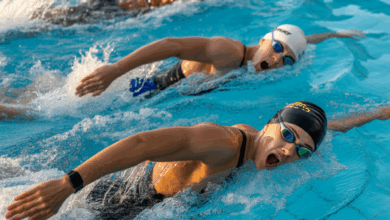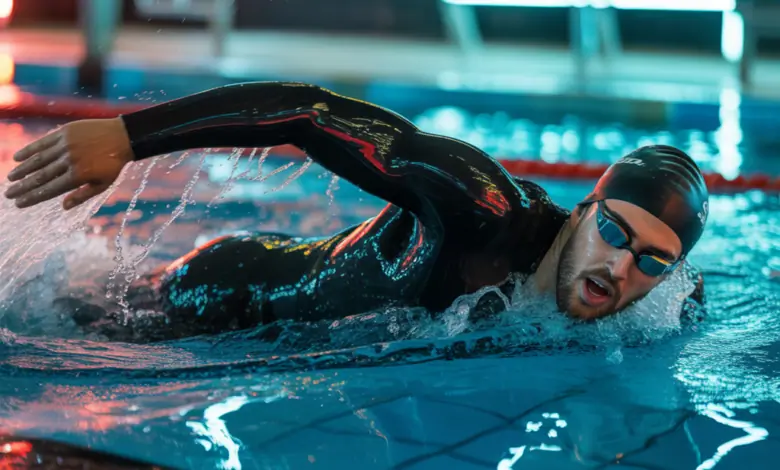
Ever climbed out of the pool after a fast 20 minutes and wondered how you could get such a hard workout without pounding the pavement? If you want maximum calorie burn, improved endurance, and a low-impact routine that fits into a busy schedule, a hiit swim workout might be exactly what you need.
Why Choose a HIIT Swim Workout?
High-intensity interval training (HIIT) in the pool combines short bursts of all-out effort with recovery periods. The result: efficient cardio, improved VO2 max, and muscular endurance — all while protecting your joints. Swimming is inherently full-body, so a HIIT swim session engages your core, shoulders, back, and legs more dynamically than many land-based intervals.
- Low-impact cardio ideal for joint sensitivity
- Efficient: build fitness in 20–40 minutes
- Versatile: scales from beginner pool HIIT to advanced sprint sets
How HIIT Swimming Works (Quick Science)
During the high-intensity intervals, you push toward near-maximal effort for short periods (e.g., 20–45 seconds). Your body switches from steady-state metabolism to anaerobic bursts, recruiting fast-twitch muscle fibers and increasing post-exercise calorie burn (EPOC). Recovery intervals allow partial recovery but keep heart rate elevated, maximizing training stimulus in minimal time.
HIIT Swim Workout: Sample Routines for All Levels
Below are three practical, adaptable session plans. Each starts with a brief warm-up and ends with a cool-down to reduce injury risk and speed recovery.
Beginner (20 minutes)
- Warm-up: 4 x 50 easy freestyle, 15–20 sec rest
- Main set: 8 x 25 sprint, 35–45 sec rest (or rest until breathing returns to comfortable level)
- Cool-down: 2 x 50 easy choice
Intermediate (30 minutes)
- Warm-up: 200 easy (mix drills and kick)
- Main set: 6 x (4 x 50 — 20 sec sprint, 10 sec easy) with 60 sec rest between reps
- Finisher: 4 x 25 hard from a push, 30 sec rest
- Cool-down: 200 easy
Advanced (40 minutes)
- Warm-up: 300 (include build-ups and dynamic drills)
- Main set: 12 x 100 on interval (swim hard first 50, recover second 50) or 16 x 50 as all-out sprints with 20–30 sec rest
- Threshold set: 4 x 200 at tempo pace with short rest
- Cool-down: 200 easy
Practical Tips to Improve Your Pool HIIT
- Focus on quality over volume: Short, fast reps with solid technique beat sloppy long sprints.
- Use tools wisely: Paddles and fins can increase intensity or help you focus on stroke mechanics. Don’t overuse paddles early in a HIIT session.
- Control breathing: Practice bilateral breathing and exhale fully during underwater phases to avoid premature fatigue.
- Time, don’t count laps: Use a clock or swim watch to control work-to-rest ratios for consistent progress.
- Pool length matters: Short-course (25m/25yd) offers more turns (and breaks); long-course (50m) increases continuous swim demand.
Workout Variations and Progressions
- Tabata Swim: 8 rounds of 20 sec hard / 10 sec rest — repeat 2–3 times with full recovery between sets.
- Descending Intervals: 50, 100, 150, 200 with decreasing rest — great for pacing practice.
- Aqua AMRAP: As many 50s as possible in 20 minutes at near-HIIT intensity — track laps over weeks to measure progress.
Nutrition, Recovery & Lifestyle Tips to Maximize Results
HIIT swim workouts can tax glycogen stores and central nervous system. Supporting your training with smart nutrition, sleep, and mobility work accelerates gains.
- Pre-workout: A small carb + protein snack 30–60 minutes before (banana and yogurt, rice cake with nut butter) fuels short, intense sessions.
- Post-workout: Aim for 20–30g protein within 1 hour to aid muscle recovery and a balanced meal with carbs and healthy fats within 2 hours.
- Hydration: Even in water, you sweat. Drink fluids before and after, and consider electrolyte replacement for longer sessions.
- Sleep & recovery: 7–9 hours of quality sleep supports hormone balance and muscle repair.
- Cross-training: Add strength sessions twice a week to build power (focus on pull, core, and hip drive) and reduce injury risk.
Real-World Examples
Case 1: Sarah, a busy mom, swapped two 45-minute treadmill runs for a 25-minute hiit swim workout three times a week. She reported less knee pain, faster fitness gains, and saved time.
Case 2: Omar, a triathlete, uses pool HIIT once weekly to sharpen speed and reduce impact load during heavy bike and run blocks.
Case 3: Lydia, a master’s swimmer, adds Tabata pool sessions to break through a plateau and improve her 100m sprint.
Frequently Asked Questions
1. Is a hiit swim workout safe for beginners?
Yes, if you scale intensity, practice good technique, and start with shorter work intervals and longer rest. Begin with beginner sample sets, focus on breathing and form, and consult a healthcare provider if you have medical concerns.
2. How often should I do HIIT swimming?
2–3 times per week is effective for most people, balanced with easy aerobic swims or rest days. HIIT is taxing; allow at least 48 hours before repeating a maximal session for optimal recovery.
3. Can HIIT swim workouts help me lose weight?
Yes. HIIT increases calorie burn and can raise post-exercise metabolic rate. Combined with a sensible diet and consistent training (including strength work and sleep), pool HIIT can be a powerful tool for fat loss.
Safety Notes
Always warm up and cool down. If you’re new to swimming or have cardiovascular issues, consult a professional. Don’t train to the point of blackout — oxygen debt in water can be dangerous. Train with a buddy or under lifeguard supervision when possible.
Conclusion — Take the Plunge
A hiit swim workout is a time-efficient, joint-friendly way to build speed, burn calories, and enjoy a full-body challenge. Start with the beginner routine, use the progressions to keep improving, and support your sessions with good nutrition and recovery. Ready to transform your pool time? Try one of the sample workouts this week and track your progress.
For more structured plans, check our workout routines, find meal ideas in our nutrition guides, and balance training with self-care using our wellness tips. Share your first session results — I’d love to hear how your HIIT swim workouts go!