Ever been halfway through a set of heavy deadlifts or pull-ups and felt your hands start to betray you — slipping, aching, or covered in painful calluses? If your hands are limiting your gains, you’re not alone. This guide delivers practical, real-world gym workout tips hands that you can use today to boost grip strength, protect your skin, and lift stronger without compromising recovery.
Why your hands matter more than you think
Your hands and wrists are the connection point between your body and the gym equipment. Strong, healthy hands improve performance in compound lifts (deadlifts, rows, pull-ups), functional training (farmer carries, kettlebell swings), and sports (climbing, tennis). Weak grip or tender hands can cut workouts short, slow progress, and increase injury risk.
Gym Workout Tips Hands: Grip, Care, and Technique
Below are targeted strategies to make your hands an asset, not a liability. These cover strength work, mobility, skin care, and simple technique adjustments that add up fast.
Grip-strength exercises (progressive and specific)
- Farmer’s carries: 3–4 sets of 30–60 seconds. Walk heavy while maintaining tight shoulders and neutral wrists. Great for overall hand endurance.
- Dead hangs and towel hangs: 3 x max time. Use a pull-up bar or loop a towel over the bar for added difficulty. Builds passive grip and shoulder resilience.
- Plate pinches: Pinch two weight plates together and hold for 20–40 seconds. Excellent for pinch strength and finger isolation.
- Wrist curls & reverse wrist curls: 3 x 12–20 to strengthen forearms for sustained grip.
- Hand grippers or spring squeezes: 3 x 10–20 reps as a finisher to boost crush strength.
Wrist and hand mobility: warm-ups that work
Start every session with a 3–5 minute hand and wrist sequence to prevent strain:
- Wrist circles (30 seconds each direction).
- Finger flicks and spreads (20–30 reps).
- Light band pull-aparts with wrist rotation for shoulder-wrist coordination.
- Scapular pull-ups and shoulder activation before heavy gripping work — unstable shoulders make the hands work harder.
Protecting your hands in the gym: skin care and equipment
Calluses and blisters are common. Treat them proactively:
- File, don’t rip: Use a pumice or callus file weekly to keep thick skin manageable and avoid painful splits.
- Chalk vs. gloves vs. straps: Chalk improves grip but can dry skin. Gloves protect skin but reduce tactile feedback and grip activation. Straps allow heavier pulls but can stall grip development — choose based on the workout goal (strength vs. max effort).
- Hydrate and moisturize: Dry skin cracks easily. Apply a light, non-greasy moisturizer after workouts and drink water throughout the day.
Workout variations and sample mini routines
Here are three short routines tailored to different goals — beginner, intermediate, and performance-focused — you can slot into your weekly program.
Beginner (2x/week)
- Dead hangs: 3 x 20–40 sec
- Wrist curls: 3 x 12
- Farmer carries (light): 4 x 30 sec
- Hand gripper: 3 x 10
Intermediate (2–3x/week)
- Towel pull-ups: 4 x 6–8 (or max)
- Plate pinches: 3 x 30 sec
- Reverse curls: 3 x 10–12
- Heavy farmer carries: 3 x 45–60 sec
Performance (athletes / heavy lifters)
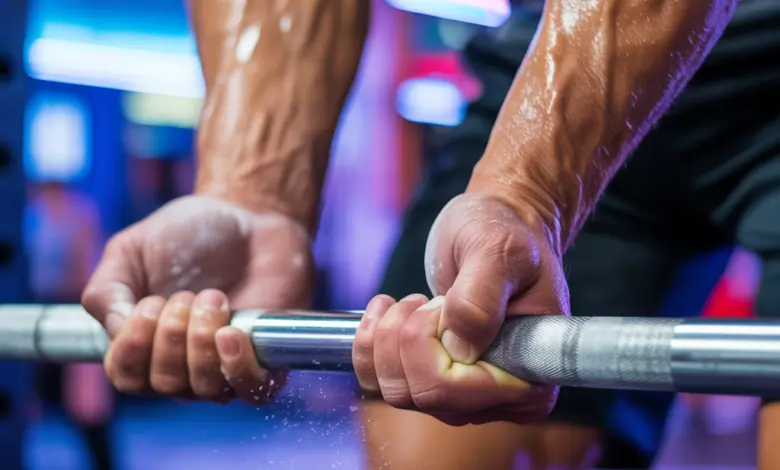
- Mixed-grip deadlifts with chalk: work up to heavy sets, use straps only for top sets
- Weighted dead hangs: 3 x max
- One-arm farmer carries: 4 x 40–60 sec each side
- Specific pinch and crush training: 3–4 sets as finishers
Healthy lifestyle tips to support hand health
Building stronger hands isn’t only about gym work. Tendons and skin respond to nutrition, sleep, and recovery.
- Nutrition: Support tendon health with collagen-rich foods or supplements, vitamin C (for collagen synthesis), and omega-3s to reduce inflammation.
- Sleep and recovery: Tendons need rest to adapt. Aim for 7–9 hours of sleep and avoid consecutive days of maximal grip work.
- Manage inflammation: Use ice on swollen joints after acute overuse and consult a professional for persistent pain.
Real-world examples and tips from the gym floor
When I coached weekend lifters and athletes, a few small changes made big differences:
- A client with weak deadlifts saw a 15% increase in one-rep max within 8 weeks after adding twice-weekly farmer carries and plate pinches.
- A climber reduced fingertip pain by scheduling two low-grip days per week and improving wrist mobility; this allowed harder sessions to be more productive.
- Switching from gloves to chalk helped another trainee feel the bar better and activate forearm muscles more efficiently, improving pull-up numbers.
Frequently Asked Questions
1. How can I quickly improve my grip strength for deadlifts?
Focus on progressive overload with grip-specific work: heavy farmer carries, dead hangs, and mixed-grip deadlifts. Use chalk to help hold heavier loads, and reserve straps for top singles only so your grip keeps developing.
2. Are gloves or straps better for protecting hands?
Gloves protect skin but can decrease direct bar feel and grip activation. Straps protect the hands and let you lift heavier without grip fatigue but can limit long-term grip gains. Use gloves for high-rep accessory work if you get blisters, and use straps sparingly for max lifts.
3. When should I see a doctor for hand or wrist pain?
If pain is sharp, persistent beyond a week, accompanied by swelling, numbness, or limits daily activities, see a medical professional or physical therapist. Don’t push through acute pain — early assessment prevents chronic issues.
Conclusion — take control of your grip
Your hands deserve a deliberate training plan. Use these gym workout tips hands to build strength, protect your skin, and integrate mobility and recovery into your routine. Start with one new habit this week — a weekly callus file, a 3-minute wrist warm-up, or a farmer carry set — and track how your lifts respond.
Ready for more? Explore our workout routines for full programs that include grip development, check the nutrition guides to support tendon health, and browse our wellness tips for recovery strategies. Try one change now and come back to share your progress — stronger hands mean stronger results.