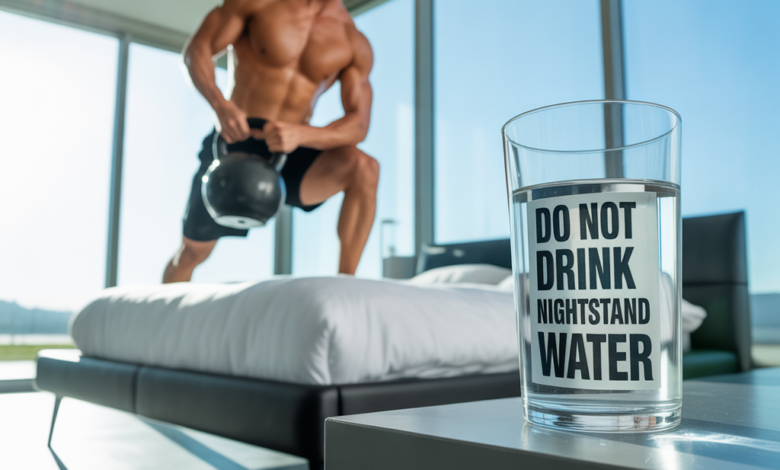
Ever reached for a glass of water on your nightstand in the dark, taken a sleepy sip, and wondered if it’s really okay? That familiar habit — keeping a glass by the bed for convenience — seems harmless, but “do not drink nightstand water” is advice many health-conscious people are starting to take seriously. In this article, we’ll explore the risks, science-backed hydration tips, and smart fitness-friendly alternatives so you can stay healthy, hydrated, and performance-ready.
Why people keep water on the nightstand (and why it’s tempting)
We all know the scenario: late workouts, a big dinner, or a glass of wine before bed leads to middle-of-the-night thirst. Having a glass within arm’s reach feels practical and comforting. For people focused on recovery and sleep, a sip of water can even seem essential. But convenience comes with trade-offs.
Do not drink nightstand water — the hidden risks
Leaving water exposed overnight invites contamination. Dust, airborne bacteria, insect debris, and even mold spores can settle in an open glass. Saliva backflow, especially if you’ve taken a sip earlier, introduces microbes that multiply over hours. And if the glass sits on an unclean nightstand or near plants and electronics, additional contaminants can make their way into your drink.
The science: bacteria and stagnation
Stagnant water at room temperature is a better medium for microbes than fresh, circulating water. While a single overnight glass isn’t likely to create an acute infection in a healthy adult, it can contribute to mild stomach upset or oral bacteria exposure. For people with weakened immune systems, this risk increases.
Environmental contaminants to watch for
- Household dust and pet dander
- Mold spores from humid environments
- Insect matter (tiny flies, mosquito eggs)
- Residue from skincare products or medications on fingertips
Healthier hydration habits for sleep and fitness recovery
Instead of a perpetually open glass, try these practical swaps that keep hydration safe and support your training and recovery goals.
Practical alternatives to nightstand water
- Use a covered bottle or insulated flask — keeps out dust and slows bacterial growth.
- Fill a small bottle with filtered water before bed and store it in the fridge for a refreshing sip.
- Use a straw-equipped bottle to limit direct mouth contact and reduce backflow contamination.
- Keep a reusable water bottle for the night and wash it daily — especially the cap and mouthpiece.
Hydration timing and sleep-friendly strategies
- Plan hydration around your workouts: drink 300–500 ml (10–17 oz) within 30 minutes after exercise to promote recovery.
- Reduce late-night fluid intake 1–2 hours before bed to minimize sleep disruptions from bathroom trips.
- If you wake thirsty, sip chilled water from a covered bottle rather than an exposed glass.
Fitness tips that connect hydration with performance
Hydration isn’t just about quenching thirst — it supports muscle recovery, joint health, and energy levels. Follow these fitness-specific tips to optimize fluid balance without risking exposure to contaminated nightstand water.
Pre- and post-workout hydration routine
- Pre-workout: Drink 250–500 ml (8–17 oz) of water 30–60 minutes before training.
- During intense sessions longer than an hour, use electrolyte drinks or sips every 15–20 minutes.
- Post-workout: Rehydrate with 500–700 ml (17–24 oz) and include a protein + carb snack for optimal recovery.
Workout variations that minimize late-night thirst
- Avoid intense evening training sessions that spike hydration needs late at night; shift high-intensity workouts to earlier in the day when possible.
- Try low-impact evening activities — yoga, mobility work, or a short brisk walk — to wind down without causing excessive sweating.
- Include cooling strategies post-exercise like cold showers or ice packs to lower core temperature and reduce overnight fluid demands.
Practical lifestyle changes to reduce contamination risks
Small home hygiene shifts prevent nightstand water from becoming a hazard.
Nightstand hygiene checklist
- Wipe the surface weekly with a mild disinfectant.
- Keep drinking vessels covered and wash them daily.
- Move plants or food away from bedside surfaces to reduce mold and insect attraction.
- Store medications and beauty products in drawers to prevent residue transfer.
Real-world example
Emma, a 32-year-old runner, used to leave a tumbler of water beside her bed. After a couple of nights with stomach upset following an overnight sip, she switched to a covered stainless-steel bottle, filled it with filtered water each evening, and rinsed it every morning. Her sleep improved, and she felt more confident about her nightly hydration routine. Small changes like Emma’s can make a meaningful difference.
Frequently Asked Questions
Q1: Is it dangerous to drink water that’s been on the nightstand overnight?
A1: For most healthy adults, the occasional sip of overnight water is unlikely to cause serious harm, but it can contain bacteria, dust, or mold spores that increase the chance of minor stomach upset or oral bacteria exposure. People with weakened immune systems should avoid it.
Q2: How can I keep a bedside water supply safe?
A2: Use a covered or insulated bottle, rinse and refill it daily, store it in the fridge if you like cold water, and keep bedside surfaces clean. Consider using a straw or mouthpiece to limit direct contact.
Q3: How does hydration affect my workouts and sleep?
A3: Proper hydration supports muscle function, recovery, and cognitive performance. Timing matters — hydrate before and after workouts and moderate late-night fluids to prevent sleep disruption. For detailed routines, check our workout routines and nutrition guides.
Conclusion — Do not drink nightstand water without taking precautions
Keeping hydration at hand is smart, but the simple rule “do not drink nightstand water” without precautions helps you avoid unnecessary exposure to bacteria and contaminants. Swap out open glasses for covered bottles, maintain a hydration schedule aligned with your fitness goals, and keep your nightstand clean. These small habits protect your health, improve sleep quality, and support consistent training progress.
Ready to level up your hydration and fitness routine? Try swapping your bedside glass for a covered bottle tonight and explore more practice-driven advice in our wellness tips and workout routines. Share your experience in the comments — what bedside hydration habit has worked best for you?