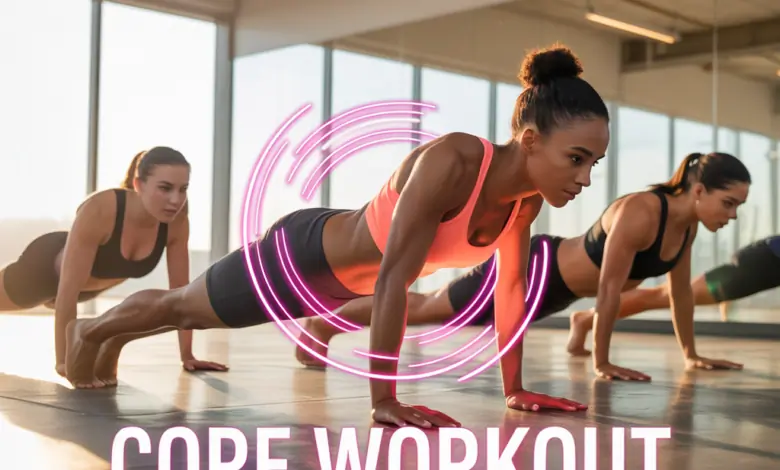
Ever felt winded after carrying a few grocery bags upstairs or experienced that familiar nagging lower-back ache after a long day at a desk? Strengthening your core can change those moments — and it’s easier than you think. If you’ve searched for practical, sustainable core workout tips, this guide gives you evidence-based advice, beginner-friendly routines, and progressions to build a resilient midsection that supports everyday life.
Why a Strong Core Matters
Your “core” isn’t just your abs. It includes the deep transverse abdominis, obliques, pelvic floor, diaphragm, and the muscles around your lower back and hips. A strong, stable core improves posture, reduces injury risk, boosts athletic performance, and makes daily tasks — from picking up kids to swinging a golf club — feel easier.
Core Workout Tips: How to Train Your Midsection Effectively
Below are practical core workout tips you can apply whether you’re training at home or in the gym. These focus on quality, progression, and functional strength rather than endless crunches.
1. Prioritize Technique Over Reps
- Focus on maintaining a neutral spine and bracing the core like you’re about to get a light punch to the stomach.
- Breathe intentionally — exhale during exertion and avoid holding your breath (Valsalva) on high-rep sets unless lifting heavy with proper coaching.
- Slow, controlled movements activate more muscle fibers than fast, sloppy reps.
2. Train All Planes of Motion
Include exercises that work flexion (crunching), extension (anti-extension), rotation (twisting), and anti-rotation (stability). This builds balanced core strength and translates to real-life movement.
- Flexion: Bicycle crunches, dead bugs
- Extension/Anti-extension: Planks, rollouts
- Rotation: Russian twists, cable woodchops
- Anti-rotation: Pallof press, single-arm carries
3. Use Progressive Overload
Just like any muscle group, your core responds to gradual increases in challenge. Progress by:
- Increasing hold time (e.g., plank from 30s to 60s)
- Adding load (weighted carries, cable chops)
- Changing lever length (knee vs. straight leg raises)
- Increasing complexity (single-arm plank, uneven loading)
4. Train Core Functionally
Include exercises that mimic daily tasks and sports movements — farmer’s carries for loaded walking, anti-rotation work for resisting twist during a golf swing, and hip bridges for lifting from the hips safely.
Sample Core Routines: From Beginners to Advanced
Beginner — 10-Minute Core Circuit (No Equipment)
- Dead Bug — 3 sets x 8-10 per side
- Forearm Plank — 3 sets x 20–40 seconds
- Glute Bridge — 3 sets x 12–15
- Side-Lying Leg Raise — 2 sets x 10 per side
Perform as a circuit with 30–60 seconds rest between rounds. This builds foundational core endurance and hip stability.
Intermediate — 20-Minute Core Strength Session
- Pallof Press (band or cable) — 3 sets x 8–10 per side
- Hanging Knee Raises or Lying Leg Raises — 3 sets x 10–12
- Plank with Shoulder Tap — 3 sets x 12 taps
- Single-Leg Romanian Deadlift (light weight) — 3 sets x 8 per side
Advanced — Strength and Stability Mix
- Ab Wheel Rollouts — 3 sets x 8–10
- Weighted Russian Twists — 3 sets x 12–16
- Farmer’s Carry (heavy) — 4 rounds x 40–60 meters
- Single-Arm Overhead Carry — 3 rounds x 30–50 meters per side
Healthy Lifestyle Habits That Enhance Core Results
Exercise alone won’t deliver the best outcomes. Combine your training with these lifestyle habits:
- Nutrition: Prioritize protein for muscle repair and include anti-inflammatory foods (leafy greens, fatty fish). See our nutrition guides for meal ideas that support strength gains.
- Sleep: Aim for 7–9 hours to optimize recovery and core muscle growth.
- Mobility: Stretch hips and thoracic spine; tight hips and a stiff upper back force the core to compensate.
- Posture: Regularly check sitting posture; engage your core gently when standing or walking to build endurance.
Common Mistakes and How to Fix Them
- Too many crunches: Replace excessive flexion work with anti-extension and anti-rotation moves for functional strength.
- Neglecting the posterior chain: Strong glutes and back support a healthy core; include hip bridges and deadlifts.
- Rushing progressions: If you can’t hold a 20-second plank with good form, prioritize holds and technique before advanced variations.
Real-World Examples: How Core Strength Helps You Daily
Think of everyday tasks that become easier with a stronger core:
- Carrying groceries — less strain on the low back when you brace and walk with stability.
- Playing with kids — improved endurance to lift, twist, and bend safely.
- Improved athletic performance — a stable core lets you transfer force effectively in running, swinging, and throwing.
Frequently Asked Questions
1. How often should I do core workouts?
Aim for 2–4 focused core sessions per week, plus integrated core work during compound lifts (squats, deadlifts). Frequency depends on intensity: higher-intensity core strength days need more recovery.
2. Will core exercises give me visible abs?
Visible abs depend largely on body fat percentage and genetics. Core exercises build the muscles underneath, but reducing body fat through a sensible diet and full-body training is necessary to reveal definition.
3. Can core training help with lower back pain?
Yes, when done correctly. Strengthening deep stabilizers (transverse abdominis, multifidus) and improving hip mobility can reduce mechanical stress on the spine. If you have chronic pain, consult a healthcare professional before starting a program.
Putting It All Together
Core workout tips are most effective when combined: prioritize technique, train all planes of motion, progress gradually, and support your training with smart nutrition, sleep, and mobility work. Start small, be consistent, and celebrate functional wins — like carrying a heavy bag without wincing. For structured training options, check out our workout routines and additional wellness tips to build a plan that fits your life.
Ready to strengthen your core and move better every day? Pick one tip from this article to try during your next session and track the change. Share your progress or questions — let’s build stronger, more resilient bodies together.