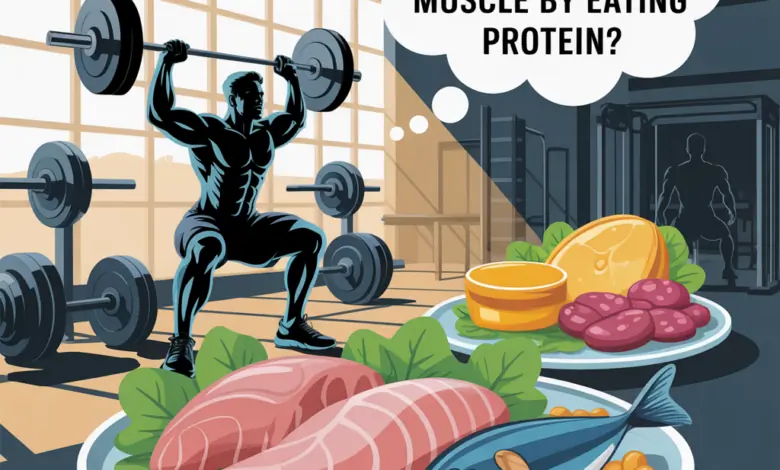
Ever stood in the grocery aisle wondering if one more chicken breast or another protein shake will finally give you the arms you want? Or maybe you’ve heard that protein is the magic bullet for muscle growth and thought, “Can I skip the gym if I just eat more protein?” That question—can you gain muscle just by eating protein—is one of the most common fitness myths I clear up with clients every week.
Can you gain muscle just by eating protein?
Short answer: no. Eating protein is essential for building and repairing muscle tissue, but protein alone—without resistance training, adequate calories, and recovery—won’t create significant hypertrophy (muscle growth). To increase muscle mass you need a combination of the right nutrition, progressive overload (training stimulus), and recovery. Below I’ll explain why protein is crucial, what else matters, and how to design an effective, realistic plan.
Why protein matters for muscle growth
Protein provides amino acids—especially leucine—that stimulate muscle protein synthesis (MPS). When you train, you create micro-tears in muscle fibers; protein helps repair and build them bigger and stronger. Key points:
- Muscle protein synthesis requires sufficient dietary protein and the training stimulus.
- Aim for high-quality protein sources (lean meats, fish, eggs, dairy, legumes, and dairy alternatives).
- Distribution matters: spreading protein across meals helps maintain a positive protein balance throughout the day.
How much protein do you actually need?
General guidelines for muscle gain:
- For most active adults: 1.2–2.2 g/kg body weight per day (0.55–1.0 g/lb).
- Practical tip: start around 1.6 g/kg (0.7 g/lb) and adjust based on progress and appetite.
- Aim for 20–40 g protein per meal to maximize MPS, depending on body size and workout intensity.
What else is required to gain muscle
Protein is necessary, but not sufficient. Think of muscle growth as a three-legged stool: resistance training, nutrition (calories + protein), and recovery.
1. Resistance training (the essential stimulus)
No training stimulus = no reason for muscles to grow. Lifting weights or using resistance bands creates adaptations. Key principles:
- Progressive overload: gradually increase weight, reps, or volume.
- Train each muscle group 2–3 times per week for best results.
- Rep ranges: 6–12 reps for hypertrophy; 8–20 for beginners using lighter loads.
2. Energy balance and calories
If you want to build muscle, you usually need a modest calorie surplus—eating more energy than you burn—so the body has extra resources for growth. Alternatively, beginners can sometimes gain muscle in a calorie maintenance or slight deficit if they’re new to training.
3. Recovery: sleep, stress, and rest days
Muscle growth happens between workouts. Aim for 7–9 hours of sleep, manage stress, and schedule rest days to allow supercompensation (actual gains) to occur.
Practical fitness tips and workout variations
Here are realistic, actionable steps you can take starting this week.
Beginner full-body routine (3x/week)
- Squat (bodyweight or goblet) – 3 sets of 8–12
- Push-up or bench press – 3 sets of 8–12
- Bent-over row or band row – 3 sets of 8–12
- Romanian deadlift (dumbbell) – 3 sets of 8–12
- Plank – 3 sets of 30–60s
At-home variations (bodyweight and bands)
- Progress push-ups by elevating feet or adding reps
- Use resistance bands for rows, presses, and deadlifts
- Slow, controlled tempo increases time under tension—an effective stimulus
Intermediate lifter (split and progressive overload)
- Upper/lower split: 4 days per week focusing on heavier compound lifts and accessory work
- Add small weight increases, extra sets, or drop sets every 1–2 weeks
- Log workouts—track weights and reps to ensure progress
Nutrition strategies that actually work
Pair your training with smart nutrition:
- Eat enough protein but also enough total calories to support gains.
- Include carbs around workouts to fuel training and aid recovery (rice, oats, fruit).
- Don’t fear dietary fat—healthy fats support hormones and satiety.
- Use protein shakes as a convenient supplement, not a replacement for whole foods.
Example daily meal plan for muscle gain
- Breakfast: Omelet with spinach + oats (25–30 g protein)
- Lunch: Grilled chicken salad with quinoa (30–40 g protein)
- Snack: Greek yogurt + fruit (15–20 g protein)
- Dinner: Salmon, sweet potato, veggies (30–40 g protein)
- Post-workout: Protein shake or cottage cheese if needed
Real-world examples
Case 1: Sarah increased protein from 60 g to 110 g/day but didn’t lift consistently. Result: minor changes in body composition, but no real muscle gains—because she lacked progressive overload.
Case 2: James combined a 3x/week hypertrophy program with a 200 kcal daily surplus and 1.8 g/kg protein. Over 12 weeks he gained 6–8 pounds, most of it lean mass—showing how training plus nutrition produces results.
Common mistakes to avoid
- Relying solely on protein supplements without whole foods.
- Expecting rapid changes without progressive training.
- Ignoring sleep and stress—they blunt muscle-building hormones.
Frequently Asked Questions
1. Can I build muscle if I only change my diet and never lift weights?
No. While increased protein and calories can slightly improve body composition, significant muscle hypertrophy almost always requires resistance training as the primary stimulus.
2. Is it possible to gain muscle on a low-carb or vegan diet?
Yes. Muscle growth depends on overall protein intake, caloric balance, and training. Vegans may need to plan complementary protein sources and possibly higher total protein to reach the same amino acid profile. Low-carb diets can work if calories and protein are adequate.
3. How soon will I see muscle gains after increasing protein and starting training?
Beginners often notice strength and visual changes within 4–8 weeks; more noticeable hypertrophy usually appears after 8–12 weeks with consistent effort. Tracking progress with photos and strength logs helps measure true changes.
Conclusion — Can you gain muscle just by eating protein?
Eating more protein is a powerful piece of the muscle-building puzzle, but on its own it won’t produce substantial gains. The best approach combines adequate protein intake with resistance training, a modest calorie surplus (when appropriate), smart recovery, and consistent progression. If you’re ready to take the next step, start a structured program and pair it with a protein-focused meal plan that fits your life. Check out our workout routines for beginner and intermediate plans, and browse our nutrition guides to dial in your meals. Ready to start? Pick a 12-week plan, commit to 3–4 training sessions per week, and track your protein and calories—your results will follow.
Want more tips and sample routines? Explore our wellness tips page and subscribe for weekly advice to build strength smarter, not harder.