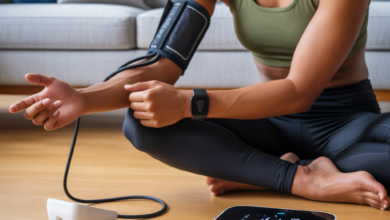
Imagine you’re three weeks into a solid training streak and then you stub your toe so hard it swells overnight. You’re asking yourself: can I workout with a broken toe or do I have to stop exercising altogether? That moment of frustration is familiar to every athlete and weekend warrior — the good news is you don’t necessarily have to sit still. With the right approach, modifications, and medical guidance, you can keep training without risking healing.
Can I workout with a broken toe? Safe exercise options
The short answer: sometimes. Whether you can safely exercise depends on the type of fracture, pain level, and weight-bearing restrictions from your healthcare provider. Many simple toe fractures (non-displaced) allow for modified activity — while complex or displaced fractures usually require immobilization and non-weight-bearing rest.
Get the basics right: consult, immobilize, and assess
- See a doctor for an accurate diagnosis and x-ray — don’t guess.
- Follow recommended immobilization (buddy taping, stiff-soled shoe, walking boot) and pain-management strategies.
- Watch for worsening symptoms (increased pain, numbness, color changes) and stop any activity that aggravates the toe.
Low-impact workouts that won’t wreck your recovery
If your care team clears you for activity, focus on low-impact, non-weight-bearing, or protected-weight workouts. These build fitness while protecting the healing toe.
Upper-body strength and core
- Seated dumbbell presses, rows, chest presses — performed seated or lying down to avoid toe pressure.
- Core circuits: planks (on knees if necessary), dead bugs, Russian twists (keeping feet supported).
- Resistance-band work for shoulders, back, and arms.
Cardio without pounding
- Swimming or aqua jogging — excellent because water unloads the foot. Use caution entering/exiting the pool if balance is affected.
- Stationary bike with a stiff-soled shoe or toe protector — keep resistance moderate to avoid pushing off hard with the toes.
- Rowing machine if you can keep feet securely strapped and avoid toe pain.
Lower-body modifications
- Single-leg work on the uninjured side (careful with balance).
- Leg press with minimal toe pressure — adjust foot position so the ball of the foot and toes are less stressed.
- Seated hamstring curls and quad extensions.
Practical tips for exercising with a broken toe
- Use a walking boot or rigid-soled shoe as recommended to offload the toe during standing exercises.
- Buddy tape the injured toe to its neighbor for stability unless advised otherwise by your doctor.
- Modify balance work — hold onto a stable surface or skip single-leg balance until healed.
- Keep workouts shorter and more frequent to maintain fitness without overloading healing tissue.
- Ice after workouts and elevate the foot to reduce swelling.
Real-world example
One client, Sarah, fractured her proximal toe while hiking. Her doctor allowed protected training with a stiff-soled boot after two weeks. We replaced her runs with pool workouts, added seated upper-body supersets, and used a stationary bike with low resistance. After six weeks she transitioned into light jogging and regained full fitness by 10 weeks with a phased return-to-run plan.
When to avoid exercise or stop immediately
There are times when you must rest completely:
- If your doctor prescribes non-weight-bearing or casts you — follow that order strictly.
- Severe pain, new numbness, increasing swelling, or signs of infection (red streaks, fever) — stop and seek medical care.
- Any exercise that causes sharp pain in the broken toe — don’t push through.
Return-to-activity timeline and progression
Typical timelines vary: simple toe fractures often begin to feel better in 4–6 weeks, while full return to high-impact activity may take 8–12 weeks. Use a graduated approach:
- Weeks 0–2: Immobilization, rest, pain control.
- Weeks 2–6: Low-impact cardio and protected strength under guidance.
- Weeks 6–8+: Start progressive loading, short walks, gentle jogging if pain-free.
Always follow your provider’s clearance and consider a physical therapist to design a progressive plan focused on mobility, strength, and balance.
Healthy habits to speed healing
- Nutrition: prioritize protein, vitamin C, calcium, and vitamin D to support bone repair. Consider a balanced meal plan from a reliable nutrition guides page for ideas.
- Sleep: aim for 7–9 hours to facilitate tissue recovery.
- Smoking cessation: tobacco slows bone healing — cut back or quit.
- Gentle mobility work and circulation-boosting activities, like ankle pumps and light elevation.
Can I workout with a broken toe? Final thoughts and safe action steps
So, can I workout with a broken toe? In many cases you can, but the key is modification, medical clearance, and smart programming. Protect the toe, avoid high-impact activities, and switch to cardio and strength work that doesn’t stress the injury. Keep your workouts productive and recovery-focused so you return stronger.
Ready to adapt your training? Check out tailored workout routines for injury-friendly sessions, and explore more wellness tips to support healing. If you’re uncertain, book a visit with your provider or a physical therapist to get a personalized plan.
Frequently Asked Questions
1. How long should I wait to exercise after breaking a toe?
Wait until you’ve seen a doctor and received clearance. Many people can begin gentle, non-weight-bearing or protected activity within 1–2 weeks for minor fractures; more severe fractures may require several weeks of non-weight-bearing. Follow your healthcare provider’s timeline.
2. Can I still run with a broken toe?
Running is high-impact and typically not recommended until the toe has healed significantly. Returning too soon risks re-injury or delayed union. Start with low-impact cardio and progress to run-walk intervals only when you’re pain-free and have medical clearance.
3. What are the safest workouts with a broken toe?
Swimming, aqua jogging, seated upper-body workouts, core training, and cycling (with appropriate shoe protection) are often safe options. Avoid jumping, sprinting, and heavy barefoot work until fully healed.
Conclusion — take action wisely
Can I workout with a broken toe? Yes — often, but only with modifications, proper protection, and medical approval. Use low-impact alternatives, prioritize healing with nutrition and rest, and progress slowly. If you want help designing an injury-friendly plan, explore our workout routines and nutrition guides, or reach out to a physical therapist to create a safe return-to-training roadmap.