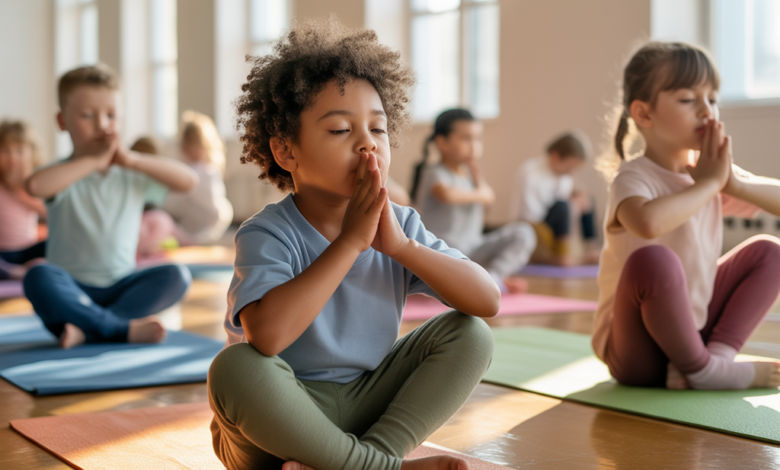
Has your child ever frozen at the school door, eyes wide, hands trembling before a recital or test? Or perhaps bedtime becomes a cycle of worry about monsters, schoolwork, or friendships. If so, calming breathing for anxious kids can be one of the fastest, most reliable skills you teach them — no special equipment required and usable anywhere, from the classroom to the soccer field.
Why breathing exercises help anxious children
When kids feel anxious, their bodies trigger the same fight-or-flight responses we see in adults: shallow breathing, a racing heart, and tense muscles. Deliberate breathing techniques slow the nervous system, lower heart rate, and create a sense of safety. These mindful breathing practices — also called breathing exercises for kids or deep breathing techniques for anxious children — are an accessible form of emotion regulation that builds resilience over time.
Quick, fun calming breathing for anxious kids routines
Below are several kid-friendly techniques you can try. Each one is short (1–5 minutes), playful, and easy to adapt by age.
1. Balloon Belly Breath (Belly breathing)
- How to: Ask the child to place one hand on their belly and one on their chest. Inhale slowly through the nose for 3–4 seconds, imagining the belly filling like a balloon. Exhale through the mouth, letting the balloon deflate.
- Why it works: Encourages diaphragmatic breathing, reducing shallow chest breaths tied to panic.
- Variation: Use a real balloon or a stuffed animal on the belly to make it visual and tactile.
2. Snake Hiss Breath (Long exhale technique)
- How to: Inhale for 3 counts, then exhale while making a gentle “sss” sound like a snake for 5–6 counts.
- Why it works: Extending the exhale activates the parasympathetic system, calming the body.
3. Square Breathing (4-4-4-4)
- How to: Inhale for 4, hold for 4, exhale for 4, hold for 4. Repeat 3–5 times.
- Why it works: The rhythm provides predictability and focus, great for pre-performance nerves.
- Tip: Younger kids can imagine tracing a square with their finger as they breathe.
4. Counting Breath (Grounding through numbers)
- How to: Breathe in for 3, breathe out for 3, then count the breath out loud. Repeat up to 10 breaths.
- Why it works: Counting adds a cognitive element that redirects anxious thoughts into a simple task.
Integrating calming breathing into daily routines
Consistency turns breathing exercises into a habit. Here are practical ways to integrate them without resistance:
- Morning Routine: Start the day with 2–3 balloon breaths after brushing teeth.
- Transition Cues: Use a breath before leaving the house, before school, or after screen time.
- Bedtime Wind-Down: Pair breathing with a bedtime story or gentle stretching.
- Active Breaks: Combine breathing with short movement breaks — 30 seconds of jumping jacks followed by 5 belly breaths helps regulate energy and focus.
Combining movement and breath: kids’ workout variations
Pairing breathing with movement teaches kids to coordinate breath with activity — valuable for sports, stage nerves, and day-to-day stress.
Simple active sequences
- Sun Salutation Mini-Flow: 3 rounds of reach (inhale) and fold (exhale) — great for mornings.
- Calm Cardio Cool-Down: After a quick run, slow to walk and do 5 long snake breaths to lower heart rate.
- Balance & Breath: Stand on one foot and take 4 deep breaths; switch feet. Improves focus and steadiness under pressure.
Healthy lifestyle habits that support calmer breathing
Breathing exercises are powerful, but they work best alongside healthy habits that reduce baseline anxiety:
- Routine sleep schedule: Aim for consistent bed and wake times to regulate mood and stress responses.
- Balanced nutrition: Regular meals with protein, healthy fats, and fiber stabilize blood sugar and mood.
- Screen-time limits: Wind down screens an hour before bed to support breath-centered relaxation routines.
- Outdoor play: Exposure to sunlight and unstructured play lowers anxiety and gives natural opportunities for breath work.
Real-world examples: how parents, teachers, and coaches use these techniques
– A teacher starts each class with 60 seconds of square breathing to help students settle after recess.
– A soccer coach teaches belly breathing before penalty kicks so players can calm their nerves and improve accuracy.
– A parent uses snake hissing breaths during a thunderstorm to shift a child’s focus away from scary sounds.
Tips for success — getting kids on board
- Model the behavior: Do the breathing exercises together. Kids copy what they see.
- Keep it short and playful: Aim for 1–3 minutes initially to build willingness and consistency.
- Use stories and imagery: Balloons, dragons, and bubbles make the practice memorable.
- Celebrate effort: Praise attempts rather than perfection to reinforce the habit.
Frequently Asked Questions
1. How long should a child practice calming breathing for anxious kids?
Start with 1–3 minutes per session and gradually build to 5 minutes. Short, frequent practices are more effective than rare, long sessions.
2. At what age can kids learn these breathing techniques?
Simple techniques like balloon belly breathing can be introduced around ages 3–4 with playful cues. More structured practices (square breathing) work well for school-age children (5+).
3. What if my child resists or forgets to breathe when anxious?
Use cues and routines: a visual reminder, a toy, or a short shared practice can help. Keep it low-pressure — practice when calm so it becomes an automatic tool during anxiety.
Conclusion: Make calming breathing for anxious kids a daily habit
Calming breathing for anxious kids is a simple, science-backed tool you can use anywhere to reduce fear, improve focus, and build emotional resilience. Start small, make it playful, and pair breathing with movement and healthy lifestyle habits for best results. Try one technique today — model it, practice it for a week, and notice the difference.
Want more ideas? Check out our workout routines for kids and the family, explore practical tips in our wellness tips section, or review age-appropriate meal plans in our nutrition guides to support calm, confident children.
Call to action: Pick one breathing exercise and practice it with your child tonight. Share your experience in the comments or save this page to your routine checklist — small steps lead to big change.