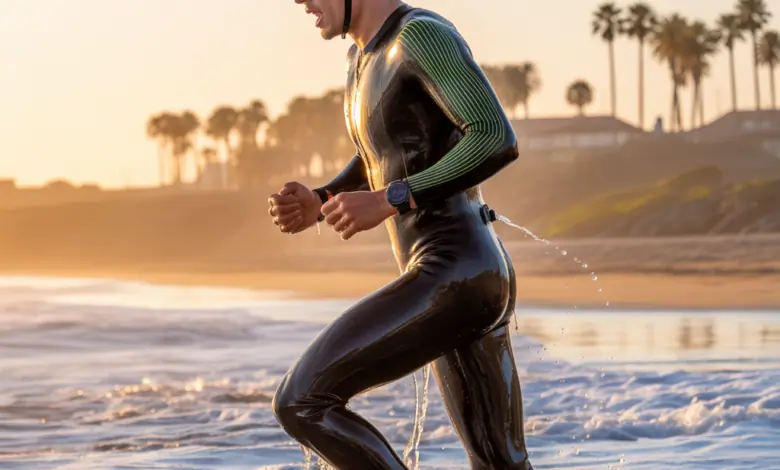
Ever stood at the swim start staring at fog over the Pacific or paced nervously in transition while imagining every possible mishap? Race day nerves are universal — but with the right plan, they become fuel. This California triathlon guide for race day walks you through a calm, confident, and practical approach so you can focus on performance and enjoy the finish line.
Why a California-specific race-day plan matters
California triathlons vary wildly — coastal wind, inland heat, Bay Area fog, mountain altitude. Tailoring your race-day strategy to local conditions (ocean swell vs. lake calm, rolling hills vs. flat bike courses) helps you avoid surprises and stay strong from swim to run. Below you’ll find a checklist, practical tips, workout variations, and nutrition guidance that translate across distances — sprint to Olympic — and across climates in the state.
Pre-race checklist: What to pack and set up
- Race kit: race bib/belt, timing chip, goggles, helmet, shoes, sunglasses
- Transition gear: two water bottles, flat kit (CO2/mini-pump, spare tube, tire levers), multi-tool
- Nutrition and hydration: pre-race snack, race gels, electrolytes, caffeine source
- Clothing layers: wetsuit or sleeveless top, windbreaker for early morning chill
- Comfort items: towel, sunscreen, hat, warm-up clothes, safety pins
- Race day documents: event confirmation, ID, medical info if needed
Quick tip: layout your transition the night before
Organize items in the exact order you’ll use them. Shoes facing the bike’s nose, helmet resting on the handlebars, nutrition in the order you’ll consume it. A practiced layout saves seconds that add up to minutes.
Race morning: a calm timeline
- Wake up early enough to digest — typically 2–3 hours before your wave.
- Eat a familiar, carb-focused breakfast: toast with peanut butter, banana, or oatmeal.
- Hydrate with electrolytes; avoid overdrinking water right before the start.
- Arrive early to check-in, warm up, and set your transition area.
- Warm up: 10–15 minutes of light jogging and dynamic swims if possible.
Sample 90-minute pre-race routine
- 90 min: Light breakfast + hydration
- 60 min: Arrive at venue, rack bike
- 45 min: Final gear check, body glide where needed
- 30 min: Warm-up jog and short swim if allowed
- 10 min: Mental visualization and breathing drills
Swim strategies for California conditions
Whether you’re facing ocean chop or calm lake water, solid swim technique and sighting reduce wasted energy.
- Open water sighting: lift your head every 6–8 strokes to pick a landmark or buoy.
- Wetsuit practice: practice getting in and out of the wetsuit during training so donning and doffing is smooth.
- Mass starts: go out controlled. Draft off stronger swimmers rather than sprinting and burning glycogen early.
Workout variation: ocean-sim swim set
2–3 times/week practice: 10x100m with varying effort (easy, threshold, easy) and add 4x50m sighting drills to replicate choppy conditions.
Bike: pacing, course recon, and safety
California bike courses might include coastal winds or inland climbs. Recon the course if possible, or study elevation and wind patterns ahead of time.
- Pacing: use wattage or perceived exertion. On hilly courses, ride steady power rather than constant speed.
- Flat kit: always have a spare tube and CO2 cartridge. Fixing a flat quickly keeps you competitive.
- Descending: practice cornering and braking on similar roads during training rides.
Brick workouts to prepare your legs
Weekly brick: 60–90 min bike at race-pace effort immediately followed by a 15–20 min run to adapt to the bike-to-run transition.
Run: pacing and fueling for the second half
The run is where races are won or lost. Start controlled for the first kilometer after T2 to allow your legs to settle.
- Fueling: take small sips of sports drink at every aid station; use gels at regular intervals you practiced in training.
- Heat management: for warm California races, use water sponges, pour water on your head, and slow pacing at aid stations if needed.
- Pacing: negative splits (second half faster) often feel better and reduce bonking risk.
Mental game: visualization and breathing
Visualization reduces anxiety. Picture your transition flow, the swim exit, clipping into your bike, and crossing the finish. Pair this with box breathing (4-4-4-4) before the start to steady your heart rate.
Your “California triathlon guide for race day” checklist
- Race confirmation and arrival plan
- Transition setup practiced and labeled
- Nutrition and hydration schedule confirmed
- Warm-up routine rehearsed
- Equipment double-checked (brakes, tires, goggles)
- Mental cues and race strategy noted
Real-world examples that illustrate these tips
At a foggy Bay Area sprint, a teammate saved time by pre-setting tire pressure for cool mornings — avoiding under-inflation that causes slow rolling. In Palm Springs, another athlete used a lightweight cap and extra hydration stops to beat the heat. Practicing open water starts at your local lake or bay will make that ocean start feel routine instead of chaotic.
Healthy lifestyle tips to support race day
- Sleep: prioritize 7–9 hours in the week before race day; aim for 8–9 the night before.
- Taper properly: reduce volume but keep intensity to maintain sharpness.
- Balanced meals: lean protein, complex carbs, and healthy fats in the week before competition.
- Recovery: active recovery, foam rolling, and gentle stretching after hard sessions.
Frequently Asked Questions
Q: What should I eat on race morning for a California triathlon?
A: Stick to familiar, easily digestible carbs 2–3 hours before start: toast with peanut butter, a banana, or oatmeal. Supplement with a small caffeine dose if you usually use it, and sip electrolytes. Avoid high-fiber or high-fat foods right before the race to prevent stomach issues.
Q: How do I set up transitions to save time?
A: Practice transition runs in training so you can bike in, rack quickly, and run out. Lay out gear in race order, wear elastic laces on run shoes, and have nutrition within reach. Labeling or using a consistent layout every race cuts mental load and speeds movement.
Q: How do I handle ocean swim anxiety or rough conditions?
A: Practice sighting and breathing bilaterally, get open-water sessions under your belt, and start at the side if mass starts are overwhelming. Drafting behind a competent swimmer and conserving energy during the first few hundred meters helps you settle into rhythm.
Conclusion: Ready, set, race—your next step
Use this California triathlon guide for race day as your blueprint: rehearse transitions, tailor nutrition and pacing to local conditions, and practice specific workouts like bricks and open-water sighting. With preparation comes confidence — and that’s the secret to enjoying and performing on race day. Ready to build a race plan or refine your training? Check out our workout routines, explore targeted fuel plans in our nutrition guides, and browse practical recovery strategies on our wellness tips page. Get out there and make this race your best one yet.