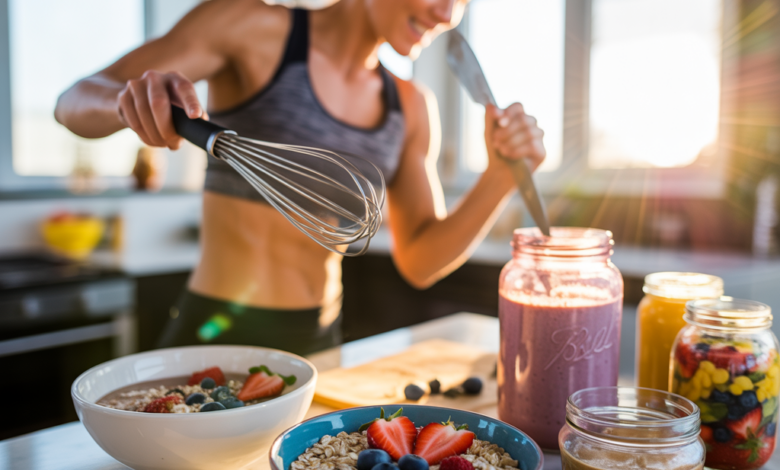
Ever stare at the clock on a Monday morning, coffee in one hand and a sad granola bar in the other, wondering how your day got hijacked by bad food choices? What if five extra minutes on Sunday could give you a week of healthy, delicious mornings? That’s the power of breakfast meal prep—simple planning that turns rushed mornings into fuel for your workouts, focus, and energy.
Why breakfast meal prep actually works
Meal prepping breakfast reduces decision fatigue, helps you hit your macronutrient goals, and prevents impulse eating. When you have a fridge full of ready-to-eat, nutrient-dense options, you’re more likely to stick with healthy habits—and that consistency compounds over time for weight management, muscle building, and improved mood.
Key benefits at a glance
- Time savings: spend 30–90 minutes once and save 5–15 minutes every morning.
- Nutrition control: portion sizes, protein, and carbs are easier to track.
- Cost-effective: buying in bulk and batch-cooking lowers meal costs.
- Better workout performance: consistent pre- and post-workout fueling.
Breakfast Meal Prep: How to get started
Start simple. You don’t need fancy tools—just a grocery list, storage containers, and a basic plan. Here’s a step-by-step to turn your first attempt into a habit.
Essential gear and grocery list
- Containers: glass or BPA-free plastic, 12–16 oz for single servings.
- Reusable jars for overnight oats and parfaits.
- Baking tin or muffin pan for egg muffins and frittatas.
- Shopping basics: eggs, oats, Greek yogurt, frozen fruit, spinach, bell peppers, oats, chia seeds, canned beans, whole-grain tortillas, cottage cheese, nuts, and lean protein (chicken, turkey, tofu).
Simple Sunday plan (60 minutes)
- Preheat oven and bake a tray of egg muffins (eggs, spinach, peppers) — 20 minutes.
- Mix overnight oats for 4 jars — 5 minutes to assemble.
- Cook a lean protein (grilled chicken or tofu) or batch-cook breakfast sausage — 20 minutes.
- Portion yogurt parfaits and assemble grab-and-go boxes — 10 minutes.
7 Make-ahead breakfast ideas (healthy & practical)
Here are real-world recipes that hold up well through the week and cover different tastes and nutrition goals.
Protein-packed options
- Egg muffins: 6–8 eggs, chopped spinach, bell peppers, feta. Bake, cool, and store for 4–5 days. Great for high-protein breakfasts before strength training.
- Greek yogurt parfaits: Greek yogurt, mixed berries, a sprinkle of granola and chia seeds. Add a scoop of protein powder if desired.
Carb-focused and fiber-rich
- Overnight oats: rolled oats, milk (or plant milk), chia seeds, banana. Prep 4 jars for breakfasts or post-long run refuels.
- Breakfast burrito bowls: brown rice or quinoa, black beans, salsa, avocado (add fresh), and scrambled egg or tofu.
Quick vegan and low-prep
- Chia pudding: chia seeds, almond milk, maple syrup—mix and top with fruit in the morning.
- Nut butter & banana whole-grain wraps: assemble and wrap in foil for grab-and-go convenience.
Pairing breakfast with your workout routine
Breakfast choices should match your training. A 20–30 minute walk needs minimal fuel, while a heavy leg day benefits from a carbohydrate + protein meal 1–2 hours prior.
Pre-workout vs. post-workout examples
- Light morning cardio (20–30 min): half a banana or a small parfait 30–45 minutes before.
- HIIT or strength training (45–75 min): oat bowl with protein or egg muffins 60–90 minutes before; a protein smoothie immediately after.
- Yoga or mobility sessions: herbal tea and a chia pudding or small fruit + nut combo.
Workout variations and meal timing tips
- Morning lifters: prioritize 20–30 g protein at breakfast to support muscle protein synthesis.
- Endurance athletes: include 30–60 g carbs in the pre-workout meal for longer sessions.
- Busy schedules: keep a stash of protein bars or boiled eggs for emergencies—prepare them as part of your weekly breakfast meal prep.
Storage, reheating, and safety tips
Storing food correctly extends freshness and reduces waste.
- Refrigerate most egg- and yogurt-based breakfasts for up to 4–5 days.
- Overnight oats and chia pudding last 3–5 days in jars.
- Freeze portions of breakfast burritos or frittatas for 1–2 months—thaw overnight in the fridge and reheat.
- Label containers with date and contents to avoid mystery meals midweek.
Frequently Asked Questions
1. How long does breakfast meal prep stay fresh?
Most refrigerated meal-prepped breakfasts stay fresh for 3–5 days. Items with dairy or cooked eggs are best consumed within 4–5 days. Freeze portions you won’t eat within that timeframe.
2. Can meal-prepped breakfasts help with weight loss?
Yes. Planning breakfasts helps control portions, reduce snacking, and maintain consistent protein and fiber intake—key factors for satiety and steady energy. Pair meal prep with regular exercise and a balanced calorie plan for best results. See our nutrition guides for more strategies.
3. What if I don’t like eating the same thing every day?
Rotate a few options: prep two or three different breakfasts each week (e.g., overnight oats, egg muffins, and a yogurt parfait) and alternate them. Use different toppings and spices to vary flavors without extra prep time.
Conclusion — Make breakfast meal prep your morning superpower
Simple planning and a 60–90 minute weekly session can transform your mornings. Breakfast meal prep helps you save time, eat better, improve workout performance, and reduce stress on busy days. Start small: pick two recipes, set aside one hour on Sunday, and test what works. Need help matching meals to your training plan or calorie goals? Check out our workout routines and wellness tips pages for targeted guidance.
Ready to take back your mornings? Try one of the seven make-ahead breakfasts this week and share your favorite combo in the comments below. Small habits lead to big changes—start your breakfast meal prep today.
For more high protein meal prep ideas, check out Meal Prep Ideas High Protein.
For more high protein meal prep ideas, check out Meal Prep Ideas High Protein.