Ever finished a tough set and wondered why your legs felt like jelly while your buddy still looked fresh? Or struggled to recover after a long swim meet? The difference often comes down to what you ate. In this article you’ll discover the best foods for swimmers, how to time meals around training, and practical tips to swim stronger, recover faster, and feel better in and out of the pool.
Why Nutrition Matters for Swimmers
Swimming is unique: it’s a full-body, high-energy sport that blends endurance, sprint power, and repeated efforts. That means your diet needs to support glycogen stores, build and repair muscle, and maintain hydration and electrolyte balance. The best foods for swimmers provide a balance of complex carbohydrates, lean proteins, healthy fats, vitamins, minerals, and water — all optimized for training demands and recovery.
Top 10 Best Foods for Swimmers
Here are the go-to foods that swimmers should include regularly. These options maximize energy, recovery, and overall performance.
- Oats and whole grains: Oatmeal, brown rice, quinoa, and whole wheat pasta provide sustained energy and help refill glycogen before long sessions.
- Lean proteins: Chicken, turkey, lean beef, tofu, and eggs support muscle repair. Aim for a portion at each meal.
- Fatty fish: Salmon, mackerel, and sardines supply omega-3s for inflammation control and brain function.
- Greek yogurt and dairy: High in protein and calcium; great for recovery snacks or smoothies.
- Legumes: Beans, lentils, and chickpeas offer carbs, protein, and fiber — ideal for post-swim meals.
- Bananas and berries: Fast, portable carbs with antioxidants and potassium to help prevent cramps.
- Leafy greens and colorful veggies: Spinach, kale, peppers, and carrots provide micronutrients for immunity and recovery.
- Nuts and seeds: Almonds, walnuts, chia, and flaxseed offer healthy fats and a calorie-dense fuel source for heavy training weeks.
- Sweet potatoes: Delicious complex carbs loaded with vitamin A and potassium for energy and electrolyte balance.
- Beetroot: Emerging as a performance ally, beetroot juice or roasted beets can improve blood flow and endurance for some swimmers.
Pre-Swim Fuel: What to Eat Before Practice
For workouts longer than 45 minutes, eat a light, carbohydrate-focused snack 60–90 minutes before: a banana with a spoonful of peanut butter, a small bowl of oats, or a slice of toast with jam. For early morning sessions, a smoothie with fruit and yogurt can be easier on the stomach.
Post-Swim Recovery: Meals That Help You Bounce Back
Once training ends, prioritize quick carbs and a high-quality protein source within 30–60 minutes to accelerate glycogen restoration and muscle repair. Examples: Greek yogurt with berries, chocolate milk and a banana, or a turkey sandwich on whole grain bread. Follow with a balanced meal within 2–3 hours.
Sample Day: Meal Plan for a High-Training Day
A simple, practical sample for a swimmer training twice a day:
- Pre-morning swim: Small smoothie (banana, oats, yogurt, honey)
- Post-morning swim/brunch: Omelet with spinach, sweet potato hash, whole grain toast
- Pre-afternoon session: Apple and a handful of almonds
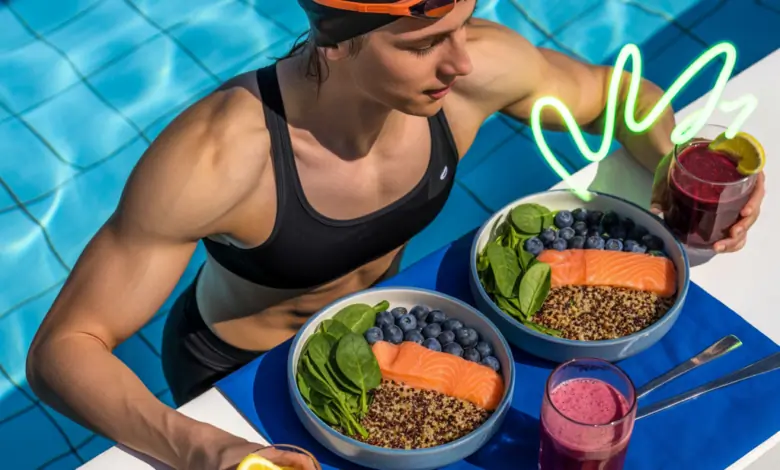
- Post-afternoon swim/dinner: Grilled salmon, quinoa, roasted vegetables
- Evening snack: Greek yogurt with berries or cottage cheese and fruit
Practical Fitness Tips and Workout Variations
Nutrition pairs with smart training. Here are actionable tips you can implement this week:
- Periodize your calories: Increase carbohydrate intake on heavy training days and lean back on rest days. This helps body composition and energy availability.
- Try rail-based intervals: For faster sprint capacity, do 8 x 50s at race pace with 20–30 seconds rest.
- Mix in dryland strength: Two to three sessions per week focusing on hip drive, core stability, and pulling strength will transfer to the pool.
- Use active recovery: On low-intensity days, opt for long, easy swims or mobility sessions to promote circulation and recovery.
- Hydration strategy: Drink water throughout the day, and include electrolyte-containing drinks for long workouts or hot conditions.
Real-world example: A college distance swimmer I coached improved race splits by prioritizing 60–90g of carbs pre-session (oatmeal or bagel) and protein-rich recovery within 30 minutes. Combined with two weekly strength sessions, the gains were clear in harder, faster workouts.
Healthy Lifestyle Advice for Better Performance
- Sleep 7–9 hours nightly — growth and recovery hormones are released during deep sleep.
- Manage stress with breathing exercises or light yoga; chronic stress blunts recovery.
- Consistent meal timing helps maintain steady energy levels for morning and evening practices.
- Track progress with simple metrics: training consistency, how soreness feels, and resting heart rate.
Frequently Asked Questions
How much protein do swimmers need daily?
Most swimmers require about 1.2–1.8 grams of protein per kilogram of body weight per day, depending on training load and goals. For intense training or muscle-building phases, aim toward the higher end; for maintenance, the lower end is sufficient. Spread protein across meals for best results.
What are the best pre-workout snacks for swimmers who train early in the morning?
Easy-to-digest carbs work best: a banana, a small smoothie with fruit and yogurt, or toast with honey. Keep portion small to avoid stomach upset but enough to raise blood glucose and prevent fatigue during session.
Should swimmers use supplements like protein powder or electrolytes?
Supplements can be convenient: a whey or plant-based protein powder makes post-swim recovery easier, and electrolyte mixes help during long or hot sessions. However, prioritize whole foods first and use supplements to fill gaps, not as replacements for balanced meals.
Conclusion: Start Fueling Smarter Today
Choosing the best foods for swimmers comes down to timing, balance, and consistency. Focus on whole grains, lean proteins, healthy fats, fruits and vegetables, and smart hydration. Pair that nutrition plan with targeted training — from interval sets to dryland strength — and you’ll see faster recovery, more powerful sets, and better race-day performance.
Ready to put this into action? Try swapping one processed snack for a recovery-focused option this week, and check out our workout routines and nutrition guides for meal ideas and training templates. For tips on overall wellbeing, visit our wellness tips page and start building a sustainable swim lifestyle today.