Ever stood in front of the mirror after leg day and wondered whether you should’ve spent more time squatting or deadlifting? If you’re chasing bigger, stronger glutes, that question—are deadlifts or squats better for glutes—comes up a lot. The good news: there’s no single perfect answer. It depends on your goals, anatomy, technique, and program. Read on for a clear, actionable breakdown so you can pick the right lifts and progress faster.
How Glutes Work: A Quick, Useful Primer
The glute group (gluteus maximus, medius, and minimus) plays roles in hip extension, abduction, and external rotation. Squats are generally knee-dominant with significant hip flexion, while deadlifts are hip-hinge dominant. Both are compound lifts that recruit the glutes, but they emphasize different parts and work them in distinct ways.
Why that matters
- Squats often load the gluteus maximus at deeper hip flexion ranges, especially when performed with a wider stance or low-bar technique.
- Deadlifts target the posterior chain and teach strong hip extension—valuable for glute development when you hinge correctly (think Romanian or sumo variations).
Squats for Glutes: Benefits, Variations, and Tips
Squats are a staple for lower-body development. When you squat, the glutes activate strongly, particularly near the top of the lift and when using heavier loads or squatting to parallel or below.
Best squat variations for glutes
- Back squat (low-bar): shifts load to hips, increases glute recruitment.
- Front squat: keeps torso upright—good for quads but still works glutes when performed to depth.
- Goblet squat: great for beginners to learn depth and hip drive.
- Bulgarian split squat: unilateral focus that isolates glutes and corrects imbalances.
Practical tips for squats
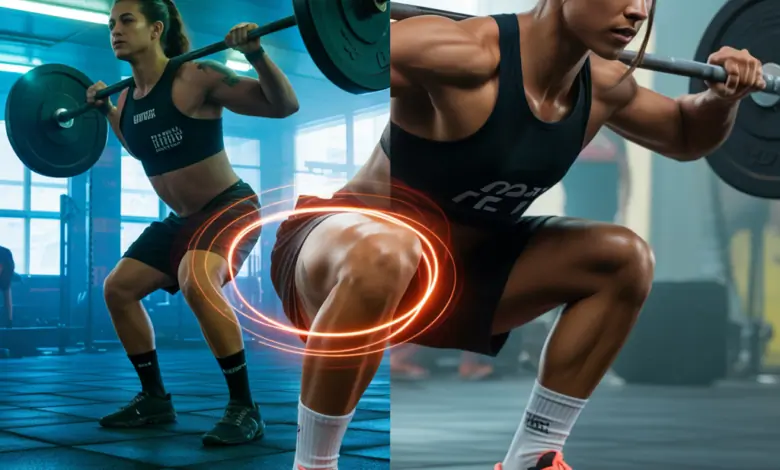
- Prioritize depth—aim for parallel or below if mobility allows; deeper squats often recruit more glute activation.
- Use a slightly wider stance and turn toes out a touch to engage the glute medius.
- Drive through the heels, keep chest up, and squeeze the glutes at the top for full hip extension.
- Rep ranges: 6–12 for hypertrophy; 3–6 for strength work.
Deadlifts for Glutes: Benefits, Variations, and Tips
Deadlifts are unmatched for training the posterior chain. They teach a powerful hip hinge and, when loaded appropriately, drive heavy glute contraction during lockout.
Best deadlift variations for glutes
- Romanian deadlift (RDL): emphasizes hip hinge and eccentric lengthening of glutes and hamstrings.
- Sumo deadlift: shorter range of motion, more hip drive, often increases glute activation for lifters with long torsos or femurs.
- Trap bar deadlift: balanced between squat and deadlift mechanics—less technical, great for beginners.
Practical tips for deadlifts
- Prioritize hinge mechanics—push hips back, soft knees, and focus on posterior chain tension.
- Control the eccentric (lowering) on RDLs to create more muscular damage and growth stimulus.
- Use moderate reps (6–10) for RDLs and higher volume for accessory hamstring-glute work.
Are deadlifts or squats better for glutes?
Short answer: both. Squats and deadlifts train the glutes differently—squats via deeper hip flexion and vertical load, deadlifts via hip hinge and heavy posterior chain engagement. Choosing one over the other should be based on your individual goals:
- If your goal is maximal hip extension strength and posterior chain power, prioritize deadlifts (especially RDLs and sumo).
- If you want overall lower-body development and more quad/glute balance with deep range-of-motion, prioritize squats.
- For glute hypertrophy, combine both within a structured program and add targeted accessory work like hip thrusts, glute bridges, and banded lateral walks.
How to Program Squats and Deadlifts for Glute Growth
Smart programming mixes heavy compound lifts with isolation and frequency. A balanced week might include one heavy squat session, one deadlift-focused posterior session, and 1–2 accessory glute days.
Sample week (intermediate)
- Day 1 — Heavy Squat: Back squats 5×5, Bulgarian split squats 3×8, glute bridges 3×12.
- Day 3 — Posterior Power: Trap bar deadlifts 4×4, RDLs 3×8, hamstring curls 3×12.
- Day 5 — Hypertrophy/Accessory: Hip thrusts 4×10, cable kickbacks 3×12, banded side steps 3×20 steps.
Progressive overload, consistency, and enough volume are the keys—regardless of whether you favor squats or deadlifts.
Real-World Examples and Success Stories
Coaches often report that clients who initially favored one lift saw better glute development when they added the complementary lift. For instance, lifters who mainly squatted added RDLs and noticed stronger lockouts and more posterior shape; those who only deadlifted added Bulgarian split squats and saw improved muscle fullness and symmetry.
Healthy Lifestyle Tips to Maximize Glute Growth
- Nutrition: Eat a slight calorie surplus with adequate protein (0.7–1.0 g per pound of bodyweight) to support muscle growth—see our nutrition guides for meal templates.
- Sleep & recovery: 7–9 hours nightly and active recovery days help muscles rebuild stronger.
- Mobility: Hip flexor stretches, thoracic mobility work, and ankle mobility improve squat depth and hinge mechanics.
- Consistency: Track lifts and volume. Aim to increase weight or reps gradually every 2–4 weeks.
Practical Workout Variations to Try This Month
- Week 1: Swap one heavy squat day for pause squats to increase time under tension.
- Week 2: Introduce tempo RDLs (3-second lowering) to the deadlift day.
- Week 3: Finish two sessions with banded hip thrusts or glute bridges for extra activation.
For full routine templates, explore more in our workout routines section.
Frequently Asked Questions
1. Can I get big glutes with just squats or deadlifts?
Yes, both can build glutes, but hypertrophy is best achieved by combining heavy compound lifts with targeted accessory work (hip thrusts, glute bridges, unilateral lunges) and proper nutrition.
2. Should beginners start with squats or deadlifts?
Beginners benefit from learning both movement patterns. Start with goblet squats and trap bar deadlifts to develop safe mechanics, then progress to barbell variations as technique improves.
3. How often should I train glutes each week?
Aim for 2–4 dedicated glute-focused sessions weekly, with total weekly volume spread across squats, deadlifts, and accessory exercises for best growth and recovery.
Conclusion — Make Squats and Deadlifts Work Together
So, are deadlifts or squats better for glutes? The honest answer: both. Use squats to develop depth and overall lower-body mass, and deadlifts to build hip hinge strength and posterior power. Combine them intelligently in your program, add targeted glute accessories, and support your training with proper nutrition and recovery. Ready to design a plan that fits your body and goals? Check out our workout routines, read more in our nutrition guides, and grab daily recovery tips in wellness tips to get started today.
Call to action: Try the sample week above for four weeks, track your glute gains, and come back to tweak rep ranges and exercises. Want a personalized plan? Leave a comment or sign up for coaching.