Ever finish a workout and feel stiff, sore, or just plain tired for days afterward? What if the foods on your plate could speed recovery, ease joint pain, and reduce swelling — not just for athletes but for anyone who wants to feel better day to day? That’s the power of an anti inflammation diet: a practical eating approach that targets chronic inflammation and supports a more energetic, resilient body.
What is an anti inflammation diet and why it matters
An anti inflammation diet (also called an anti-inflammatory diet) focuses on whole, nutrient-dense foods that help calm the body’s inflammatory response. Chronic inflammation is linked to pain, slower recovery, fatigue, and long-term conditions like heart disease and type 2 diabetes. Switching to foods that fight inflammation can be a simple, sustainable strategy to reduce symptoms and improve overall health.
Key principles of anti-inflammatory eating
- Prioritize whole foods: fruits, vegetables, whole grains, legumes, nuts, and seeds.
- Choose healthy fats: extra-virgin olive oil, avocados, fatty fish (salmon, sardines), and omega-3 rich seeds (chia, flax).
- Include colorful plants: berries, leafy greens, cruciferous vegetables and other antioxidant-rich produce.
- Limit processed foods, refined carbs, added sugars, and industrial seed oils.
- Use anti-inflammatory spices: turmeric, ginger, garlic, and cinnamon.
Anti inflammation diet: sample day + real-world meal ideas
Here’s a realistic, easy-to-follow day that shows how to eat anti-inflammatory without feeling restricted.
- Breakfast: Oat bowl with blueberries, walnuts, a teaspoon of ground flaxseed, and cinnamon.
- Snack: Greek yogurt (or plant-based alternative) with mixed berries and a drizzle of raw honey.
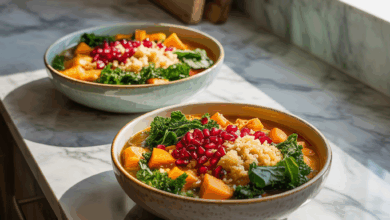
- Lunch: Quinoa salad with roasted sweet potato, kale, chickpeas, pumpkin seeds, and olive oil–lemon dressing.
- Snack: Apple slices and almond butter.
- Dinner: Grilled salmon, sautéed spinach with garlic, and a side of steamed broccoli and brown rice.
- Bonus: Turmeric-ginger tea after dinner to support digestion and recovery.
Fitness tips that complement an anti-inflammatory eating plan
Diet and exercise work hand-in-hand. Use these workout and lifestyle strategies to maximize the benefits of your anti-inflammatory food choices.
Smart exercise choices
- Low-impact cardio: swimming, cycling, brisk walking — great for circulation without excess joint stress.
- Strength training: 2–3 sessions per week with compound moves (squats, push-ups, rows) to support muscle and joint health.
- Mobility and flexibility: daily 10–15 minute sessions of dynamic stretching or yoga to reduce stiffness and improve recovery.
- Interval training (modified): short HIIT sets (10–15 minutes) for metabolic benefit — reduce intensity or duration when inflamed.
Recovery and lifestyle habits
- Prioritize 7–9 hours of quality sleep for hormone balance and tissue repair.
- Manage stress with breathing exercises, meditation, or nature walks — chronic stress drives inflammation.
- Stay hydrated; water supports cellular function and helps remove inflammatory byproducts.
- Consider foam rolling and contrast baths (hot/cold) after intense sessions to reduce soreness.
Foods to embrace and foods to avoid
Knowing what to eat — and what to skip — makes the anti-inflammatory approach practical.
Top anti-inflammatory foods
- Fatty fish (salmon, mackerel) — rich in omega-3s.
- Berries and cherries — potent antioxidants.
- Leafy greens and cruciferous veggies — fiber and phytonutrients.
- Nuts, seeds, olive oil, avocados — healthy monounsaturated and polyunsaturated fats.
- Spices like turmeric and ginger — natural anti-inflammatory compounds.
Inflammation-promoting foods to limit
- Refined sugars and sugary drinks.
- Highly processed foods and fast food.
- Refined carbohydrates (white bread, pastries).
- Trans fats and excessive omega-6 oils.
Practical tips for sticking to an anti-inflammatory meal plan
- Meal prep: roast a tray of vegetables and a batch of grains on Sunday for quick meals.
- Swap simple ingredients: use olive oil instead of vegetable oil, berries for sugary desserts.
- Make flavorful dressings with lemon, olive oil, garlic, and turmeric — flavor helps adherence.
- Start small: replace one inflammatory food each week (e.g., swap soda for sparkling water with lemon).
- Track results: note energy, sleep, and pain levels to see what works for you.
Real-world example: a busy professional’s anti-inflammatory routine
Maria is a 38-year-old project manager who used to rely on takeout and coffee. She started batching lunches (salmon or chickpea bowls), swapped afternoon chips for a handful of almonds and a clementine, and added two 30-minute strength sessions per week plus nightly stretching. Within six weeks she reported less joint stiffness, more consistent energy, and a 30-minute morning walk became easier. Small, sustainable changes made all the difference.
Frequently Asked Questions
1. How long does it take to see benefits from an anti inflammation diet?
Some people notice reduced bloating and energy improvements within days, while meaningful reductions in chronic pain or inflammation markers often take 4–12 weeks. Consistency with diet, sleep, and exercise is key.
2. Can I still eat meat on an anti-inflammatory diet?
Yes. The focus is on quality and balance. Choose lean, minimally processed meats and prioritize fatty fish and plant-based proteins. Red meat is fine in moderation, ideally grass-fed and paired with plenty of vegetables.
3. Are supplements necessary to reduce inflammation?
Whole foods should be the foundation. Supplements like fish oil, curcumin, or vitamin D can help in some cases, especially if you have deficiencies — but consult a healthcare provider before starting supplements.
Conclusion: Start your anti inflammation diet today
Adopting an anti inflammation diet is less about strict rules and more about steady, practical swaps — more whole plants, healthy fats, and movement that supports recovery. Pair these eating habits with smart training, sleep, and stress management and you’ll likely notice real changes in energy, pain, and performance. Ready to build a routine that complements your food choices? Check out our workout routines for recovery-focused training, browse our nutrition guides for meal ideas, and explore wellness tips to reduce stress and sleep better. Start today: pick one swap and one stretch to add to tomorrow’s routine — small steps, big results.