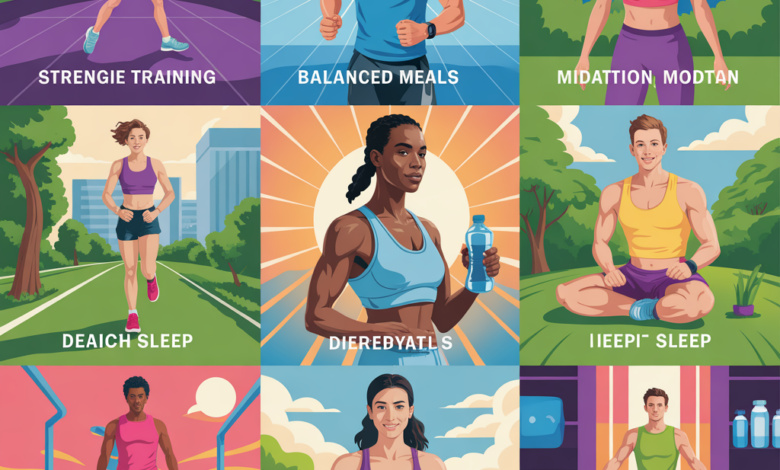
Ever find yourself juggling work, family, and a social life and wonder how anyone actually stays healthy long-term? What if small, realistic changes could stack into big gains for your energy, mood, and body? Whether you’re a busy professional, a parent short on free time, or someone starting their fitness journey, these 10 tips for a healthy lifestyle are designed to be practical, flexible, and immediately usable.
10 tips for a healthy lifestyle: a practical roadmap
Below are ten evidence-backed habits that cover nutrition, fitness, sleep, stress, and daily routines. Use this as a blueprint for building lasting wellness rather than chasing quick fixes.
1. Prioritize whole foods and balanced meals
Swap highly processed items for whole foods—vegetables, fruits, lean proteins, whole grains, legumes, nuts, and seeds. A simple plate rule: half the plate veggies, one quarter protein, one quarter whole grains or starchy veg. For example, replace a takeout bowl with grilled chicken, brown rice, and steamed broccoli to boost nutrients and control portions. For meal ideas, check our nutrition guides.
2. Move daily: find consistent, enjoyable activity
Daily movement beats occasional extremes. Aim for at least 30 minutes of moderate activity most days (brisk walking, cycling, or swimming). If you’re pressed for time, split it into three 10-minute walks. Real-world example: Maria, a teacher, takes two 15-minute walks plus a 5-minute mobility routine between classes and feels more focused and less stiff.
3. Include strength training twice a week
Muscle maintains metabolism, improves posture, and reduces injury risk. Try two full-body strength sessions (30–45 minutes) per week using compound exercises: squats, lunges, push-ups, rows, and planks. Beginner option: bodyweight circuits at home. Advanced variation: add dumbbells or kettlebells for progressive overload. Explore structured workout routines for all levels.
4. Add variety with workout variations
Prevent boredom and plateau by mixing cardio, strength, mobility, and interval training. Example week: one HIIT session (20 min), one steady-state cardio (45 min walk or bike), two strength workouts (30–40 min), and daily mobility or stretching (10 min). At-home HIIT: 40 seconds work/20 seconds rest for 4–6 rounds of squats, mountain climbers, jumping jacks, and planks.
5. Hydrate smartly and reduce sugary drinks
Hydration supports energy, digestion, and cognitive performance. Aim for steady water intake across the day—start with a glass on waking. Replace soda and sugary beverages with water, sparkling water, or unsweetened herbal tea. If you struggle with plain water, add lemon, cucumber, or mint for flavor.
6. Sleep hygiene: quality sleep is non-negotiable
Poor sleep undermines diet and training. Aim for 7–9 hours nightly. Create a consistent bedtime routine: dim lights an hour before bed, limit screens, and keep the bedroom cool and dark. Real-world tip: set an alarm 30 minutes before bedtime as a reminder to unplug and wind down.
7. Manage stress with practical techniques
Chronic stress impacts weight, immunity, and sleep. Use quick, science-backed tools: 5–10 minutes of deep breathing, progressive muscle relaxation, short walks, or journaling. For busy people, a two-minute breathing break between meetings can reduce tension and improve clarity.
8. Build routines and small habits
Big changes rarely happen overnight. Stack new habits onto existing ones—for example, do a 2-minute plank after brushing your teeth, or add a greens smoothie to your breakfast routine. Over weeks, small wins compound into meaningful lifestyle shifts. This is key to sustainable healthy living tips for busy schedules.
9. Stay accountable and track progress
Accountability increases adherence. Use a simple habit tracker, fitness app, or a workout partner. Track non-scale wins too—better sleep, improved mood, increased energy, or easier climbing of stairs. Example: Mark tracked three habits (water, 20-minute walk, and strength session) and saw consistent improvements in two months.
10. Prioritize recovery and listen to your body
Rest days, foam rolling, mobility work, and quality sleep are as important as training. If you’re sore or exhausted, opt for light active recovery (yoga, walking) instead of forcing intense workouts. Recovery reduces injury risk and helps long-term consistency.
Quick checklist: daily habits to adopt
- Start your day with water and a protein-rich breakfast.
- Move for 30 minutes across the day (can be broken up).
- Complete at least two strength sessions per week.
- Limit added sugars and prioritize whole foods.
- Practice a 5-minute stress-management technique daily.
- Stick to a consistent sleep schedule.
Practical examples and mini-plans
Beginner 2-week starter plan
Week 1: Three 20–30 minute walks, two 20-minute bodyweight strength sessions, daily stretching (5–10 min). Week 2: Add one HIIT (12–15 min) and increase walk time by 10 minutes. Focus on whole-food meals and consistent sleep.
Busy schedule modification
If you can only spare 20 minutes, do a high-intensity circuit at home: 4 rounds of 40 seconds on / 20 seconds rest – squats, incline push-ups, planks, and alternating lunges. Pair this with a microwaved steamable bag of mixed veggies and a canned tuna or rotisserie chicken for a fast, balanced meal.
Frequently Asked Questions
Q: How quickly will I see results from these healthy lifestyle tips?
A: You may notice improved energy and mood within days to weeks. Physical changes like weight loss, muscle gain, or improved endurance typically appear after 4–12 weeks, depending on consistency and starting point. Focus on sustainable habits for long-term results.
Q: Can I get fit without a gym membership?
A: Absolutely. Many effective routines use bodyweight exercises, resistance bands, or minimal equipment. Walking, running, cycling, HIIT, and home strength circuits all build fitness. See our workout routines section for sample at-home plans.
Q: How do I avoid burnout while trying to build healthy habits?
A: Prioritize slow, incremental changes. Start with 1–2 habits (hydration, daily walk) and add more as those become automatic. Schedule rest days, vary workouts, and track non-scale victories to stay motivated. If a plan feels overwhelming, scale back and focus on consistency.
Conclusion — commit to lasting change
These 10 tips for a healthy lifestyle are not about perfection—they’re about progress. Small, consistent actions compound into better health, more energy, and greater resilience. Start with one or two tips today, and build gradually. Need a structured plan? Explore our nutrition guides and wellness tips pages to tailor this approach to your life.
Ready to take the first step? Pick one tip from this list, commit to it for two weeks, and notice the difference. Share your progress or questions in the comments below — I’ll help you stay on track.
For more workout tips, check out Workout Tips to Gain Weight.
For more meal prep ideas, check out our Healthy Meal Prep guide.