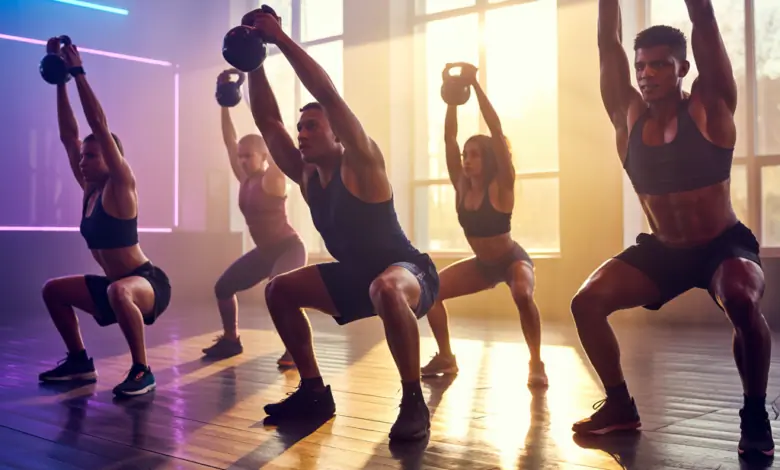
Ever stared at a kettlebell on the gym floor wondering if it’s a medieval weapon or a shortcut to getting stronger and fitter? Imagine squeezing in a 20-minute full-body workout at home that torches calories, builds muscle, and improves posture — all with one tool. If you’re new to kettlebells, this guide to the 10 best kettlebell exercises for beginners will take you from nervous to confident, with clear cues, progressions, and practical tips.
Why kettlebells are perfect for beginners
Kettlebells provide a unique mix of strength, cardio, balance, and mobility training. A kettlebell workout for beginners can teach you hip hinge mechanics, core stabilization, and grip strength — fundamentals that carry over to everyday life. Plus, you get time-efficient conditioning: think heavy compound movements instead of isolated machine work.
How to choose the right kettlebell
Start with a weight that lets you perform clean technique for 8–12 reps. For most women, that’s 8–12 kg (18–26 lb); for most men, 12–16 kg (26–35 lb). If unsure, pick the lighter option and focus on form. Prioritize range of motion and control over lifting heavy right away.
10 Best Kettlebell Exercises for Beginners
Below are simple, effective kettlebell moves, each with benefits, form tips, and a beginner-friendly variation.
-
Kettlebell Deadlift
Benefits: Teaches the hip hinge, strengthens hamstrings and glutes, and builds foundational posterior-chain strength.
How to: Feet hip-width, kettlebell between feet, push hips back, chest up, grip the handle, stand by driving through heels and squeezing glutes.
Tip: Keep a neutral spine; don’t round. Variation: Romanian kettlebell deadlift with a slight knee bend for more hamstring emphasis.
-
Goblet Squat
Benefits: Easy way to learn squatting depth and maintain an upright torso while building quads and core strength.
How to: Hold kettlebell by the horns at chest, feet slightly wider than hip-width, squat sit-back keeping knees tracking toes.
Tip: Use a box or bench to find consistent depth. Variation: Add a pause at the bottom for extra core activation.
-
Kettlebell Swing (Two-Handed)
Benefits: Best for explosive hip power, conditioning, and posterior chain endurance.
How to: Hinge at hips, load hamstrings, snap hips forward to drive kettlebell to chest height. Arms are guides — power comes from hips.
Tip: Practice deadlifts and hip-hinge drills first. Variation: One-arm swings for unilateral control once confident.
-
Kettlebell Clean
Benefits: Teaches safe transition from swing to rack position, improves grip and coordination.
How to: From swing, pull the bell to rack position, letting it rotate around your wrist and settle against your forearm.
Tip: Bend elbows slightly and keep bell close to body. Variation: Work single reps slowly to master the rack catch.
-
Kettlebell Press (Strict)
Benefits: Builds shoulder strength and core stability. Great for posture and upper-body balance.
How to: From the rack, brace core, press kettlebell overhead keeping wrist stacked and ribs down.
Tip: Start seated or with support to isolate pressing mechanics. Variation: Push press uses a small leg drive for heavier loads.
-
Kettlebell Row (Single-Arm)
Benefits: Simple back-builder that corrects muscle imbalances and enhances posture.
How to: Hinge forward with a flat back, row the kettlebell to your ribcage, squeeze shoulder blade back and down.
Tip: Keep hips squared and avoid rotating. Variation: Two-arm renegade row for added core challenge.
-
Suitcase Carry (Farmer Carry Variation)
Benefits: Improves grip, anti-rotation core strength, and carries-over to daily tasks like carrying groceries.
How to: Hold kettlebell at your side, brace core, walk 20–30 meters maintaining upright posture.
Tip: Keep shoulders even; switch arms every lap. Variation: Double suitcase carry for extra load.
-
Turkish Get-Up (Beginner Progression)
Benefits: Full-body mobility and stability movement that improves shoulder health and coordination.
How to: Break it down into stages: roll to elbow, press to hand, lift hips, sweep leg, and stand. Use a light bell at first.
Tip: Practice the steps without weight, then with a lighter kettlebell. Variation: Half get-up focusing on the bottom and mid positions.
-
Kettlebell High Pull
Benefits: Bridges the gap between swings and cleans, trains explosive posterior chain and upper back engagement.
How to: From the swing, pull the bell higher toward chest with elbows leading while keeping the hinge.
Tip: Don’t shrug; pull with the hips and upper back. Variation: High pull to upright row combo for conditioning.
-
Kettlebell Halo
Benefits: Great for shoulder mobility, thoracic rotation, and warming up before a session.
How to: Hold bell by the horns at chest, circle it slowly around your head in both directions while keeping core tight.
Tip: Move slowly and keep neck relaxed. Variation: Add a squat between halos for a dynamic warm-up.
Beginner Kettlebell Workout (Sample)
Try this 20–25 minute routine twice a week to build a base:
- Warm-up: 5 minutes halos, bodyweight squats, hip hinges
- 3 rounds:
- 10 Kettlebell Swings
- 8 Goblet Squats
- 6 Single-Arm Rows each side
- 30-second Suitcase Carry (each side)
- 60–90 seconds rest between rounds
- Cool-down: Turkish Get-Up practice and mobility for shoulders/hips
Practical tips for success
- Prioritize technique over weight—good form prevents injuries and speeds progress.
- Progress gradually: increase reps, add sets, then increase weight.
- Record short videos of your lifts to check posture and hinge pattern.
- Pair kettlebell training with mobility work and short cardio sessions for balanced fitness.
Healthy lifestyle advice to amplify results
Strength training alone won’t deliver the full picture. Fuel recovery with lean protein, whole-food carbohydrates, and healthy fats. Aim for 7–9 hours of sleep, manage stress with breathing or short walks, and remain consistent — 2–3 kettlebell sessions per week plus active recovery will yield noticeable changes. Visit our nutrition guides and wellness tips for more guidance to pair with your kettlebell journey.
Frequently Asked Questions
1. How often should a beginner do kettlebell workouts?
2–3 sessions per week is ideal for most beginners. This allows for neuromuscular adaptation and recovery. On off-days, include mobility work or light cardio to support recovery and maintain consistency.
2. What weight kettlebell should a beginner start with?
Start with a weight you can control for 8–12 reps while maintaining perfect form. Common starting points: women 8–12 kg (18–26 lb), men 12–16 kg (26–35 lb). Choose lighter if you’re unsure and prioritize technique.
3. Are kettlebells safe for people with lower back issues?
When programmed correctly and performed with proper hip hinge and core bracing, kettlebell exercises (like deadlifts and swings) can strengthen the posterior chain and improve back health. However, consult a healthcare professional if you have an existing condition, and begin with light loads and supervised coaching if possible.
Conclusion
The 10 best kettlebell exercises for beginners give you a complete toolkit to build strength, burn fat, and improve mobility with a single piece of equipment. Start light, focus on form, and progress consistently — even 20 minutes, twice a week, will create meaningful change. Ready to build a simple kettlebell program? Check our workout routines for structured plans, grab a kettlebell, and get moving today.