
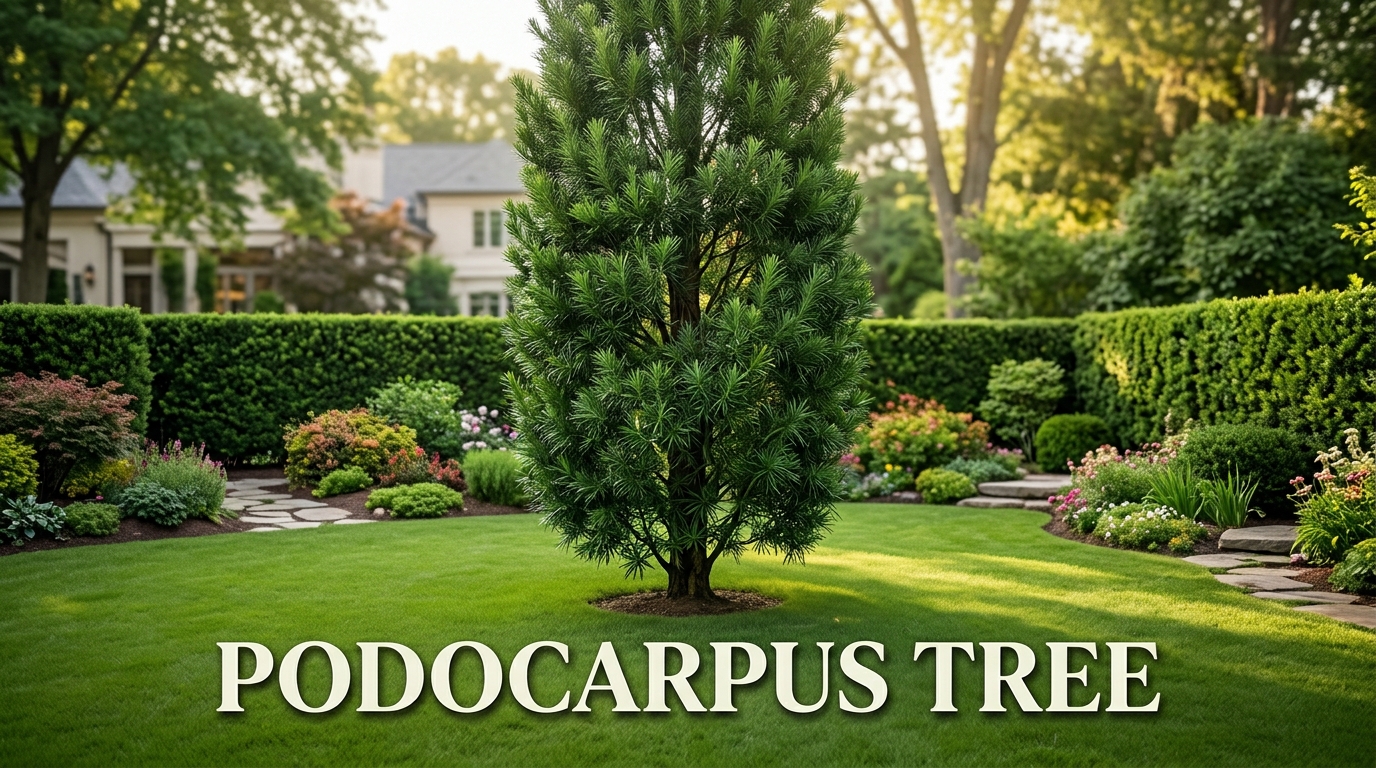
A podocarpus tree gives warm-climate yards dense evergreen color without demanding constant attention. It works as a privacy hedge, specimen, screen, or trained small tree. Good drainage and suitable winter temperatures matter more than complicated maintenance.
The species most American homeowners encounter is Podocarpus macrophyllus, also called yew pine, Buddhist pine, or Japanese yew. It grows best across warmer regions of the United States. Mature plants can become much larger than their clipped nursery appearance suggests.
Quick answer: This evergreen grows best in sun or partial shade and well-drained soil. Established plants handle drought and coastal conditions better than soggy ground. Regular pruning can maintain a dense hedge, while untrimmed specimens can develop into substantial landscape trees.
| Key fact | What U.S. gardeners should know |
|---|---|
| Botanical name | Podocarpus macrophyllus |
| Common names | Yew pine, Japanese yew, Buddhist pine |
| Plant type | Evergreen coniferous shrub or tree |
| Typical hardiness | About USDA Zones 8B to 11 for the common species |
| Light | Full sun to partial shade |
| Mature height | Commonly 30–40 feet when allowed to grow naturally |
| Soil | Adaptable, but drainage is essential |
| Water | Regular while establishing; more drought tolerant later |
| Main landscape uses | Hedge, privacy screen, specimen, patio planting |
| Common concerns | Root rot, aphids, scale, mites, nutrient yellowing |
Key Takeaways
* Give the plant well-drained soil rather than constantly wet ground. * Expect a much larger mature plant unless you maintain it as a hedge. * Full sun creates denser growth, while shade often produces a looser habit. * Water young plants consistently, then reduce irrigation as roots establish. * Prune selectively for a natural appearance or regularly for formal screening. * Watch yellow leaves, curled growth, and declining roots for early trouble.
What Makes This Evergreen Useful in American Landscapes?
Yew pine combines narrow foliage with dense, year-round growth. That combination makes it useful where homeowners want privacy without a deciduous winter gap. It also tolerates many urban conditions once established.
You can maintain the plant as a clipped screen or let it develop a visible trunk. Gradually removing lower branches creates a more traditional tree form. Leaving them intact produces a dense, almost wall-like mass.
Its narrow leaves also create a softer texture than many broadleaf screening shrubs. The plant fits formal landscapes, tropical designs, courtyards, and foundation beds, and professional landscaping design ideas can help you place it well. Coastal gardeners may appreciate its reported salt tolerance.
How Big Does a Podocarpus Tree Get?
An untrimmed podocarpus tree can become substantially larger than the specimens sold beside foundation shrubs. UF/IFAS describes common landscape forms reaching roughly 30 to 40 feet or more. Width varies by cultivar, training method, and available growing space.
This mature size is important when choosing a planting location. A young five-foot specimen can look harmless beside a walkway or window. Years of growth can create pruning problems when the original spacing was too tight.
Smaller selections offer another option for compact yards. The shrubby ‘Maki’ type remains considerably smaller than the full species. Choosing a cultivar can reduce future pruning while preserving the evergreen appearance.
Best USDA Zones and Climate
The common landscape species performs best in warmer U.S. regions. UF/IFAS generally places P. macrophyllus around USDA Zones 8B through 11. Some selected forms may have slightly different published hardiness ranges.
That makes the plant particularly useful across Florida and other mild southern or coastal locations. Gardeners near the colder edge should consider local winter lows before planting. Severe cold can make an otherwise easy plant unreliable.
Homeowners farther north can grow smaller forms in containers. Containers can be moved to protected locations during freezing weather. Choose a pot with unrestricted drainage because winter protection doesn’t prevent waterlogged roots.
Sunlight and the Best Planting Location
Full sun usually produces the strongest and densest growth. Partial shade is also acceptable, making this evergreen useful around buildings and filtered-light areas. Plants grown in heavier shade may grow more slowly and become more open.
Choose a site with enough room for the form you want. A specimen needs space to develop naturally, while a hedge needs room to prune. Avoid forcing a large cultivar into a narrow strip beside walls.
Check drainage before planting rather than correcting problems afterward. Water that remains around the root zone increases the risk of decline. Raised planting areas can help when naturally heavy ground drains poorly.
Soil and Watering Requirements
This conifer tolerates clay, sand, and loam as long as excess water can escape. Slightly acidic, fertile soil generally supports healthy color and growth. Alkaline or poorly drained conditions can contribute to leaf yellowing.
New plants need dependable moisture while their roots spread into surrounding soil. Water deeply enough to moisten the root area, rather than sprinkling the surface. Let drainage and weather guide watering intervals.
Established specimens become considerably more drought tolerant. That does not mean they benefit from prolonged severe dryness. Deep, occasional irrigation during extended dry periods can protect foliage and root health.
Mulch can help moderate soil temperature and moisture. Keep mulch away from direct contact with the trunk. A thick pile against the bark can hold unwanted moisture around the stem.
Fertilizing Without Overdoing It
Healthy plants in decent soil may need little supplemental feeding. Growth problems should be diagnosed before fertilizer becomes the automatic answer. Excess fertilizer cannot correct compacted or saturated ground.
Yellow foliage sometimes points to nutritional problems, particularly where soil chemistry limits nutrient availability. UC IPM notes that mineral deficiencies and excesses can affect these plants. UF/IFAS also reports magnesium-related yellowing in some conditions.
A soil test can provide better guidance than guessing. Follow local extension recommendations when adjusting nutrients or pH. Correcting the underlying soil condition usually works better than repeated random applications.
Pruning for a Hedge or Tree Form
Decide early whether you want a formal hedge or a natural specimen. Hedge plants need regular shaping to keep their desired width and height. Tree-form specimens need selective pruning that develops attractive branch structure.
UF/IFAS recommends hand pruning for a more attractive natural hedge appearance. Repeated aggressive shearing can create a dense outer shell around weaker interior growth. Selective cuts provide more control over long-term form.
Remove dead, damaged, or crossing branches as soon as they become obvious. Avoid removing large amounts of healthy growth without a clear purpose. Gradual shaping reduces stress and prevents sudden bare areas.
For privacy screening, keep the base slightly wider than the upper portion. That shape allows sunlight to reach lower foliage more effectively. It also helps prevent a hedge from becoming thin near ground level.
Common Problems and What They Mean

Soggy soil deserves attention whenever foliage declines without an obvious pest problem. Root rot becomes more likely where drainage remains poor. Preventing saturated soil is easier than restoring a badly damaged root system.
Aphids can attack tender new growth and leave leaves curled or distorted. Scale insects and mites can also occur. Severe infestations require correct identification before choosing a treatment.
Yellowing may have several causes, including drainage problems or nutrient availability. Don’t assume every yellow leaf needs fertilizer. First, check soil moisture, recent weather, and the pattern of discoloration.
UF/IFAS describes the species as generally resistant to serious pest and disease problems. That makes prevention especially valuable because chronic stress often causes more trouble than insects. Healthy placement reduces many problems before pesticides become necessary.
Growing It as a Privacy Hedge
For a hedge, begin with the expected mature width rather than the plants’ nursery width. Crowding creates competition and increases future pruning work. Wide spacing takes longer to fill but often creates healthier individual plants.
Encourage branching during establishment through selective trimming. Avoid allowing several plants to become tall poles before building lower density. Consistent early shaping creates a fuller screen from bottom to top.
Remember that a living screen changes every year, and yard upkeep adds up, as the calories burned during yard work show. Set a realistic finished height before pruning becomes difficult. A manageable hedge can provide privacy without turning maintenance into a major seasonal project.
Is It a Good Choice for Small Yards?
The full species may overwhelm a small property when left untrimmed. Homeowners with limited space should consider compact cultivars or disciplined hedge maintenance. Mature dimensions matter more than the container size at purchase.
Columnar selections work well when vertical screening matters more than width. Smaller shrubby forms also fit patios and tighter beds more comfortably. Check the exact cultivar label because different selections can mature at different sizes.
This planning step can save years of corrective pruning. A plant that naturally fits the available space usually looks better. It also requires less labor and produces fewer conflicts with structures.
Frequently Asked Questions
Is a podocarpus tree fast growing?
A podocarpus tree generally has a slow to moderate growth rate rather than explosive yearly growth. Conditions, cultivar, irrigation, and climate can change its actual pace. Full sun usually promotes denser development than heavy shade.
Can it grow in shade?
Yes, the plant tolerates partial shade and can survive in fairly shaded locations. Growth usually slows and becomes more open as available sunlight declines. Full sun commonly produces the densest form.
How often should it be watered?
New plantings need consistent moisture while roots establish beyond the original root ball. Established plants tolerate dry periods better and usually need less frequent irrigation. Soil drainage, rainfall, heat, and plant size should determine the schedule.
Why are the leaves turning yellow?
Yellow foliage can develop from nutrient issues, alkaline conditions, or excessively wet soil. Check drainage before adding fertilizer because saturated roots cannot function normally. A soil test can help when yellowing continues despite proper watering.
Is it suitable for a privacy screen?
Yes, its evergreen foliage and tolerance for pruning make it well suited to screening. Regular shaping can keep the planting dense at the desired height. Proper spacing at planting reduces crowding as the screen matures.
The Best Way to Get Long-Term Results
Start with the right cultivar, sufficient space, and freely draining soil. Those choices solve more future problems than frequent fertilizer or corrective pruning. Match the mature plant to your property rather than relying on its nursery size.
Give young plants dependable moisture and time to establish roots. After that, focus on drainage, sensible pruning, and occasional pest inspections. This simple approach suits the plant’s naturally adaptable character.
For U.S. homeowners in suitable warm zones, this evergreen can provide decades of structure and privacy. It can remain a neat hedge or mature into an attractive landscape specimen. Plan its final form before planting, then let that goal guide future care.


